

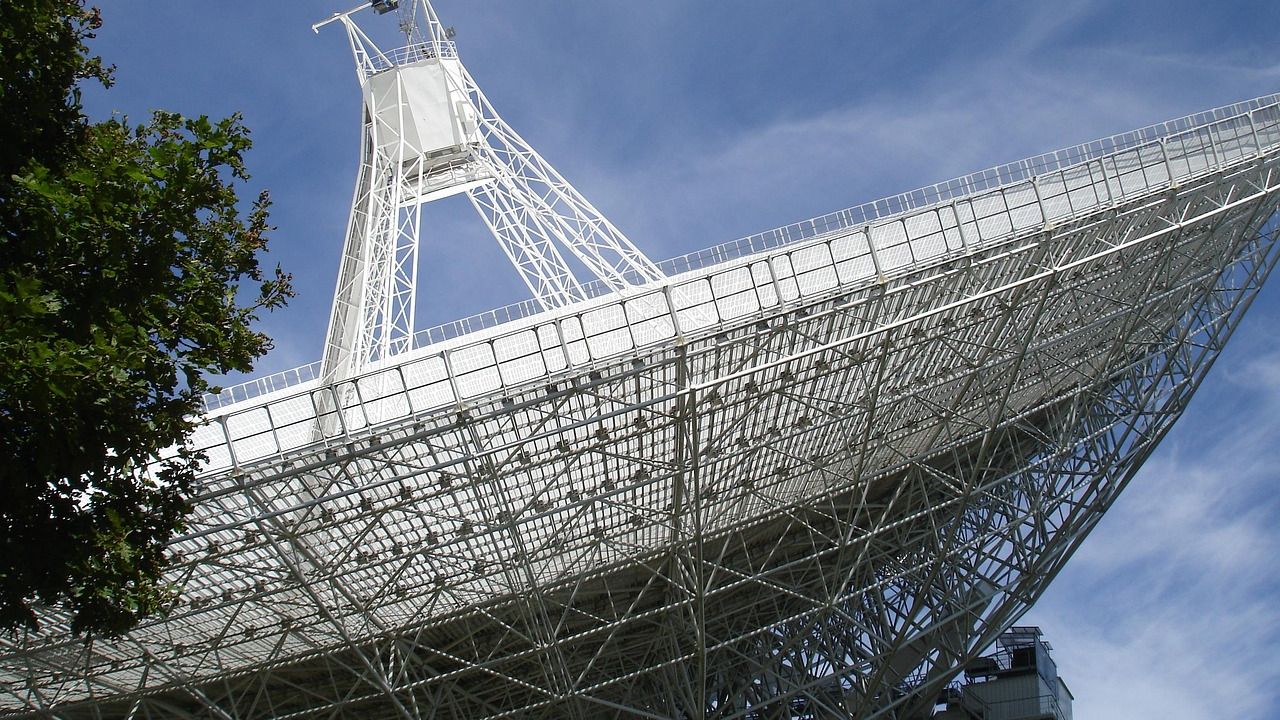
We’ve Been Listening for Ten Years. Here’s What We Heard – Image for illustrative purposes only (Image credits: Pixabay)
Astronomers at UCLA have spent the past decade training one of the world’s most sensitive radio telescopes on distant stars. Their goal was straightforward yet ambitious: detect any artificial radio signal that might point to another civilization. The effort covered 70,000 stars and processed more than 100 million candidate signals. Every single one turned out to be human in origin.
The Scale of the Effort
The project relied on continuous observations with a large radio dish capable of picking up faint transmissions across wide swaths of the sky. Researchers recorded data night after night, building an archive that grew steadily over the ten-year period. Each observation targeted stars similar to our Sun, chosen because they offered the best chance of hosting planets in the right temperature range for life.
Processing the raw recordings required sophisticated software to filter out known sources of interference. The team developed automated routines that could scan millions of frequency channels in hours rather than weeks. This approach allowed them to examine far more data than earlier searches had managed.
What the Signals Actually Showed
After exhaustive analysis, the researchers found that every candidate signal matched patterns produced by Earth-based technology. Some came from satellites, others from aircraft or ground transmitters whose emissions had reflected off the telescope structure itself. No signal displayed the narrow, persistent characteristics expected from an extraterrestrial source.
The absence of detections does not mean the search was wasted. Instead, the results set new upper limits on how common detectable civilizations might be within the observed volume of space. These limits are now among the tightest available from any single telescope campaign.
Why the Findings Still Advance the Field
One of the most useful outcomes is a clearer picture of the background noise that future searches must overcome. The team documented exactly how often human signals mimic the signatures astronomers hope to find. This catalog will help other projects design better filters and observation strategies.
The work also demonstrates that long-term, dedicated monitoring can be sustained with existing facilities. Rather than requiring entirely new instruments, the project showed that steady accumulation of data over many years can produce meaningful constraints even when no signals appear.
Scientists involved in the effort note that the search remains open-ended. The same telescope continues to collect data, and improved algorithms are already being tested on the existing archive. Future runs may examine different frequency ranges or target stars that were not included in the first decade.
What Comes Next
Plans are underway to expand the survey to additional stars and to combine the UCLA data with observations from other radio telescopes around the world. Coordinated campaigns could increase sensitivity and reduce the chance that a genuine signal is missed because of timing or direction.
The decade-long effort has also prompted discussions about how to report any future detection in a way that allows independent verification. Clear protocols for confirmation are now considered essential before any announcement would be made.
Key points from the decade-long survey:
- 70,000 stars observed with no confirmed extraterrestrial signals
- More than 100 million candidates examined and attributed to Earth sources
- New limits placed on the prevalence of detectable civilizations
- Improved methods developed for handling human interference
- Continued observations planned with refined techniques