

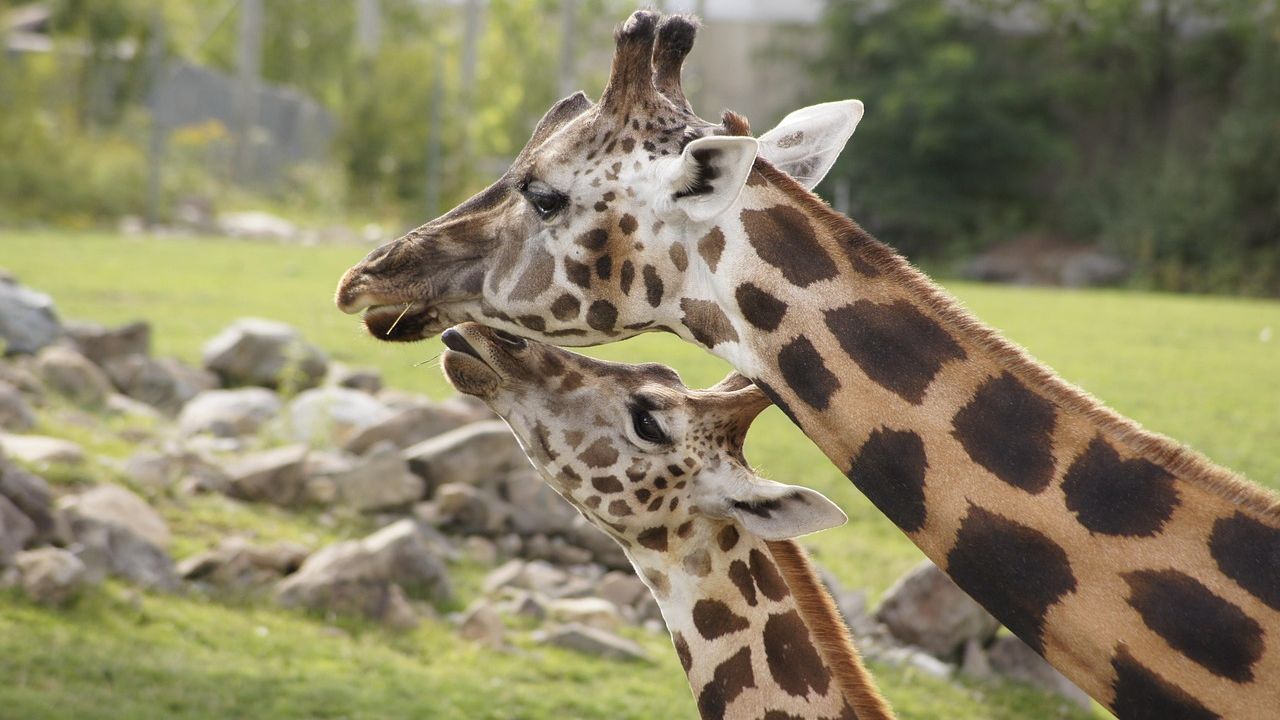
What Lamarck’s Giraffe Got Right – Image for illustrative purposes only (Image credits: Pixabay)
Jean-Baptiste Lamarck proposed that giraffes acquired their elongated necks through repeated stretching toward higher leaves, a trait then passed to offspring. The notion was long ridiculed as a quaint error in early evolutionary thought. Yet historian Jessica Riskin has uncovered layers of insight in that classic example while completing her book Power of Life. Her analysis shows how Lamarck’s framework anticipated modern understandings of organismal agency and environmental responsiveness in ways that continue to shape scientific debate.
Early Dismissal and Lingering Questions
Throughout the nineteenth and twentieth centuries, biologists largely set Lamarck’s inheritance mechanism aside in favor of Darwinian natural selection and later Mendelian genetics. Textbooks presented the giraffe story as a cautionary tale of pre-scientific thinking. Riskin notes that this rejection overlooked Lamarck’s deeper emphasis on the active role living beings play in their own development. The result was a narrowed view of evolution that treated organisms as passive recipients of random variation.
Contemporary research in epigenetics and developmental biology has reopened the conversation. Studies now document how environmental pressures can influence gene expression across generations without altering DNA sequences. These findings echo Lamarck’s core intuition that use and disuse shape heritable traits, even if the precise mechanisms differ from his original formulation.
Riskin’s Key Insights from the Research
While tracing the history of vitalist ideas, Riskin identified three central revelations that reframed her understanding of Lamarck’s contribution. First, she saw that Lamarck viewed life as inherently restless and responsive rather than mechanically determined. Second, his giraffe example illustrated how individual effort could feed into species-level change, a perspective that challenges strict gene-centric models. Third, the historical record revealed that many of Lamarck’s contemporaries took his proposals seriously before later generations hardened the divide between Lamarckism and Darwinism.
These points emerged gradually through archival work and close reading of primary texts. Riskin argues that recovering this complexity helps explain why questions about organismal purpose and environmental interaction persist in today’s laboratories. The giraffe, in her telling, becomes less a punchline and more a prompt for rethinking agency in evolution.
Implications for Current Science
Modern evolutionary biology increasingly incorporates concepts of phenotypic plasticity and niche construction. Researchers examine how animals and plants modify their surroundings and how those modifications can influence descendants. Such work aligns with the spirit of Lamarck’s thinking even when it employs different terminology and experimental tools.
Riskin’s examination suggests that the historical dismissal of Lamarck carried costs. It discouraged inquiry into the ways living systems actively participate in their own evolution. As new data accumulate, the field appears to be circling back toward a more integrated picture that grants organisms a measure of creative influence over their trajectories.
Looking Ahead
The giraffe example continues to serve as a touchstone because it forces clarity about what counts as inheritance and what counts as adaptation. Riskin’s reflections in Power of Life invite readers to reconsider long-settled narratives without discarding the advances that followed Lamarck. The result is a richer account of life’s history that remains open to further refinement as evidence grows.