

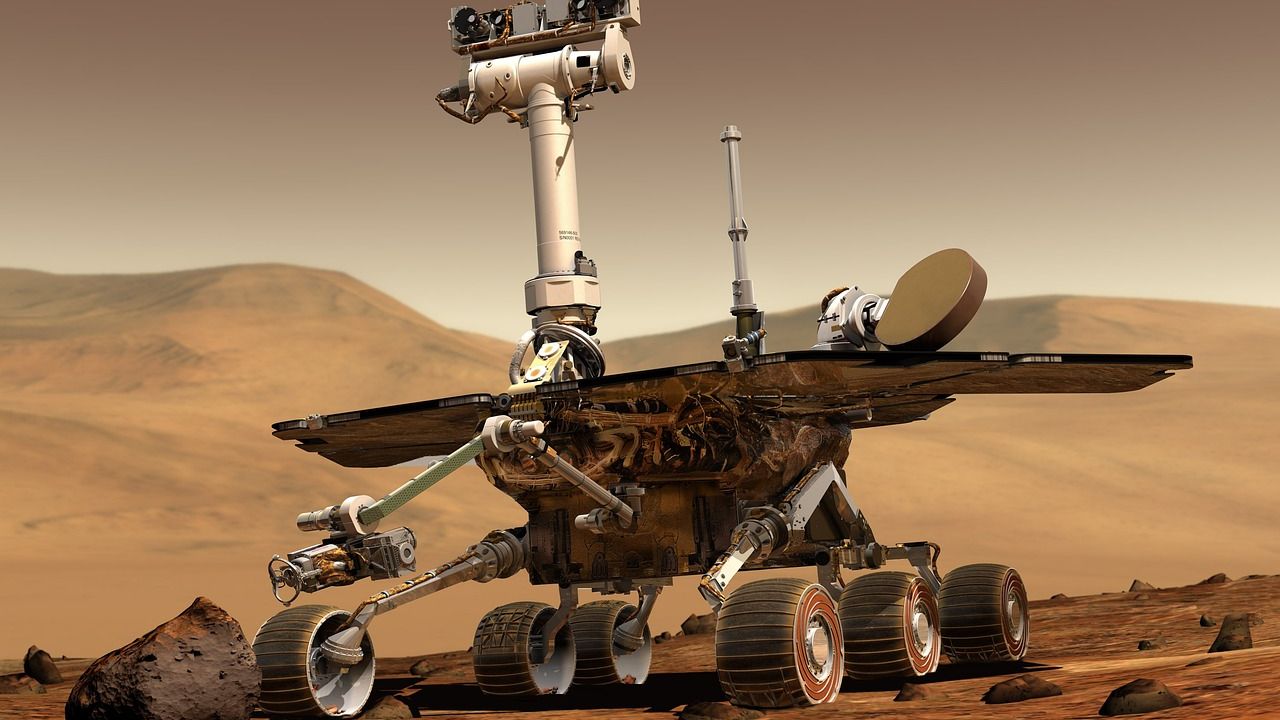
NASA’s Perseverance rover is positively glowing in its new selfie on Mars – Image for illustrative purposes only (Image credits: Pixabay)
NASA’s Perseverance rover has captured a new self-portrait while stationed on the western rim of Jezero Crater. The image places the rover against a backdrop of fractured rock formations and layered terrain that record events from Mars’ distant past. This latest photograph adds visual detail to the mission’s ongoing examination of the crater’s geology.
The Rover’s Precise Location
The western rim of Jezero Crater provides a stable vantage point for the rover’s instruments. From this elevated position, Perseverance can examine exposed rock layers that formed under different environmental conditions. The selfie confirms the rover’s exact placement amid these features, which helps mission teams correlate visual data with measurements taken on site. Such positioning matters because the rim preserves evidence of ancient processes that altered the Martian surface. The rover’s cameras document both the immediate surroundings and distant horizons in a single frame. This combination supports careful planning for future drives and sample collection.
Details Revealed in the Photograph
The image shows the rover’s mast and wheels set against sharp cliff faces and broken boulders. These elements indicate repeated fracturing and erosion over long periods. Scientists interpret the patterns as signs of past geological activity that shaped the crater floor and its surroundings. The photograph also captures subtle color variations in the rock, which often point to different mineral compositions. While the selfie itself does not contain new chemical data, it supplies context that guides how teams interpret readings from other instruments. Each new view refines the understanding of how water and wind once interacted with the landscape.
Contribution to Ongoing Mars Research
Images from Perseverance continue to build a record of the crater’s history. The mission focuses on identifying materials that could preserve traces of ancient microbial life, if it ever existed. The latest selfie reinforces the value of returning to well-documented sites for repeated observations. Teams on Earth review these visuals alongside data from the rover’s drill and spectrometers. The process remains incremental, with each photograph helping to narrow questions about when and how the crater’s environment changed. Future drives will test whether similar features appear elsewhere along the rim.
What matters now: Continued imaging from the western rim will help determine the next sampling targets and refine models of Mars’ early climate.
The steady accumulation of such records shows how exploration advances through repeated, careful documentation rather than single dramatic finds. Perseverance’s work at Jezero Crater remains one step in a longer effort to understand the planet’s evolution.