

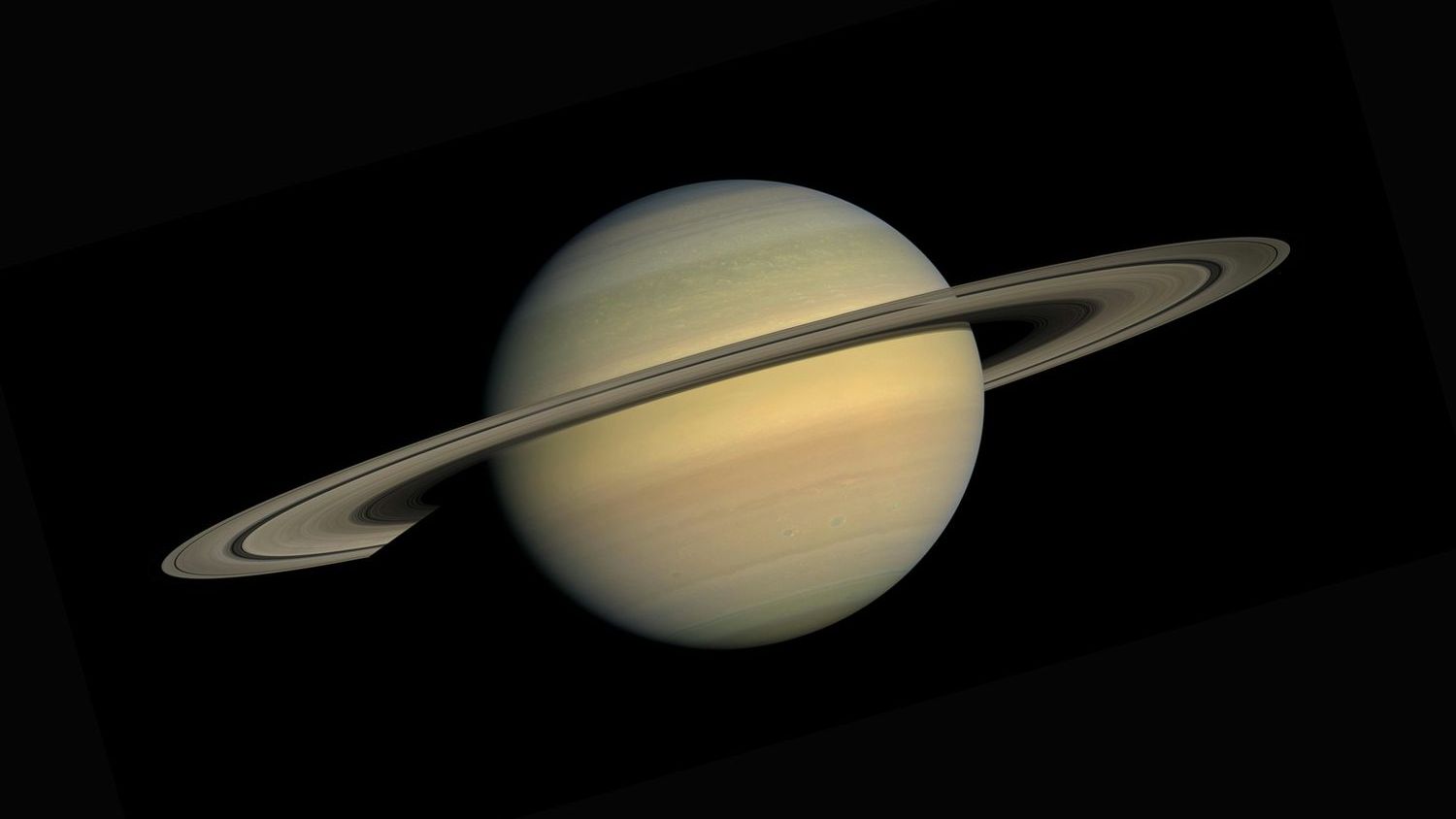
Saturn’s rings are disappearing – NASA estimates they’ll be gone within 100 million years – which means we happen to be alive during the brief window of cosmic history when Saturn has rings at all – Image for illustrative purposes only (Image credits: Unsplash)
Saturn’s iconic rings have long captured attention as one of the solar system’s most striking features. Recent analyses from NASA-supported research now suggest these rings may not endure indefinitely. Estimates point to their potential disappearance in less than 100 million years under current conditions. This timeline positions the present era as a distinctive period in the planet’s long history.
Measurements of Material Loss from the Rings
Observations have revealed a steady process where ice particles from the rings are drawn toward Saturn. These particles become electrically charged and follow the planet’s magnetic field lines into the upper atmosphere. There they vaporize and interact with existing gases. Data collected at the Keck Observatory on Mauna Kea confirmed the presence of specific ion glows at expected latitudes, matching earlier predictions from Voyager-era studies.
The rate of this loss equates to a substantial volume of water departing the rings every half hour. When combined with additional material observed falling directly onto the planet’s equator during Cassini’s final passes, the projected lifespan shortens considerably. Researchers note that solar activity and Saturn’s orbital cycle could influence the pace over time, introducing some variability into the overall estimate.
Insights into the Rings’ Possible Age
Separate gravitational measurements from Cassini’s close approaches provided clues about the rings’ total mass. The low mass value, paired with the rings’ high purity of water ice, led to suggestions that the system formed relatively recently. Comparisons with expected dust accumulation over longer periods supported an age range of roughly 10 to 100 million years in one analysis, with later work extending an upper limit to a few hundred million years.
This combination of findings creates a picture of rings that arrived late in Saturn’s 4.5-billion-year existence. The same processes now removing material could have begun shortly after formation, limiting the visible phase to a narrow span. Such details highlight how the current view of Saturn may represent a temporary alignment rather than a permanent state.
Ongoing Questions About Ring Longevity
While the loss rate appears well-supported by direct observations, interpretations of the rings’ age remain open to revision. A 2024 study proposed that ring particles might eject much of the incoming micrometeoroid debris instead of retaining it, which could allow older rings to maintain their clean appearance. Earlier commentaries had already noted that multiple formation scenarios fit the available data.
Future constraints will likely emerge from continued examination of existing Cassini records and new telescope measurements of ring composition. No immediate follow-up mission is planned to revisit the inner ring region directly. These efforts should help clarify whether the rings represent a brief spectacle or a more enduring feature of the Saturn system.
Key points on current understanding:
- Ring material loss proceeds at a measurable rate tied to solar charging and magnetic forces.
- Age estimates range from tens of millions to potentially billions of years depending on impact retention models.
- Seasonal variations and particle behavior introduce important uncertainties.
The disappearance timeline holds firmer ground than the precise formation date. Observers today therefore encounter Saturn during a phase that may prove uncommon across cosmic timescales, whether the rings prove young or simply visible now after a longer past. Continued study will refine these details without altering the basic observation that the rings are not permanent.