

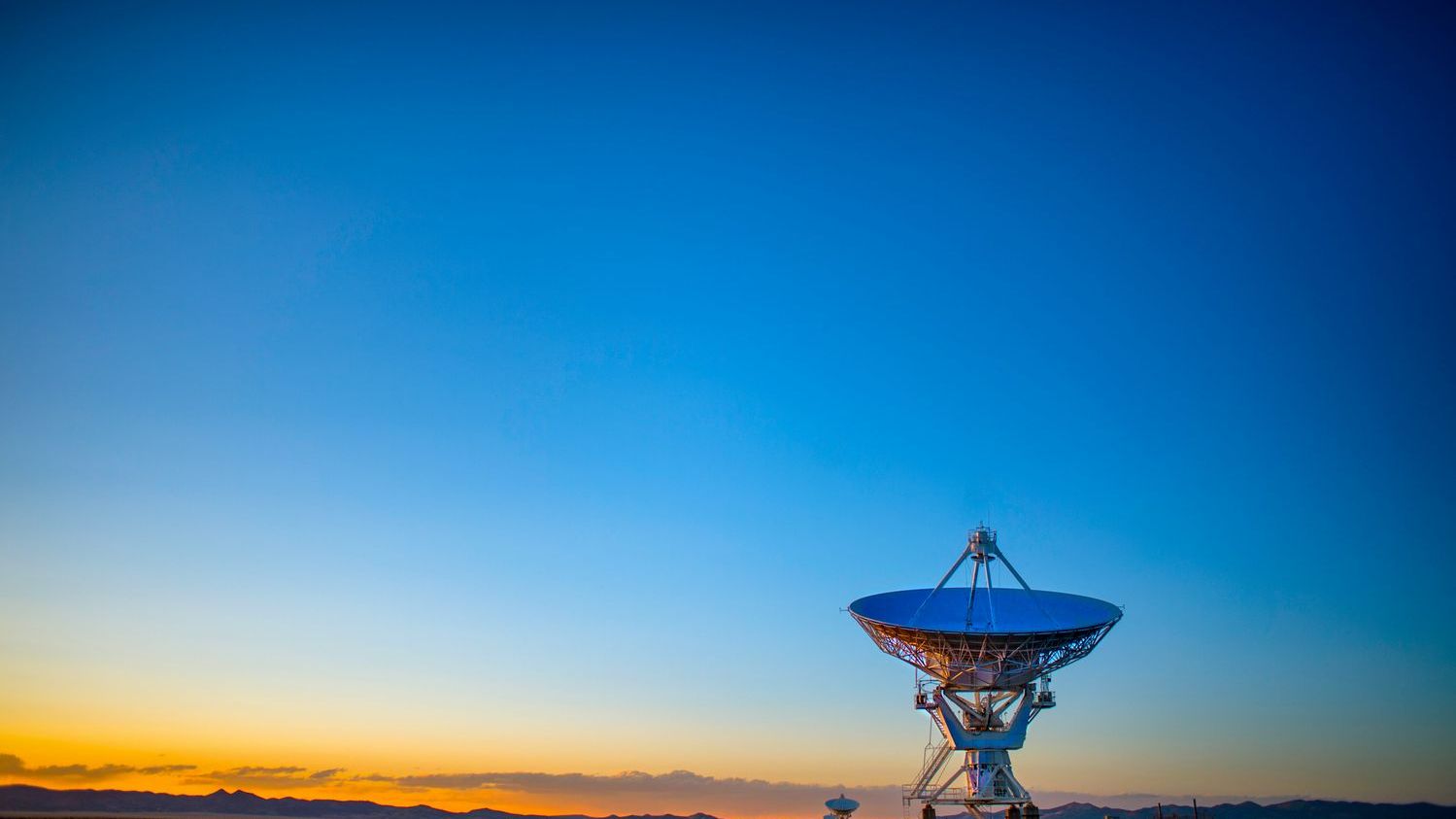
Giant radio telescope sees Artemis 2 astronauts on Orion flying around the moon. ‘There are 4 people in those pixels.’ – Image for illustrative purposes only (Image credits: Unsplash)
In the quiet countryside of West Virginia, a massive radio telescope spent five days locked onto a faint signal from deep space. The target was the Orion spacecraft carrying four astronauts on the Artemis 2 mission as it looped around the moon. What the instrument recorded was not a dramatic image but a handful of pixels on a screen, each one representing a living crew member hundreds of thousands of miles away. That simple detection offered scientists a precise record of the spacecraft’s path during a mission that marked the first time humans have traveled near the moon in more than fifty years.
A Telescope Built for the Cosmos Turns to a Human Mission
The Green Bank Telescope, one of the largest steerable radio dishes on Earth, is normally used to study distant galaxies and pulsars. For this assignment its operators shifted its focus to a much closer but still demanding target: a spacecraft the size of a small house moving at thousands of miles per hour. The telescope’s enormous collecting area allowed it to pick up the weak radio transmissions from Orion even when the craft was on the far side of the moon and out of direct line of sight with most ground stations.
Tracking continued without interruption for five full days. Every few hours the telescope adjusted its aim to follow the slow, steady orbit. The data stream was steady enough that engineers could measure small changes in the spacecraft’s speed and position with high accuracy. Those measurements later helped confirm that Orion was performing exactly as planned during its first crewed flight beyond low Earth orbit.
Four Astronauts, a Few Pixels, and a Remarkable Sense of Scale
When the observations were later displayed on a computer screen, the spacecraft appeared as little more than a cluster of bright dots. One researcher looking at the raw data remarked that there were four people in those pixels. The comment captured the strange intimacy of the moment: a machine built to listen to the universe had just recorded the presence of living explorers on their way around another world.
The pixels carried no faces or details, yet they stood for real individuals whose safety depended on the same radio link the telescope was monitoring. The contrast between the telescope’s vast size and the tiny signal it captured underscored how delicate spaceflight remains even in an era of advanced technology. Every successful data point reduced the uncertainty that always accompanies a new crewed mission.
Why Precise Tracking Matters Beyond the Headlines
Artemis 2 is designed as a test flight, not a landing. Its main goals are to verify that Orion can carry people safely to lunar distance and return them home. The radio telescope’s observations added an independent check on the spacecraft’s trajectory, separate from the usual network of NASA tracking stations. That extra layer of confirmation is especially valuable on a mission that will set the stage for later landings and longer stays near the moon.
Engineers noted that the five-day campaign also tested how well large ground-based instruments can support future Artemis flights when they venture farther from Earth. The same techniques could one day help monitor robotic landers or even crewed vehicles operating on the lunar surface itself. In that sense the West Virginia observations were both a technical success and a rehearsal for more ambitious work ahead.
What the Detection Reveals About Human Presence in Space
The Artemis 2 crew is the first to travel so far from Earth since the final Apollo mission in 1972. Their spacecraft follows a path that takes it around the moon and back, giving the four astronauts a view of the lunar far side that few people have ever seen. The radio telescope’s record of that journey adds a quiet but important footnote to the larger story of renewed human exploration.
Because the signal was captured and analyzed in near real time, mission controllers gained an additional way to cross-check the spacecraft’s health and position. Small adjustments to the flight plan could be verified quickly, reducing the chance of surprises on the long return trip to Earth. The pixels on the screen therefore represented more than a technical curiosity; they stood for a reliable link between the crew and the people supporting them from the ground.
Key points from the tracking effort
- Five continuous days of observations by the Green Bank Telescope
- Precise measurements of Orion’s speed and path around the moon
- Independent confirmation of spacecraft performance during first crewed lunar mission since Apollo
- Early demonstration of large radio telescopes supporting future Artemis flights
The five-day campaign ended when Orion moved out of the telescope’s optimal viewing window, yet the data collected will remain useful for months as engineers review every aspect of the flight. For now, the image of four people reduced to a handful of pixels serves as a reminder that even the most advanced machines ultimately exist to protect and connect human explorers on their journeys beyond Earth.