

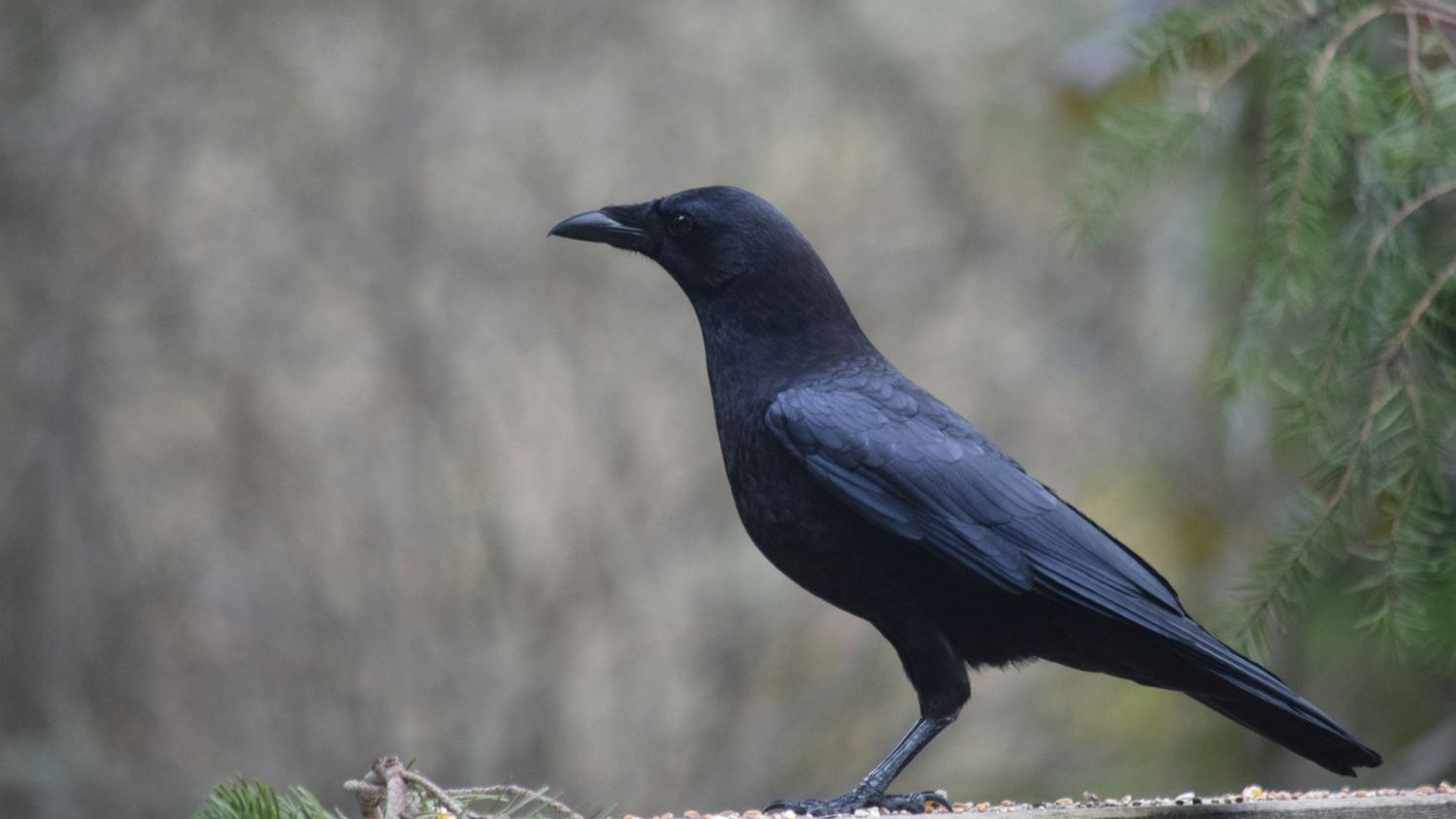
Crows can recognise individual human faces, hold grudges against specific people for years, and teach those grudges to their offspring who have never met the human in question – Image for illustrative purposes only (Image credits: Unsplash)
Researchers have documented a striking ability in American crows that goes well beyond simple recognition. A bird that has never encountered a particular person can still single out that individual’s face and respond with alarm calls or mobbing behavior. The information travels through the flock and reaches young crows that were not even alive during the original encounter.
The Experiment That Isolated Face Recognition
Scientists at the University of Washington designed a careful test to determine exactly what crows notice about people. They wore a distinctive rubber mask while capturing and banding wild crows on campus. A second, neutral mask was used by researchers who walked the same paths but never handled any birds. This setup removed differences in clothing, height, or movement, leaving only the face as the distinguishing feature.
Crows quickly learned to associate the first mask with the stressful capture. Whenever that mask reappeared, birds scolded, dove, and gathered in groups to harass the wearer. The neutral mask produced no such reaction. The response continued for years without any further trapping, showing that the birds retained a specific memory rather than reacting to a recent event.
Two Separate Timescales of Memory
Individual crows that experienced the original capture continued to react to the mask long afterward. This long-term retention stands out because it occurs in a brain roughly the size of a walnut. The same birds showed no similar response to the neutral mask, indicating the memory was tied to the face itself.
Over time a second pattern emerged. The number of crows reacting to the dangerous mask actually grew, even as the original captured birds left the population. Young crows that had never been trapped began scolding the mask. The knowledge had spread beyond the birds that lived through the event.
How the Information Moves Through the Flock
Crows share threat details socially rather than through any genetic inheritance. When one bird mobs a person, nearby crows observe the behavior and update their own view of that individual. Juveniles that stay with their parents for an extended period watch these reactions during daily foraging and learn which faces trigger alarm.
Brain imaging later confirmed the distinction. Scans showed heightened activity in threat-related regions when crows viewed the dangerous mask. The neutral mask activated areas linked to novelty instead. This pattern matches how mammals process learned fear, even though birds evolved their cognitive systems along a separate path.
What the Findings Mean for Urban Wildlife
The results suggest that crow populations maintain a shared record of local humans. Safe or neutral people receive little attention, while those linked to past disturbance remain flagged across generations. Similar recognition abilities appear in ravens, magpies, and some other species, pointing to a broader pattern among corvids.
The mask continues to draw scolding on the same campus more than fifteen years later. None of the current birds were present for the original captures, yet the response persists through repeated social transmission. This distributed memory changes how researchers view the relationship between city wildlife and the people who share those spaces.