

Somewhere between neuroscience and science fiction, a field is quietly maturing. Researchers are no longer simply speculating about whether human consciousness can be preserved – they are building real tools, publishing peer-reviewed results, and attracting serious money to make it happen. The question has shifted from “is it possible?” to “how far away are we, and what does it actually require?”
The concept has picked up a broad umbrella name in scientific circles: whole brain emulation, or WBE. It covers everything from brain mapping and preservation chemistry to digital simulation and the thorny philosophy of what makes you, you. This article traces where that research actually stands in 2026, chapter by chapter, grounded in the latest verified work.
What “Brain-Backup” Actually Means to Scientists

Mind uploading is defined as a hypothetical process of whole brain emulation in which a brain scan is used to completely emulate a person’s mental state in a digital computer. That definition sounds clean, but the practical scope is staggering. The human brain contains 86 billion neurons forming more than 100 trillion connections at junctions called synapses, and this intricate network forms the biological foundation of human consciousness, memory, and identity.
Whole brain emulation, often referred to as “mind uploading” or “brain copying,” is a theoretical concept in neuroscience, artificial intelligence, and computational neuroscience – the idea being to create a detailed and functional digital replica of a human brain, allowing an individual’s consciousness or mind to be transferred from the biological brain to a digital medium, through scanning, mapping, and simulating its function in a computer system.
Substantial mainstream research in related areas is being conducted in neuroscience and computer science, including animal brain mapping, brain-computer interfaces, connectomics, and information extraction from dynamically functioning brains. Supporters say many of the tools and ideas needed are already in existence or under active development, though others remain speculative.
The Connectome: Your Brain’s Wiring Diagram
Connectomics strives to comprehensively map connections between synapses in an organism, in pursuit of a complete wiring diagram of interconnected neurons in the brain and nervous system. Think of it as the Google Maps of the mind, but at nanometer scale. Despite decades of research, our understanding of how the brain works remains limited – a roadblock that connectomics, recently selected as Nature’s Method of the Year for 2025, seeks to dismantle.
Many neuroscientists today believe that memories are stored primarily in the synapses between neurons, and that new memories are formed when these synapses are strengthened, weakened, or newly formed. This theory has been difficult to test, but as connectomics matures, scientists will finally be able to investigate the neural underpinnings of memory storage and retrieval.
Connectomics sits at the intersection of microscopy and AI, combining advanced imaging technologies, computational modeling, and data analysis. Electron microscopy is integral to the approach, offering nanoscale resolution to allow visualization of synapses in a way that light microscopy never could.
The Fruit Fly Breakthrough That Changed Everything

In 2024, an international cohort of researchers called the FlyWire consortium reported the full connectome of an adult Drosophila melanogaster brain, creating a neuronal wiring diagram of the whole brain of an adult female fruit fly containing 50 million chemical synapses between 139,255 neurons. That number sounds modest, but the achievement is anything but. Scientists sliced a fly’s brain into thousands of ultrathin layers and took tens of millions of images to catalog every connection, with the result published in 2024 being described as “the most complete brain map of any organism to date.”
Neuroscientists around the world now use that connectome, completed in 2024, to understand how information flows through the fruit fly brain and shed light on parallel processes in our own brains. The FlyWire Codex, developed at Princeton, made the entire map publicly accessible. It has been described as “Google for the connectome,” and has already been used by roughly ten thousand people worldwide, with thousands of new searches processed daily.
Mapping the Mouse Brain: Half a Billion Connections

In 2025, the MICrONS project published a 1 mm³ map of the mouse visual cortex containing about half a billion synapses among roughly 75,000 neurons, based on 28,000 electron-microscope slices. This was no incremental upgrade. A team mapped both structure and function in a cubic millimeter of mouse brain tissue by first recording neuronal activity in a live mouse and then imaging that same tissue with electron microscopy – a project that yielded the largest functional connectome of a mammalian brain piece ever created.
Sven Dorkenwald, a new investigator at the MIT McGovern Institute, notes that this newly mapped piece of the mouse connectome is large enough that scientists can begin to see and analyze neural circuits, though zeroing in on a cubic millimeter within the mouse’s pea-sized brain means most of what’s visible is still only parts of cells. Scaling that approach to a full human brain remains the central challenge. In mammals, we are still a long way from plotting entire connectomes, though meaningful inroads are being made in delineating portions of the brain.
The Speed Problem: New Microscopy to the Rescue
Current electron microscopy methods, while powerful, are slow and costly when scaled to entire mammalian brains. Mapping a cubic millimeter of brain tissue can take months or even years. That bottleneck has driven researchers toward faster alternatives. A worldwide multidisciplinary team employed Photoemission Electron Microscopy (PEEM), a technique that has been primarily used to study materials properties, and introduced it as a new tool for connectomics – demonstrating that they could image brain tissue at synaptic resolution, hundreds of times faster than conventional techniques.
Using ultra-thin sections of mouse brain tissue stained with osmium and mounted on gold-coated silicon wafers, the researchers achieved 20-nanometre resolution, sufficient to clearly resolve individual synapses. By employing ultraviolet laser illumination, they reached gigavoxel-per-second imaging speeds, vastly surpassing traditional transmission and scanning electron microscopy. This study was published in PNAS in 2025 and could meaningfully compress the timeline for larger-scale brain mapping.
Preserving the Brain Before It Decays
The idea is that the morphomolecular organization of the brain encodes the information required for psychological properties such as personality and long-term memories, and if these structures can be maintained intact over time, this could theoretically provide a bridge to access restorative technologies in the future. That bridge depends entirely on preservation quality. When it comes to structural preservation of an entire large brain, aldehyde fixatives are widely considered by neuroscientists to be the best method available. Decades of research have demonstrated that aldehyde-based chemical fixation can preserve the brain at a level of detail sufficient for electron microscopy, including the visualization of individual synapses and the spatial distribution of key molecules.
Aldehyde-stabilized cryopreservation (ASC) is a brain-banking technique for preserving detailed brain ultrastructure over long time scales. ASC uses glutaraldehyde to rapidly stabilize brain ultrastructure, followed by vitrification to preserve brains over indefinite time scales. The technique earned the Brain Preservation Foundation’s prize. The use of ASC to preserve an intact pig brain was judged to have met the Brain Preservation Prize’s requirement of electron microscopy-based connectome preservation quality, awarded in 2018. However, this same level of whole connectome preservation quality has not yet been demonstrated in a human brain using this method.
Memory, Structure, and What Gets Stored
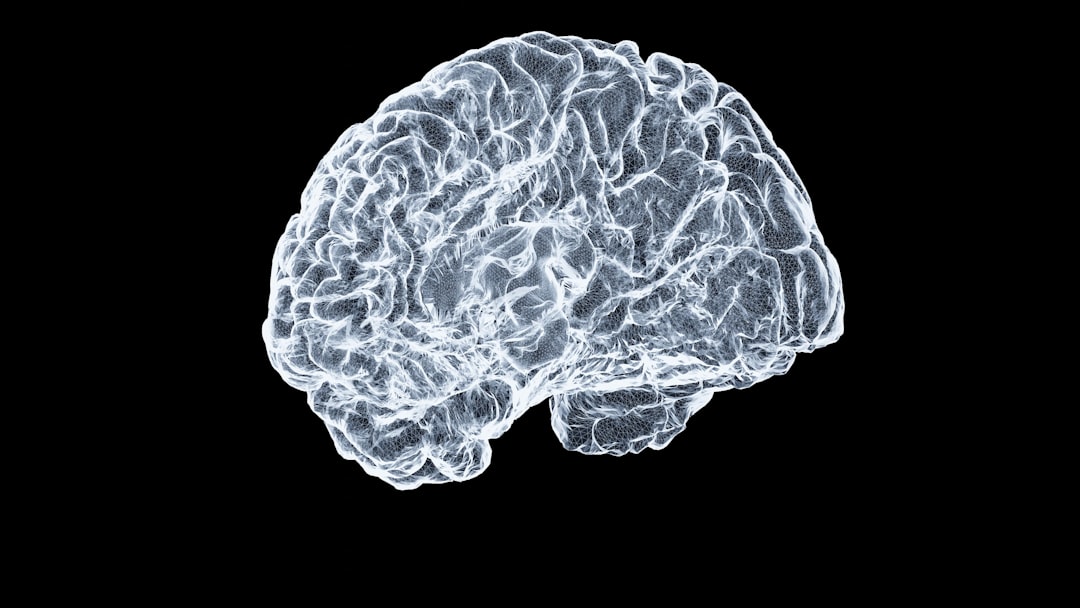
In humans, long-term memories can be accessed in less than a second in a process involving communication between multiple brain regions. A wealth of evidence suggests that the only neural process that could instantiate such rapid and widespread memory recall is rapid electrochemical ion flow through the connectome. The implication is both exciting and humbling. While the connectome provides a morphological basis, certain biomolecules such as ion channels, ion pumps, and neurotransmitter receptors also play a crucial role in mediating memory recall and other cognitive functions – meaning the biomolecule-annotated connectome is the most meaningful metric for evaluating preservation quality.
Research by Zheng and Meister from 2024 reveals a striking paradox: our sensory systems can process information at gigabit levels, yet our behavior and conscious output run at only about 10 bits per second. Despite massive neural capacity, the mind communicates through an extremely narrow channel. That compression matters enormously for any brain-backup project. This finding may have direct implications for whole brain emulation, as mapping the brain’s structure alone may not be sufficient without understanding the functional limits that shape cognition and behavior.
Who Is Actually Doing This Work?
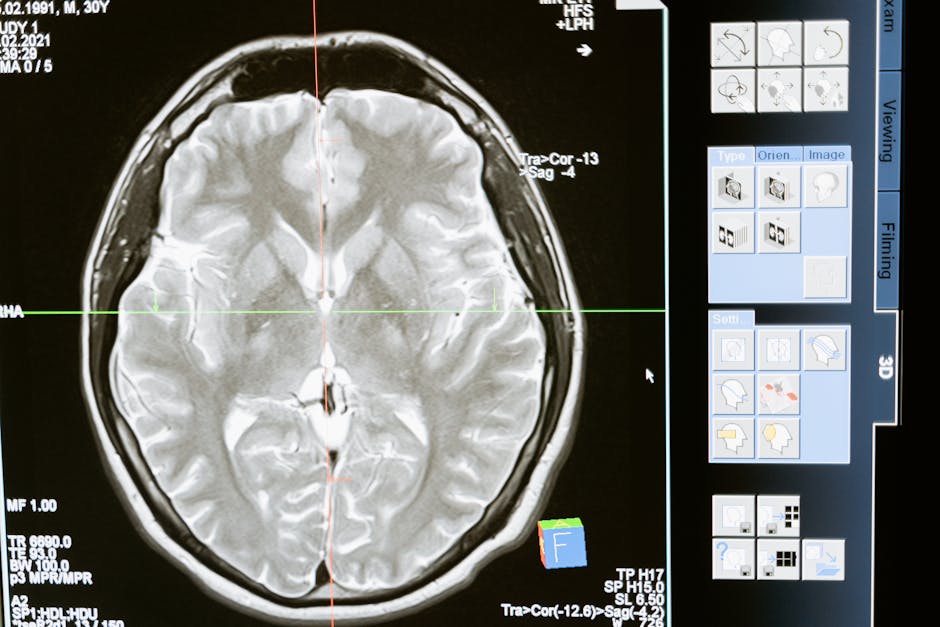
The Carboncopies Foundation is a nonprofit organization dedicated to advancing whole brain emulation and the neurotechnologies needed to make it possible, with a mission to enable the scientific understanding and technological development required to emulate entire brains – with profound implications for medicine, neuroscience, and humanity’s long-term future. They describe themselves as the only organization focused on the entire pipeline. The foundation’s work spans from data acquisition and modeling, to validation, ethics, and human impact – making it uniquely positioned as an end-to-end WBE research organization.
The Carboncopies Foundation leads research and development toward whole brain emulation, a technology to preserve and restore brain function. Alongside such nonprofits, companies operating in the brain-computer interface space are accelerating related work. In 2024, Neuralink reported its first human implant, though scientists noted the work is primarily aimed at assisting people with paralysis and that major challenges remain for long-term safety and performance. These are stepping stones, not endpoints.
The Identity Problem Nobody Has Solved

Every time a brain is scanned and uploaded to a digital environment, it creates a copy, not a transfer – meaning there will always be the original person left behind. For a moment, the human and its copy would be identical; then they would diverge. This is not a small philosophical footnote. It goes to the heart of whether brain backup is actually survival or simply the creation of a very convincing stranger.
The philosophical underpinnings challenge our concepts of self and continuity of identity, pushing us to consider whether a digital copy provides continuity of consciousness or simply an identical starting point. The technology also raises significant ethical dilemmas regarding the right to copy or delete a digital consciousness and the potential for misuse. It also prompts a reevaluation of legal and societal frameworks to address the rights, responsibilities, and protections for digital minds, potentially redefining personhood in the digital age.
A 2025 expert survey found that most participants favored the hypothesis that digital minds are possible in principle, with the median probability estimate sitting at 90%. Believing it is possible in principle, though, is very different from knowing what it would mean to be that digital mind.
How Far Away Are We, Really?
We need to understand the brain far better than we currently do, and that seems several decades to centuries away, according to a careful 2025 analysis. That is the sobering framing most working researchers apply privately, even as public enthusiasm runs ahead of the science. Whole brain emulation remains a speculative and long-term goal, and while research in brain-computer interfaces, neural modeling, and artificial intelligence contributes to understanding and capabilities, actual whole brain emulation is not yet within reach.
While researchers have achieved excellent ultrastructural preservation in selected samples taken from preserved brains, they have not yet been able to determine the conditions under which synaptic connectivity can be reliably preserved throughout all major regions across an entire human brain – a long-term research goal requiring extensive validation studies using ultrastructural imaging techniques. The gap between preserving a sample and preserving a self is still wide.
Still, the trajectory is unmistakable. From the first full fruit fly connectome published in 2024, to laser-powered imaging that maps brain tissue hundreds of times faster than before, to preservation chemistry refined over years of prize-driven competition – the infrastructure for a genuine brain-backup science is assembling piece by piece. Whether it arrives in time for any of us is a separate question. The more immediate fact is that the work is no longer speculative theater. It is being done in real labs, by real researchers, with real results. That alone marks a meaningful shift.