

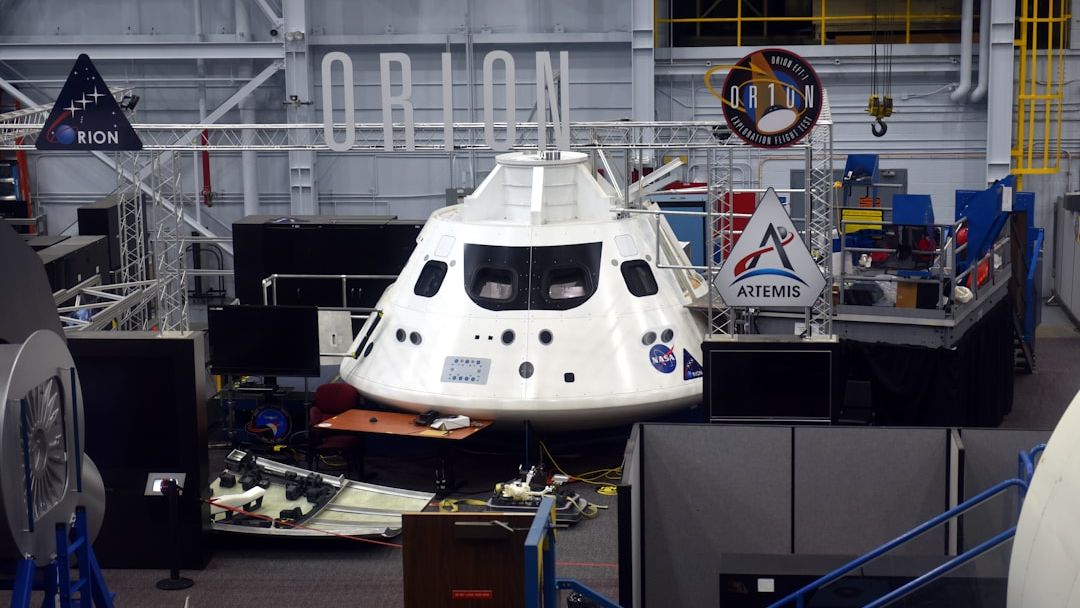
Artemis 2 moon astronauts snap gorgeous shot of swirling stars | Space photo of the day for May 18, 2026 – Image for illustrative purposes only (Image credits: Unsplash)
The Artemis 2 mission continues to deliver striking images even before its planned lunar flyby. Astronauts inside the Orion capsule recently recorded a view of stars arranged in a swirling pattern against the dark backdrop of space. The photograph underscores how the spacecraft’s position offers perspectives unavailable from Earth or low orbit. Such images help illustrate the environment crews will encounter during extended deep-space travel.
Why the Image Stands Out
The swirling appearance of the stars results from the capsule’s orientation and the long exposure needed to capture faint light in the vacuum of space. This effect turns familiar points of light into graceful arcs that trace the motion of the spacecraft itself. Observers on the ground rarely see this kind of continuous stellar motion because Earth’s atmosphere and rotation interfere with similar long exposures.
Artemis 2 marks the first time a crew has traveled beyond low Earth orbit since the Apollo era. The photograph therefore serves as an early demonstration of the visual opportunities that await during the mission’s lunar trajectory. Mission planners note that these kinds of records also provide practical data on how the spacecraft’s systems perform under real flight conditions.
Context Within the Artemis Program
Artemis 2 builds directly on the successful uncrewed Artemis 1 flight that tested the Orion capsule and Space Launch System rocket. The current crewed test flight will loop around the Moon without landing, gathering experience for later landings. Images like the recent star-field capture add public visibility to the technical progress already achieved.
Engineers continue to review telemetry from the capsule alongside these visual records. The combination of photographic evidence and instrument readings helps confirm that the vehicle maintains stable pointing and thermal control far from Earth. These checks remain essential as the program prepares for more complex operations in the years ahead.
What the View Reveals About Deep-Space Conditions
From Orion’s vantage point, the absence of atmospheric distortion allows stars to appear sharper than they do from the ground. The swirling pattern also reflects the capsule’s slow rotation relative to the star field, a motion that would be imperceptible to the crew inside. Such details offer a reminder that even routine navigation in deep space produces distinctive visual signatures.
Future Artemis crews will rely on similar observations for both scientific return and operational awareness. The current image demonstrates that the spacecraft’s windows and camera systems can deliver high-quality results under flight conditions. This capability supports the broader goal of sustained human presence beyond low Earth orbit.
Looking Ahead
The Artemis 2 photograph arrives at a moment when public interest in lunar return missions remains high. It provides a tangible preview of the sights that will accompany the first crewed lunar flyby in more than fifty years. Continued releases of mission imagery are expected to maintain that connection between technical milestones and public engagement.
As the program advances, each new visual record contributes to a growing archive of human experience in deep space. The recent star-field image stands as one early chapter in that record.