

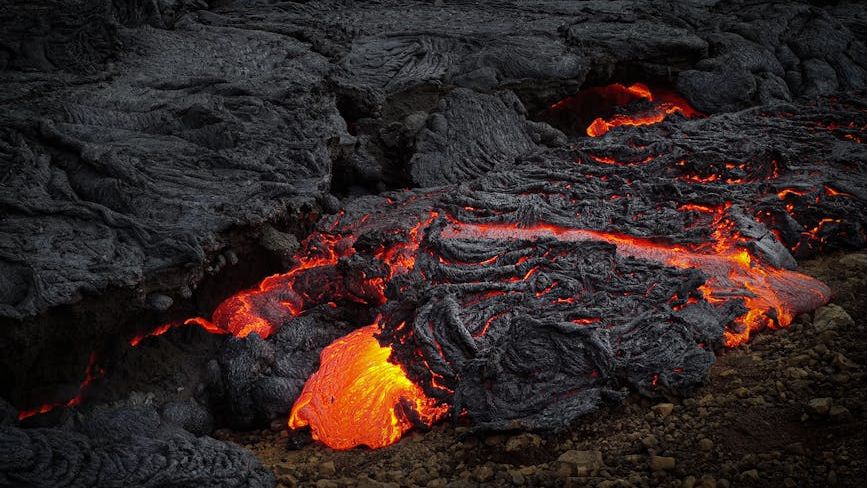
Scientists Find Thousands of Cubic Kilometers of Magma Hiding Beneath Tuscany – Image for illustrative purposes only (Image credits: Pexels)
Tuscany has drawn on Earth’s internal heat for generations, powering the world’s first geothermal plant in the Larderello region. Yet the precise origin of that steady warmth has remained uncertain in an area with almost no surface volcanoes. Fresh geophysical data now point to a large body of molten rock several kilometers below the surface, offering a clearer picture of the forces at work.
Mapping the Subsurface With Background Noise
Researchers turned to ambient noise tomography, a method that records faint vibrations traveling through the ground. These signals come from everyday sources such as ocean waves and wind rather than earthquakes. By placing more than sixty seismometers across Tuscany and nearby islands, the team built a detailed image of rock properties at depth.
The resulting map showed a distinct zone where seismic waves slowed noticeably. Such slowing occurs when rock contains partial melt, because the liquid weakens the material’s ability to transmit shear forces. The pattern matched expectations for a sizable magma body surrounded by cooler, more solid rock.
Dimensions and Composition of the Reservoir
The newly identified reservoir lies roughly ten kilometers beneath Larderello and spans about twenty kilometers across. Volume estimates reach five thousand cubic kilometers, with the innermost portion containing up to eighty percent molten material. A surrounding zone of crystal-rich mush accounts for the remaining volume.
These figures place the body on a scale comparable to magma systems beneath well-known supervolcanoes. At the same time, the absence of recent eruptions in Tuscany shows that size alone does not determine immediate risk. The magma appears to have accumulated gradually over long periods, consistent with zircon crystals of varying ages found in local rocks.
Why Heat Reaches the Surface Without Explosive Events
The reservoir supplies the heat that drives Larderello’s steam vents and power production. Several factors appear to keep the system from erupting. The magma may contain less dissolved water than typical explosive systems, reducing its tendency to expand violently when pressure drops. Slower rates of magma supply and the local crustal structure may also help trap the melt in place.
Geologists note that these conditions can persist for hundreds of thousands of years. Dating of crystals indicates repeated movement of magma between different storage levels as it cools, further supporting a long-lived but stable arrangement.
Looking Ahead at Hidden Magma Systems
The Tuscany findings add weight to the idea that large magma bodies can exist beneath regions that show little volcanic activity at the surface. Similar hints emerged from earlier work in the Andes, and preliminary data suggest another reservoir may lie under nearby Mount Amiata. Further measurements will be needed to confirm its extent.
Continued use of ambient noise tomography could reveal comparable features elsewhere. Such work shifts attention from visible vents to the broader magmatic systems that sustain geothermal resources over geologic time. The current discovery underscores both the value of these hidden reservoirs for energy and the importance of monitoring them for any long-term changes.