

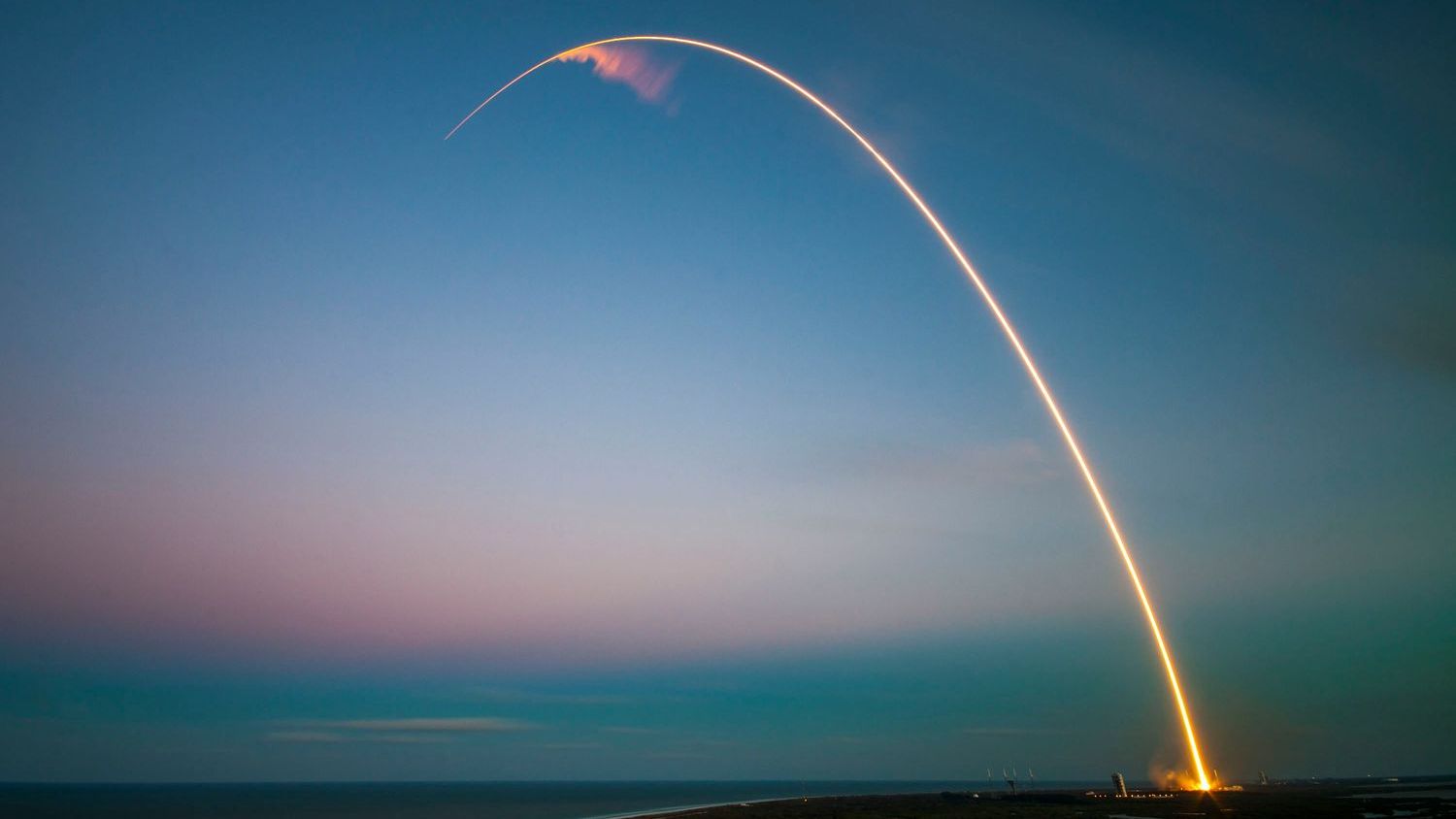
SMILE spacecraft launches to capture first X-ray views of Earth's magnetic shield – Image for illustrative purposes only (Image credits: Unsplash)
A joint European-Chinese spacecraft lifted off earlier this week on a mission that promises the first direct X-ray images of Earth’s magnetic shield. The probe, known as SMILE, will study how solar wind and sudden bursts of plasma from the sun interact with the invisible barrier that protects our planet. Researchers expect the data to improve forecasts of space weather events that can disrupt satellites, power grids, and communications.
The Sun’s Invisible Assault on Earth
Solar wind flows constantly outward from the sun, while occasional coronal mass ejections release massive clouds of charged particles. When these streams reach Earth, they press against the magnetosphere, the region dominated by our planet’s magnetic field. Most of the time the shield holds, but strong events can compress it and trigger geomagnetic storms. Scientists have long tracked these interactions with ground instruments and satellites that measure magnetic fields or charged particles. Yet no spacecraft has ever produced X-ray pictures of the boundary itself, leaving key details about its shape and response hidden from view.
How the SMILE Mission Will Work
The spacecraft carries two main instruments designed to capture soft X-rays emitted when solar wind particles collide with neutral atoms in Earth’s outer atmosphere. One instrument will map the overall structure of the magnetosphere, while the other will monitor changes in real time. SMILE will orbit in a highly elliptical path that takes it far from Earth for extended observations and then closer for data downlink. Mission planners chose this orbit to balance continuous viewing time with reliable contact to ground stations. Early operations will focus on calibration before the probe begins its primary science phase.
What Remains Unknown and Why It Matters
Even with SMILE’s new capability, researchers acknowledge that some aspects of magnetospheric behavior will stay uncertain until more data arrive. The exact timing and location of X-ray brightening during storms, for example, still require confirmation from multiple events. Improved understanding could nevertheless help refine models used by space-weather centers around the world. Those models currently rely on indirect measurements and simulations that sometimes diverge from observed effects on technology.
- First X-ray imaging of the magnetosphere boundary
- Focus on solar wind and plasma interactions
- Potential to sharpen space-weather predictions
- Joint European-Chinese development and operations
Looking Ahead After Launch
Teams on the ground are now checking the spacecraft’s systems and preparing for the first science observations. If all goes according to plan, SMILE will deliver its initial X-ray maps within months and continue collecting data for several years. The results should give scientists a clearer picture of how Earth’s magnetic shield responds to the sun, information that ultimately supports efforts to protect the technologies society depends on every day.