

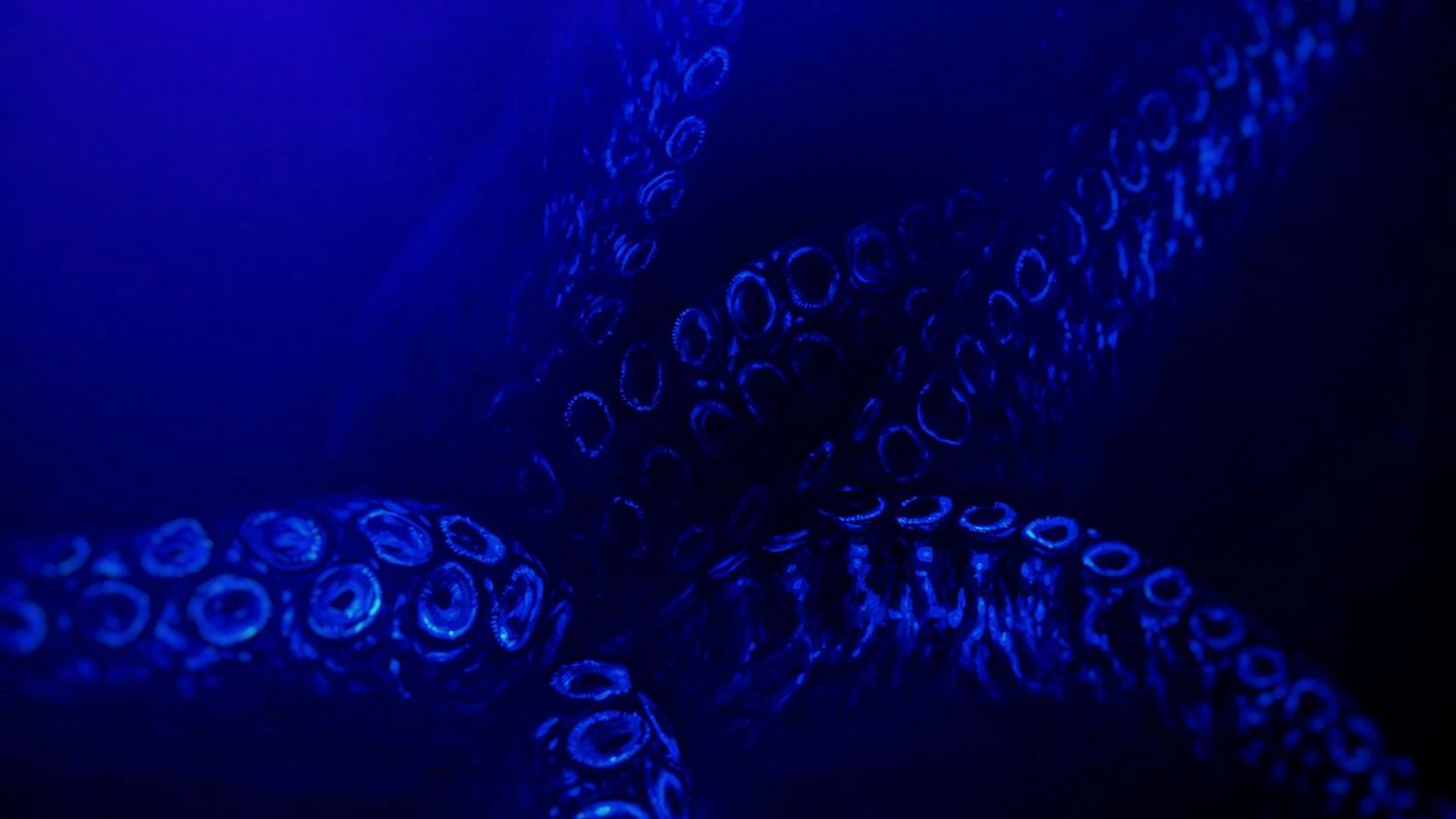
Octopuses have nine brains, three hearts, and blue copper-based blood, with roughly two-thirds of their neurons spread through their arms, allowing each arm to taste, move, and react with a startling degree of local control – Image for illustrative purposes only (Image credits: Unsplash)
Octopuses challenge every familiar idea about how a body should work. Their nervous system spreads control across multiple centers rather than concentrating it in one place. This arrangement lets the animal explore, hunt, and escape in ways that feel almost mechanical yet deeply alive. The result is a creature whose intelligence sits as much in its limbs as in its head.
A Nervous System Built for Local Decisions
The common octopus carries roughly 500 million neurons in total. About two-thirds of those cells sit inside the eight arms instead of the central brain. Each arm therefore processes touch, taste, and movement on its own before any signal reaches the main cluster of cells wrapped around the esophagus. This layout gives the limbs a surprising degree of independence. When an arm encounters a crevice or a potential meal, it can sample the surface chemically, adjust its grip, and even change direction without waiting for orders from above. The central brain still sets broad goals such as locating prey or choosing a hiding spot, yet the arms handle the fine details of execution.
Why the Phrase “Nine Brains” Fits
Scientists sometimes describe the animal as having nine brains because one central mass is joined by eight large nerve cords, one per arm. These cords contain dense clusters of neurons that function like local processors. They manage reflexes and sensory data so quickly that the arm can react to stimulation in fractions of a second. The description is shorthand rather than literal. The arm cords do not hold separate personalities or memories. They simply reduce the workload on the central brain by solving routine problems at the point of contact. The whole animal remains a single coordinated individual whose behavior emerges from the constant exchange between central planning and peripheral action.
Three Hearts and Copper-Based Blood
Octopuses also rely on an unusual circulatory system. Two branchial hearts push blood through the gills to gather oxygen. A third systemic heart then distributes the oxygenated blood to the rest of the body. This three-pump arrangement supports the high energy demands of a soft, flexible body that must squeeze through tight spaces and jet through water when threatened. The blood itself appears blue because it uses haemocyanin, a copper-containing protein, to carry oxygen. In the cold, low-oxygen waters where many octopuses live, this chemistry works more efficiently than the iron-based haemoglobin found in human blood. When the blood is fully oxygenated it takes on a distinct blue tint; when oxygen levels drop it becomes paler.
What This Anatomy Reveals About Intelligence
The octopus body shows that complex behavior does not require a single command center. Instead, control is shared between a central brain that handles vision, learning, and overall strategy and peripheral networks that manage immediate sensory-motor tasks. This distributed model lets the animal solve problems in real time while its arms remain in constant contact with the environment. Engineers studying soft robotics have taken note. Traditional control systems struggle to coordinate a boneless limb that can bend, twist, and grip at every point along its length. The octopus solution – placing decision-making power inside the limb itself – offers a practical alternative that reduces the computational load on any central processor. – Central brain coordinates goals and memory
– Arm nerve cords handle local sensation and movement
– Suckers sample texture and chemistry directly
– Three hearts maintain circulation under high demand
– Copper-based blood suits cold, oxygen-poor water The same features that make octopuses effective hunters also make them useful models for designing machines that must operate in unpredictable spaces. Researchers continue to examine how the balance between central and local control produces flexible behavior without requiring ever-larger brains. That ongoing work keeps revealing new ways a nervous system can be organized to meet the demands of survival.