


It’s Not a Force Pulling on Light, It’s a Curve in the Road

The common misconception is that gravity reaches out and yanks light sideways, like a hand deflecting a ball. That picture is wrong. The bending of light happens because the mass of a massive object warps the fabric of spacetime around it.
Light does not travel in a perfectly straight line when it passes near massive objects. Instead, it follows the curvature of spacetime as predicted by general relativity. Think of it less like a force and more like a road that curves. Light simply follows the road.
This can be understood by recognizing that gravity bends space itself, and light propagates along the geodesic of that curved space. The light hasn’t changed its behavior at all. The geometry it moves through has.
What Einstein Saw That Newton Missed
According to Newton, if a light ray from a distant star passes near a massive body it would be bent a very small amount due to the object’s gravity. Newton’s framework treated light as a particle that gravity could tug on, using the same rules as any falling object.
The problem is that Newton’s theory only accounted for half the story. In Einstein’s general relativity, spacetime is curved near bodies possessing significant energy or mass. After factoring in the assumption of spacetime curvature, Einstein’s figure for light deflection virtually doubled to 1.75 arcseconds.
In Einstein’s theory, gravitational force was exchanged for spacetime curvature. He deduced that for light incoming from distant stars grazing the Sun’s surface, the deflection of the light trajectory would be 1.75 arcseconds. Newton’s theory of gravitation gave half of that value, 0.875 arcseconds. The doubled prediction was the smoking gun that set the two theories apart.
The 1919 Eclipse That Changed Everything
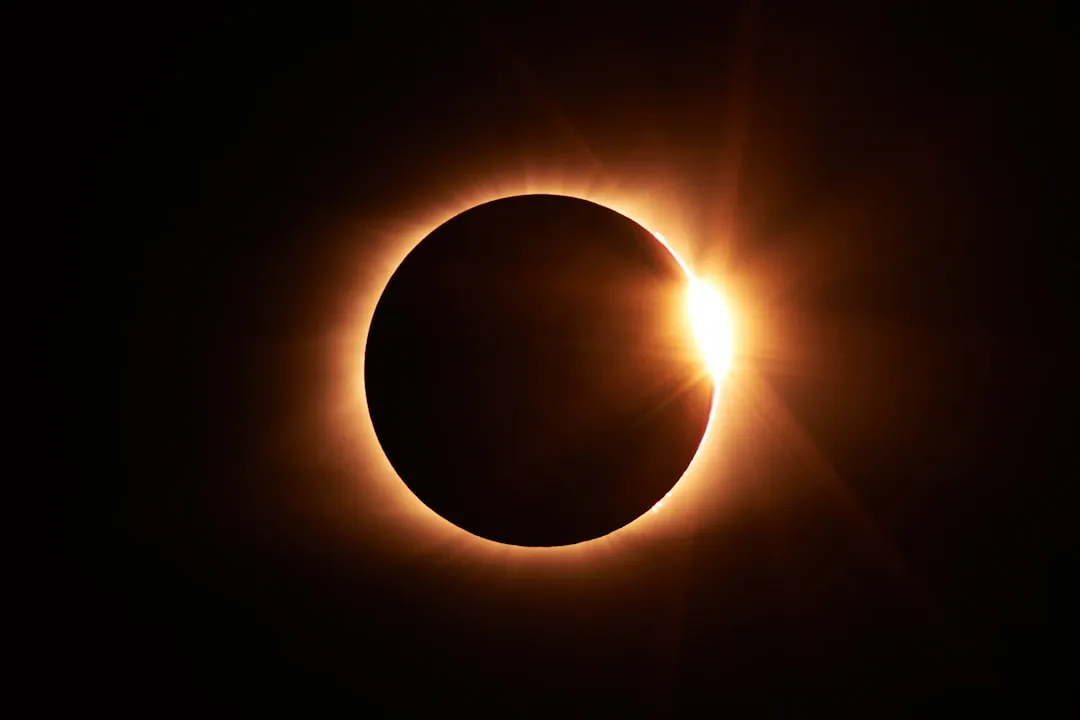
The expeditions arranged by Frank Dyson of the Royal Greenwich Observatory and Arthur Eddington of Cambridge University were designed to test Albert Einstein’s theory of general relativity, which had been published in 1915 and was still regarded with skepticism by many scientists.
On May 29, 1919, an eclipse of fundamental importance took place. Stars behind a Sun hidden by the Moon could be seen due to the deflection of light rays that passed in the gravitational field of the Sun. This was the first direct observational test of the theory.
It was the determination that light bending matched the General Relativity prediction, derived from observations during the solar eclipse on 29 May 1919, made at Sobral, Brazil, and Principe, West Africa, and reported on 6 November 1919, which established wide support for the General Theory and made Einstein a global household name.
Photons Have No Mass, So Why Do They Still Bend?
This is arguably the most counterintuitive piece of the whole puzzle. Gravity, in the old Newtonian picture, acts on mass. Light has no rest mass. So the question is a fair one.
Since light carries energy, consisting of photons, it must also carry inertia, according to the equivalence between these two physical properties. By the equivalence principle of gravitation, light carries an effective gravitational mass and is thus affected by the distribution of matter and energy, hence by the geometry of spacetime.
Gravity is not just a force that acts between objects with mass, but a consequence of how space and time are curved by the presence of energy and momentum. Light has energy and momentum, so it also contributes to the curvature of spacetime, and follows the curvature of spacetime. No mass required.
Geodesics: The Shortest Path Through a Warped Universe
To understand how light bends by gravity, we need to use the concept of geodesics. Geodesics are the shortest paths between two points in a curved spacetime. On a flat surface, that path is just a straight line. Near a massive object, the surface itself is warped.
When light passes near a massive object, such as a star or a black hole, it encounters a region of spacetime that is highly curved by the object’s gravity. The null geodesic that light follows is also bent by the curvature of spacetime, and thus light deviates from its original direction. The amount of deviation depends on how close light passes to the object, and how massive the object is.
The deflection of light by gravity is one of the most striking predictions of general relativity. In a static, spherically symmetric spacetime, null geodesics capture the path of light rays in the curved geometry. Every photon that passes a massive body is quietly tracing the shape of the universe itself.
Gravitational Lensing: When the Universe Plays Telescope
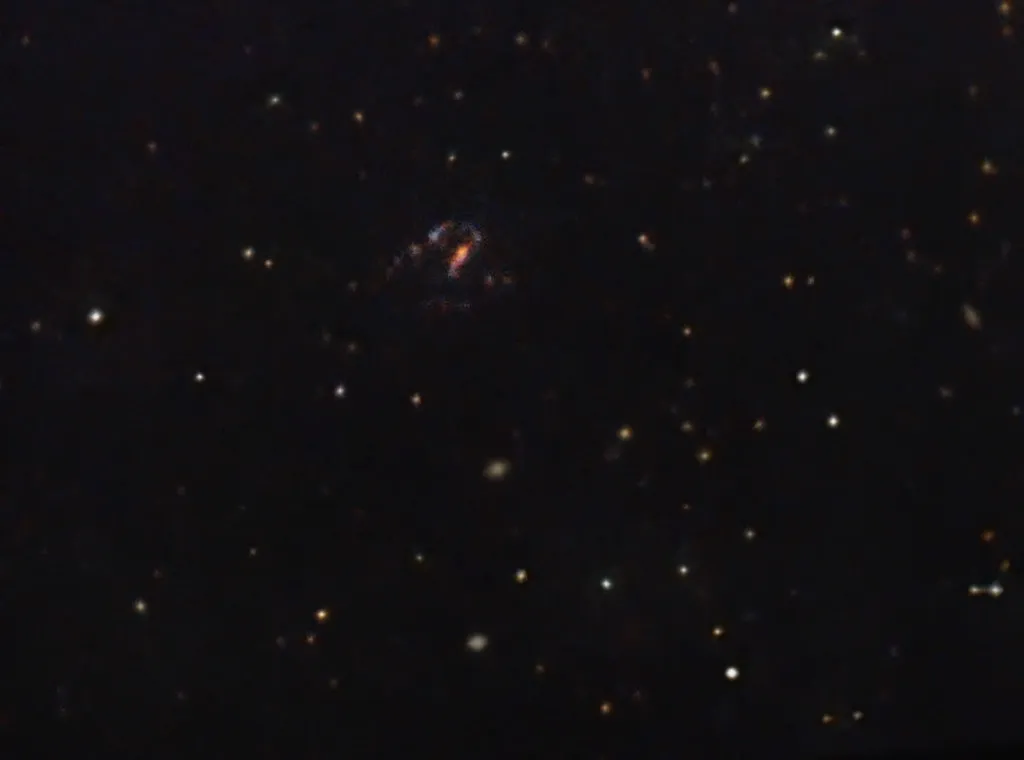
The bending of light by gravity can lead to the phenomenon of gravitational lensing, where multiple images of the same distant astronomical object are visible in the sky. This happens when a massive foreground object aligns closely enough with a more distant source.
According to Einstein’s Theory of General Relativity, light from a distant source galaxy travels to the observer along geodesics in spacetime. If a foreground galaxy is closely aligned with such a source, its gravitational potential distorts the intervening spacetime, deflecting the light to form multiple images or extended arcs.
Gravitational lensing is sensitive to the presence of all foreground matter, regardless of whether this matter is in the form of visible baryonic matter or dark matter. Gravitational lensing is therefore one of the few observational techniques that can map the distribution of dark matter, which drives the growth of large-scale structures in the universe and dominates the cosmic matter budget.
Euclid and the Modern Hunt for Lenses
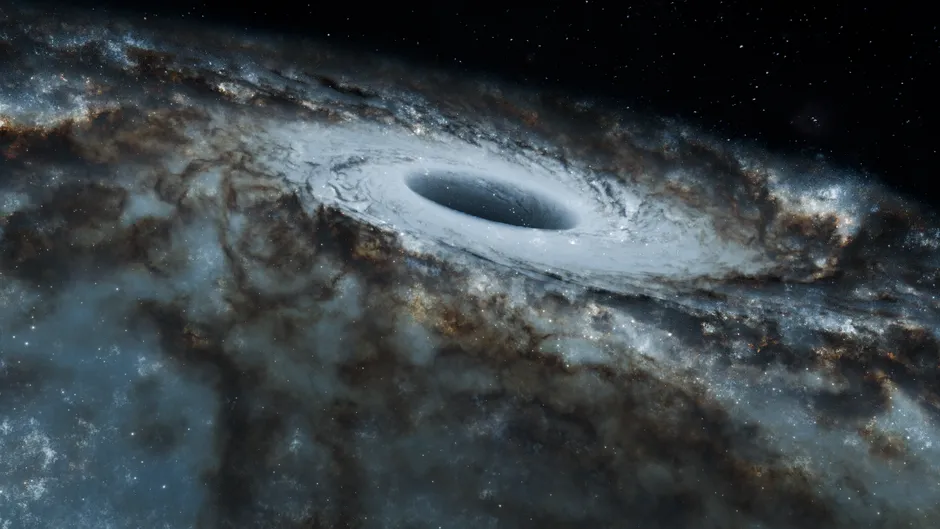
We are in a golden era for gravitational lensing research. The technology to find and catalog these cosmic magnifying glasses has improved dramatically over the past few years.
ESA’s Euclid telescope is revolutionizing the studies of strong gravitational lensing by providing very sensitive imaging over large swaths of the sky in unprecedented detail. This is exactly what is needed to identify rare gravitational lenses. In March 2025, almost 500 galaxy-galaxy strong lenses were found in the first Quick Data Release, nestled in just the first 0.04% of Euclid data, most of them previously unknown.
The all-sky survey is expected to find 170,000 new lensing systems, which are expected to greatly enhance studies of dark matter and dark energy, and to constrain the cosmological parameters better. That is a staggering number, and it will keep researchers busy for decades.
How the Mass of the Bending Object Changes Everything
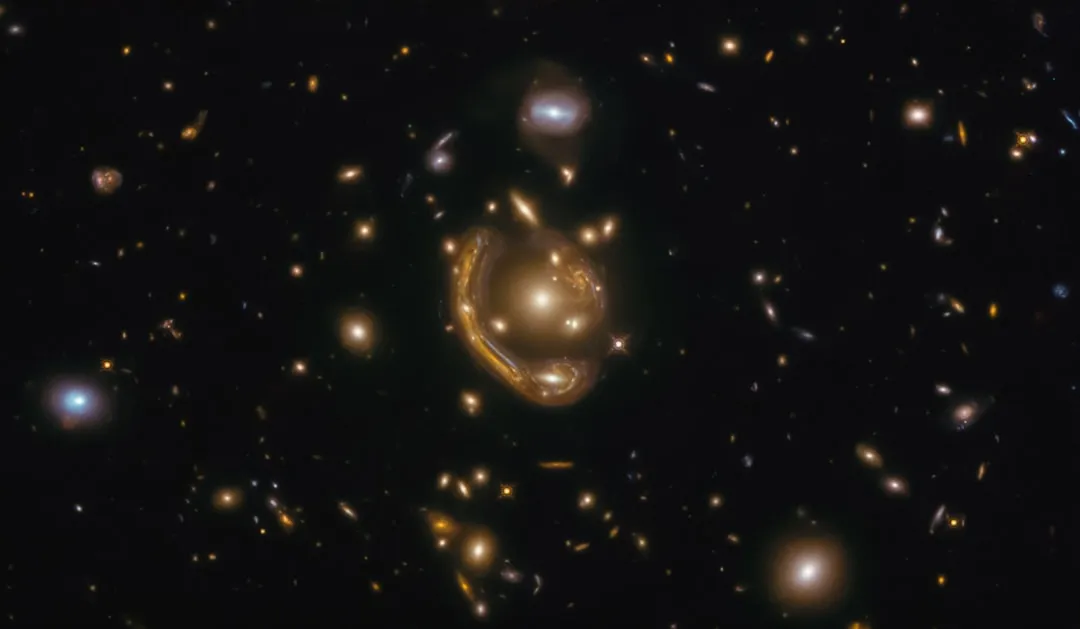
Not all gravitational lenses are equal. A single star bends light by a tiny, measurable fraction of an arcsecond. A galaxy cluster can produce dramatic arcs and rings visible across billions of light-years.
When a massive object, like a galaxy cluster or even a single massive star, bends the path of light coming from a distant source, the scale of that bending varies dramatically with mass. The relationship between mass and deflection is direct and predictable within general relativity.
This bending of light by galaxies persists over much larger scales than originally expected. Research published in 2024 found that the effect reaches out further than standard models had anticipated, which has opened new questions about how mass is distributed in the universe on the largest scales.
Black Holes: Where Light Bending Becomes Extreme
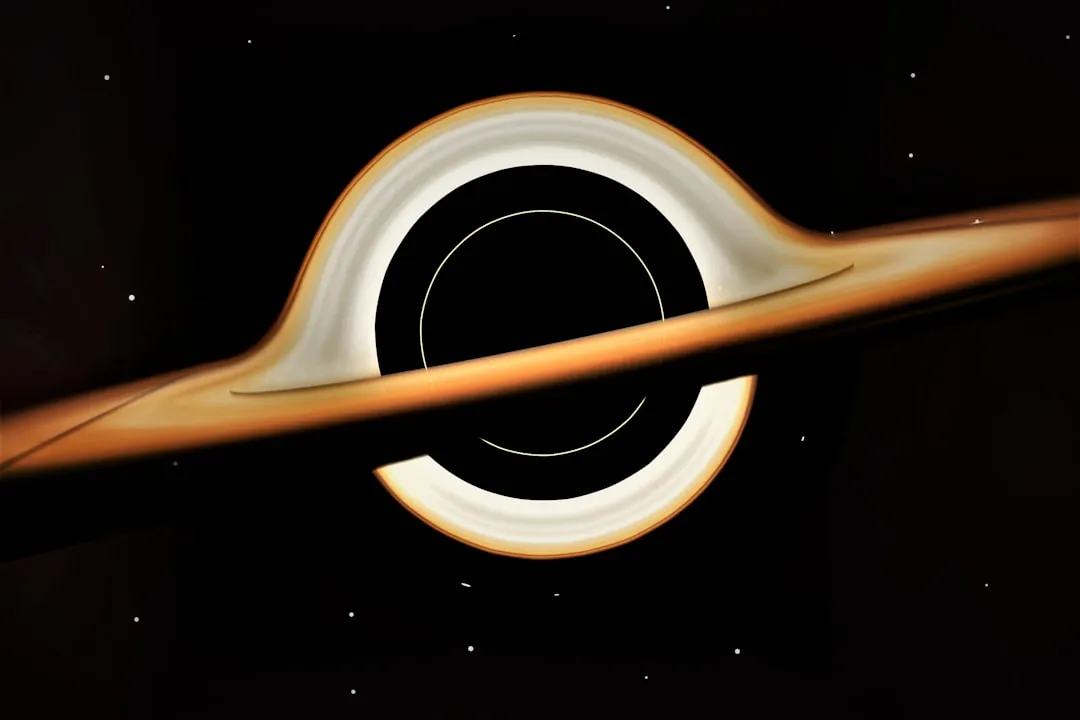
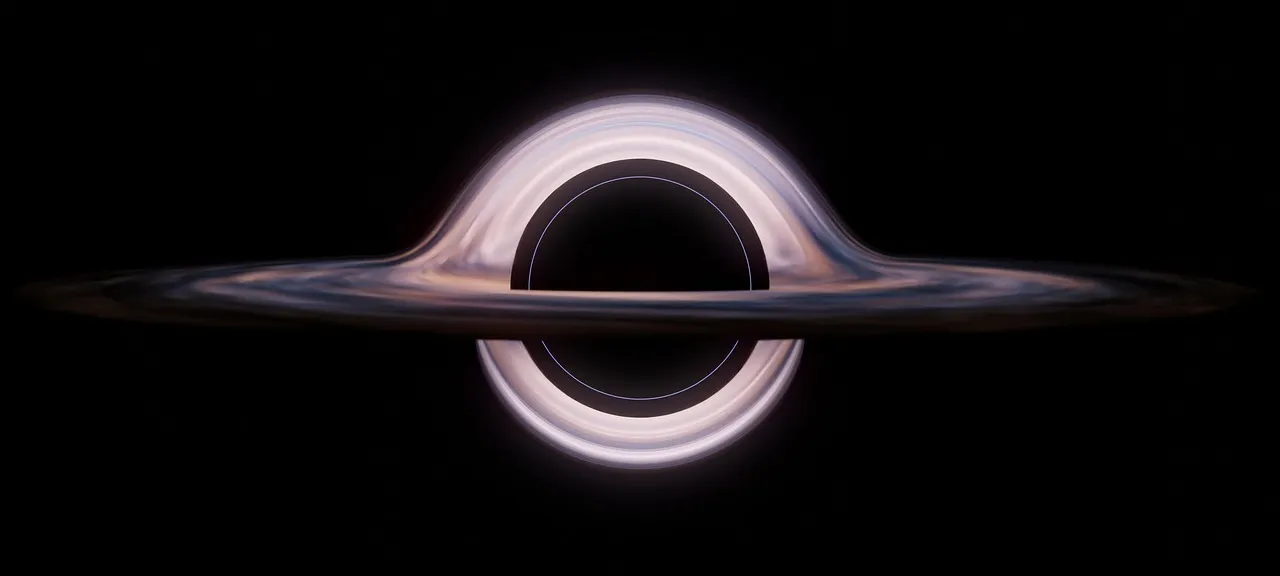
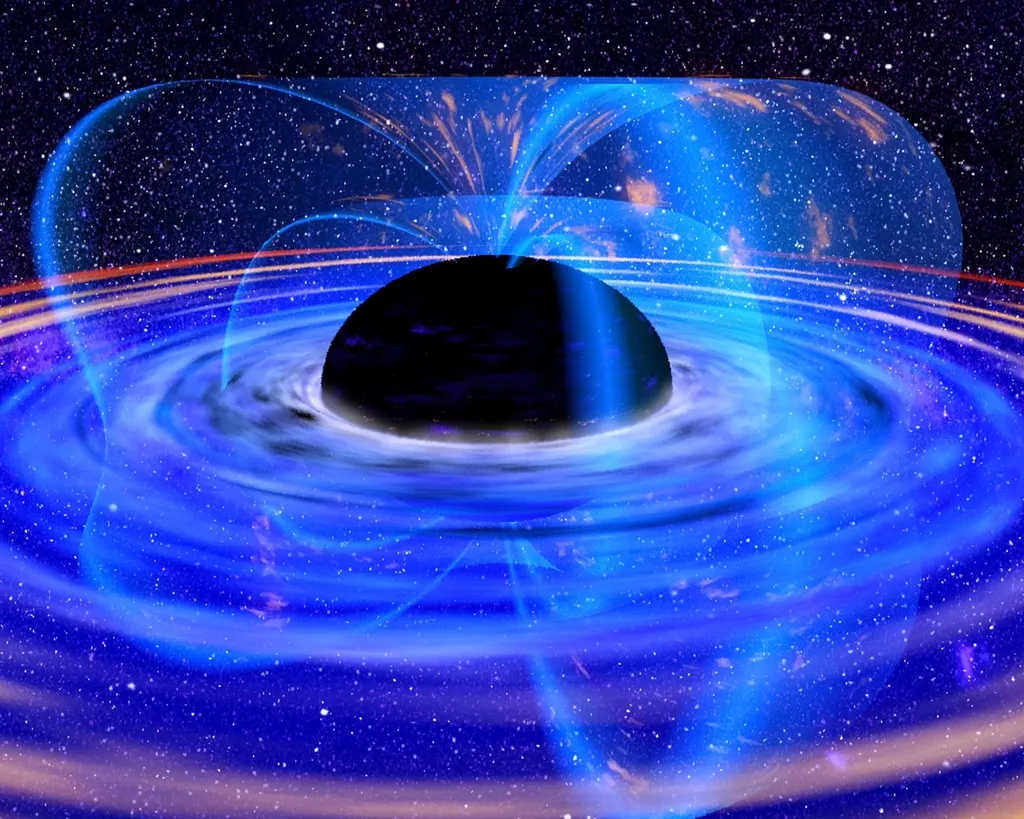
General relativity points towards the existence of black holes, regions of space in which space and time are distorted in such a way that nothing, not even light, can escape, as an end-state for massive stars. Near a black hole, light bending doesn’t just nudge a photon off course. It can trap it entirely.
One of the key predictions of general relativity, the bending of light around massive, compact objects, has been observed for a supermassive black hole in the galaxy I Zwicky 1. This kind of direct observational confirmation keeps stacking up as telescopes improve.
There is even a theoretical distance from a black hole called the photon sphere, where light can orbit in a circle. At that radius, the curvature of spacetime is so pronounced that a photon traveling tangentially gets continuously redirected back on itself. It is one of the more disorienting predictions in all of physics.
Why General Relativity Still Holds, and Where Questions Remain
Over more than a century, every precision test of gravitational light bending has confirmed general relativity’s predictions. Researchers publishing in the Monthly Notices of the Royal Astronomical Society in late 2024 developed an accurate equation for light deflection based on Einstein’s 1916 deflection angle of 1.75 arcseconds within the framework of general relativity, which was experimentally confirmed by Eddington from the May 1919 solar eclipse expeditions and subsequent measurements.
Unanswered questions remain, the most fundamental being how general relativity can be reconciled with the laws of quantum physics to produce a complete and self-consistent theory of quantum gravity. The theory works brilliantly at cosmic scales, but its relationship with quantum mechanics is still unresolved.
Work from Aalto University researchers published in 2025 explored light deflection within a unified gravity framework, calculating an extension of the Standard Model to include gravity, using dynamical equations to calculate gravitational deflection of light near astrophysical objects without needing to use a curved metric. The conversation about the deep nature of spacetime and gravity is far from over.
The Takeaway
Gravity bends light not because it pulls on photons like a magnet pulls on metal, but because mass reshapes the very geometry that light moves through. The road curves, and light follows it faithfully. That single insight, formalized by Einstein in 1915 and confirmed by starlight during a solar eclipse in 1919, restructured our entire understanding of space, time, and matter.
Today, instruments like the Euclid space telescope are turning that insight into a precision tool for mapping dark matter and probing the large-scale structure of the universe. The deeper we look, the more useful the bent path of a photon turns out to be.
There is something almost elegant about it. Light, the fastest thing in the universe, still has to follow the shape of the road. And the road, it turns out, is written in mass.
AI Disclaimer: This article was created with the assistance of AI tools and reviewed by a human editor.