

Somewhere beneath the Pacific Ocean, just off the tip of Japan’s most remote island, there is a stone structure that has puzzled scientists, obsessed divers, and quietly haunted the world of archaeology for nearly four decades. It rises from the seafloor like a forgotten monument to a civilization no history book has ever named. The more you look at it, the more uncomfortable questions start piling up.
Is it a trick of geology, or the greatest discovery in human history? Let’s dive in.
The Accidental Discovery That Shook the Scientific World
In 1986, while seeking to observe the sharks, Kihachiro Aratake, a director of the Yonaguni-Cho Tourism Association, noticed some seabed formations resembling architectural structures. He wasn’t looking for ancient ruins. He was shark-watching, which honestly makes the whole story feel even more surreal.
What he found wasn’t just a rocky outcrop – it looked deliberate, almost architectural. Word travelled fast. Shortly thereafter, a group of scientists directed by Masaaki Kimura of the University of the Ryukyus visited the formations.
At a depth of about 25 meters (82 feet), divers encountered something far more mysterious: a massive, terraced structure that looks suspiciously like a man-made pyramid. Known as the “Yonaguni Monument,” this enigmatic formation of sandstone and mudstone has sparked a fierce scientific debate since its discovery by a local diver in 1986.
What Exactly Are We Looking At Down There?

Spanning roughly 150 meters long, 40 meters wide, and 27 meters tall, the monument towers beneath the sea like a sunken pyramid. Broad surfaces rise in tiers, with right angles that defy typical underwater geology. Its scale and precision have sparked heated debate. Terraces appear to step upward like platforms or stairs, reinforcing the sense of design.
It covers around 45,000 square meters. To put that into perspective, that is roughly the size of six football fields sitting on the ocean floor. That is not a small rock.
The process of mapping revealed many surprising findings including what appears to be a massive arch or gateway of huge stone blocks which appeared to fit together perfectly, right angled joins, carvings and what appeared to be stairways, paved streets and crossroads and grand staircases leading to plazas surrounded by pairs of towering features resembling pylons.
The 12,000-Year-Old Question Nobody Can Answer
Sitting just 82 feet below sea level near the Ryukyu Islands of Japan, this giant structure with sharp-angled steps stands roughly 90 feet tall and appears to be made entirely of stone. Tests of the stone show it to be over 10,000 years old, meaning that if a civilization built this pyramid by hand, it would have taken place before this region sank under water – more than 12,000 years ago.
That would place it further back in history than most other ancient structures by several thousand years, including the Egyptian pyramids and Stonehenge. Honestly, that detail deserves a moment to sit with.
It is known that sea levels have risen substantially, by a hundred meters or more, since the end of the last glacial period about 12,000 years ago. The rising sea levels at the end of the last Ice Age, around 10,000 years ago, could explain why the structure is now underwater.
Professor Kimura and the Case for a Lost City
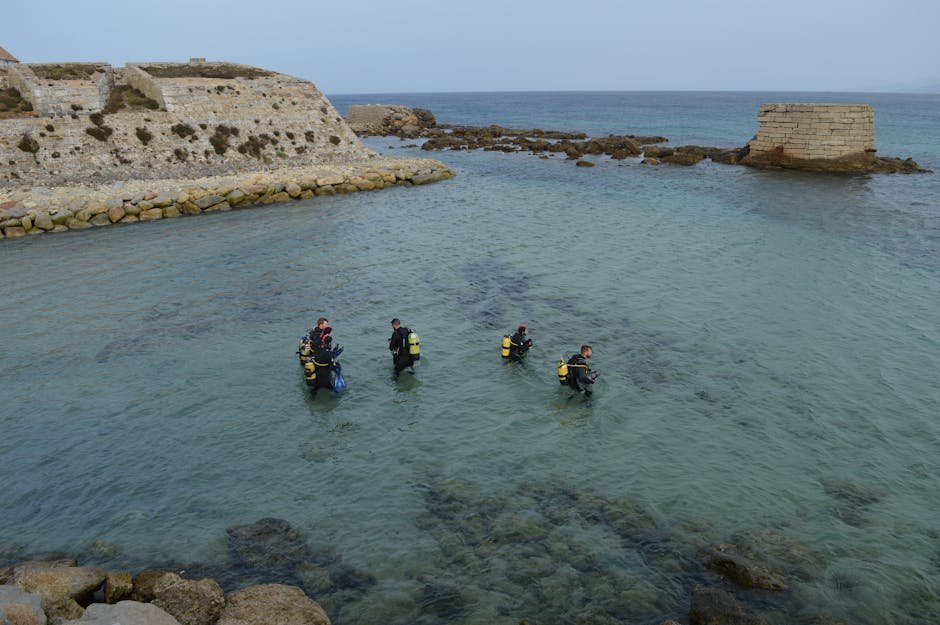
Masaaki Kimura, a marine geologist at the University of the Ryukyus in Japan, has been diving at the site to measure and map its formations for more than 15 years. Each time he returns to the dive boat, Kimura said, he is more convinced than ever that below him rest the remains of a 5,000-year-old city.
Kimura said he has identified ten structures off Yonaguni and a further five related structures off the main island of Okinawa. In total the ruins cover an area spanning 984 feet by 492 feet (300 meters by 150 meters). The structures include the ruins of a castle, a triumphal arch, five temples, and at least one large stadium, all of which are connected by roads and water channels and are partly shielded by what could be huge retaining walls.
Kimura believes the ruins date back to at least 5,000 years, based on the dates of stalactites found inside underwater caves that he says sank with the city. Structures similar to the ruins sitting on the nearby coast have yielded charcoal dated to 1,600 years ago – a possible indication of ancient human inhabitants, Kimura added.
The Skeptics Fire Back
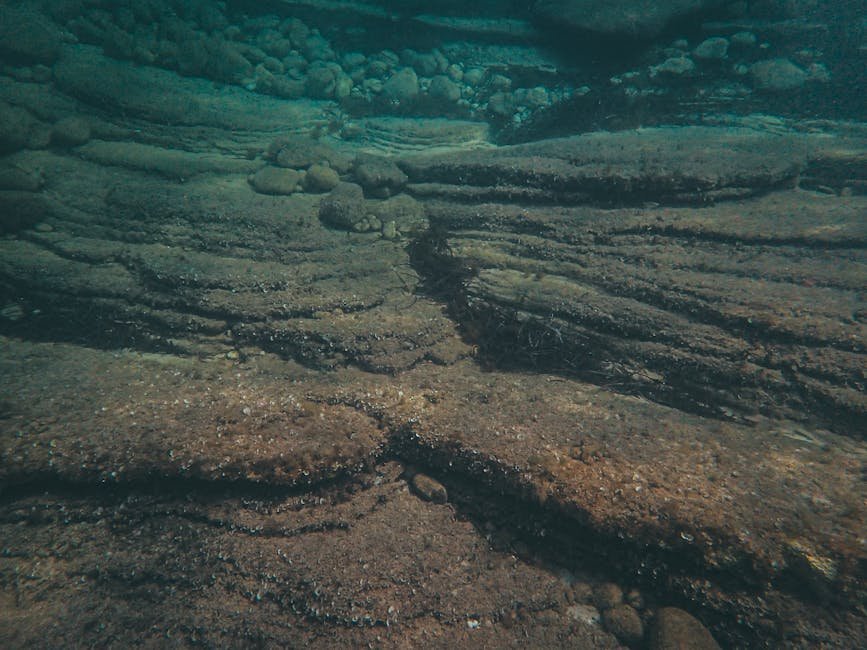
Geologist Robert M. Schoch believes that the formation is most likely natural. He didn’t just theorize from a desk either. He dove the site repeatedly and came out unconvinced. After carefully studying the Yonaguni Monument, Schoch reported that he does not believe it is an artificial, human-made structure. It is indeed an absolutely incredible structure, but he concluded that, based on all of the evidence, it is primarily a natural structure.
The rocks of the formation are criss-crossed by numerous sets of parallel, vertically oriented joints in the rock. These joints are natural, parallel fractures by which the rectangular formations seen in the area likely formed. Yonaguni lies in an earthquake-prone region; such earthquakes tend to fracture the rocks in a regular manner.
Schoch suggests that holes in the rock, which Kimura believes were used to support posts, were merely created by underwater eddies scouring at depressions. Lines of smaller holes were formed by marine creatures exploiting a seam in the rock, he said.
The 2024 Conference That Tried to Settle the Debate

Recent findings, particularly a study presented by Hironobu Suga and his team at the 2024 Association of Japanese Geographers Spring Academic Conference, challenge speculations about human origin. According to their research, the formations are more likely the result of natural geological processes, offering new insights into the structure’s origins.
According to the findings of Suga’s team, through underwater observations, researchers were able to observe erosion processes, such as bedrock detachment, abrasion, and gravel generation, as well as the ongoing formation of erosional formations, such as potholes of various shapes and sizes.
The team noted that “while these formations were once thought to be artificial, no archaeological remains or traces of human activity have been found.” This absence of evidence for human intervention strongly suggests that the monument is a product of geological forces rather than human hands. Still, not everyone in the room was persuaded.
The Jomon Connection: Japan’s Forgotten Ancient People
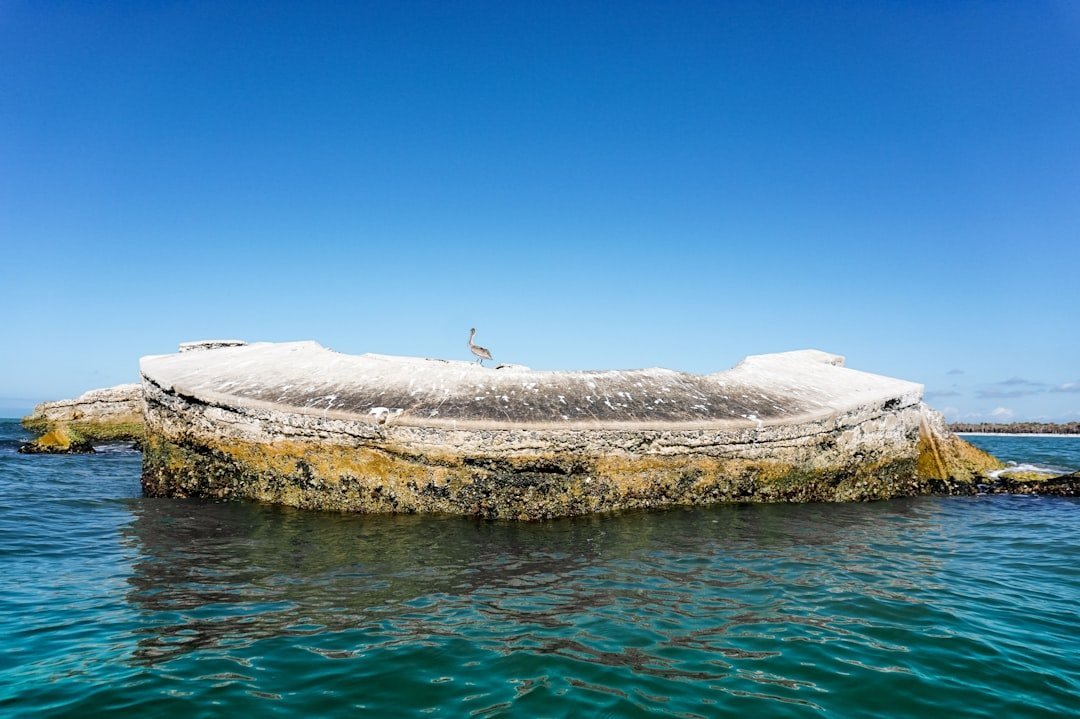
If the structures at Yonaguni are indeed the remains of an ancient city, one possibility is the prehistoric inhabitants of Japan called the Jomon, who existed from about 12,000 BC to around 300 BC and who developed a sophisticated culture. The Jomon is often compared to pre-Columbian cultures of Pacific Northwest North America because in both regions cultural complexity developed within a primarily hunting-gathering context.
Some theorists believe that the Yonaguni Monument could be connected to the Jomon period, which dates back as far as 12,000 years. The Jomon people were known for their advanced pottery and intricate societal structures, so it’s not out of the realm of possibility that they could have had the technological know-how to build large stone structures.
Although their society was considered ‘primitive’ by the standards of later times, they were the first culture on Earth to develop pottery, according to mainstream theorists. Examples of this technology date back to the time when many of the submerged structures of Yonaguni would have been above water, and if they were in fact built by human hands, this would have been the time that their construction was underway.
Carvings, Faces, and Animal Sculptures Underwater

Kimura says “it’s very difficult to explain away their origin as being purely natural, because of the vast amount of evidence of man’s influence on the structures.” For example, Kimura said, he has identified quarry marks in the stone, rudimentary characters etched onto carved faces, and rocks sculpted into the likenesses of animals.
Many of the structures associated with the Yonaguni Monument – two immense monoliths standing on edge side by side, a road at the base swept clear of all debris, round holes that may have held wooden pillars, a nearby rock carved into what from some angles resembles a human face – are cited as proof of a human hand in the making. In addition, rocks in the vicinity of the monument have been incised with lines that resemble primitive pictorial writing, and some human-made stone tools have been recovered from the area.
Here’s the thing though: Schoch doesn’t buy any of it. Schoch says he has seen what Kimura believes to be renderings of animals and human faces at the site, but argues that they “are just scratches on a rock that are natural.” Two experts, same dive site, two completely different worlds.
The Government’s Suspicious Silence
Neither the Japanese Agency for Cultural Affairs nor the government of Okinawa Prefecture recognise the features as important cultural artifacts, and neither government agency has carried out research or preservation work on the site. For a discovery of this potential magnitude, that is a striking non-response.
I think that silence tells its own story, though maybe not the conspiratorial one some people imagine. It could simply reflect institutional caution, a reluctance to officially legitimize something that the mainstream scientific community hasn’t resolved. The district of Yonaguni officially owns the formations, and tourists and researchers can freely dive at the site.
The location itself sits in a geopolitically sensitive corner of the world. It lies approximately 100 kilometres east of Taiwan. Whether that proximity has any bearing on the research vacuum is difficult to say for sure.
The Joe Rogan Debate and a New Wave of Attention
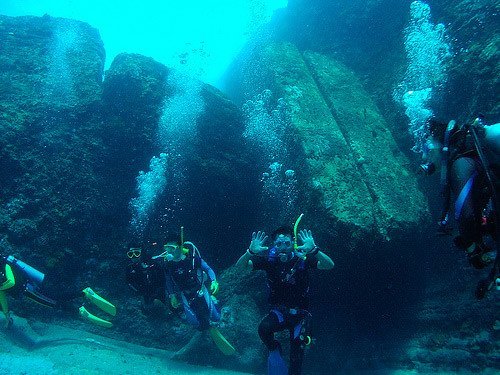
In April 2024, author Graham Hancock and archaeologist Flint Dibble reignited debate over the Yonaguni Monument’s origins during an episode of The Joe Rogan Experience. Hancock argued passionately for intelligent design based on features like carved steps and megaliths resembling human faces. Dibble countered by asserting that such formations could easily result from natural processes.
Supporters of artificial origin, such as Graham Hancock, also argue that while many of the features seen at Yonaguni are also seen in natural sandstone formations throughout the world, the concentration of so many peculiar formations in such a small area is highly unlikely. They also point to the relative absence of loose blocks on the flat areas of the formation, which would be expected if they were formed solely by natural erosion and fracturing.
Employing cutting-edge technologies such as underwater sonar mapping, 3D modeling, and geophysical studies, researchers continue striving to unveil the origins of this enigmatic site. The debate isn’t dying anytime soon, and honestly, with tools like these in play, the next decade could be genuinely explosive for Yonaguni research.
What the Mystery Really Means for Human History
Scientists currently believe that the ability for ancient humans to construct large structures like temples and pyramids evolved alongside the development of agriculture 12,000 years ago. If Yonaguni turns out to be man-made, that entire timeline collapses. Not bends. Collapses.
If human hands shaped the Yonaguni Monument, this would place its construction at least 10,000 years ago. This would date the Yonaguni Monument older than other monumental architecture like Stonehenge or the Egyptian pyramids. Everything we teach in schools about early civilization would need a serious rewrite.
The lack of definitive evidence has made it difficult to settle the debate. No artifacts, such as tools or pottery, have been discovered at the site that would indicate human activity. Nor are there any records or oral histories from the region that mention an ancient civilization in the area. For now, the ocean keeps its secrets. The Yonaguni Monument sits quietly 25 meters below the surface, waiting for science to catch up with it – or finally prove it never needed to.
What do you think – is this nature’s greatest illusion, or humanity’s oldest forgotten city? Drop your thoughts in the comments.