


There’s a question so unsettling that most people prefer not to sit with it too long. What if the cosmos isn’t silent because we’re alone, but because every intelligent civilization out there has learned, through brutal experience, to stay absolutely quiet? What if the universe isn’t an open stage waiting for life to perform, but a predator’s hunting ground, and we’ve been broadcasting our location for over a century? That thought, stripped of all sci-fi glamour, is the essence of the Dark Forest Hypothesis. It might be the most terrifying idea in all of science. Let’s dive in.
The Fermi Paradox: The Question That Started It All

Astronomers have long wondered why we haven’t yet encountered alien civilizations even though humanity is young and our universe is ancient, a conundrum known as the Fermi Paradox. It’s a genuinely maddening contradiction when you think about the numbers. The Earth is about 4.5 billion years old, and the paradox states that, given the scale of the universe, favourable conditions for life are likely to have occurred many, many times.
In response to the apparent cosmic silence, in 1950 physicist Enrico Fermi famously asked, “Where are they?” The Fermi paradox, as it is now known, refers to the seeming contradiction between the high probability of extraterrestrial life existing in the universe and the lack of evidence for alien civilizations. The paradox hasn’t aged away. It’s still the central question haunting modern astrobiology. As planetary scientist and astrobiologist Ian Crawford at Birkbeck, University of London, puts it: “All the Fermi Paradox tells you is that civilizations are rare. It doesn’t tell you why they’re rare.”
What the Dark Forest Hypothesis Actually Says

The Dark Forest Hypothesis is the idea that extraterrestrial civilizations may exist in abundance across the universe, but remain silent and hidden out of fear that revealing themselves would lead to destruction by a more technologically advanced and hostile civilization. It’s a cold, almost game-theoretic view of the cosmos. Think of it less like a friendly neighborhood and more like a pitch-black jungle where everyone has a loaded weapon and zero reason to trust anyone else.
The hypothesis presumes that any space-faring civilization would view any other intelligent life such as theirs as an inevitable threat and thus destroy any nascent life that makes itself known. According to the Dark Forest Hypothesis, since the intentions of any newly contacted civilisation can never be known with certainty, then if one is encountered, it is best to make a preemptive strike, in order to avoid the potential extinction of one’s own species. Honestly, when you frame it like that, it stops being a science fiction concept and starts sounding like a perfectly rational survival strategy.
The Origins of the Idea: From Berserkers to Liu Cixin
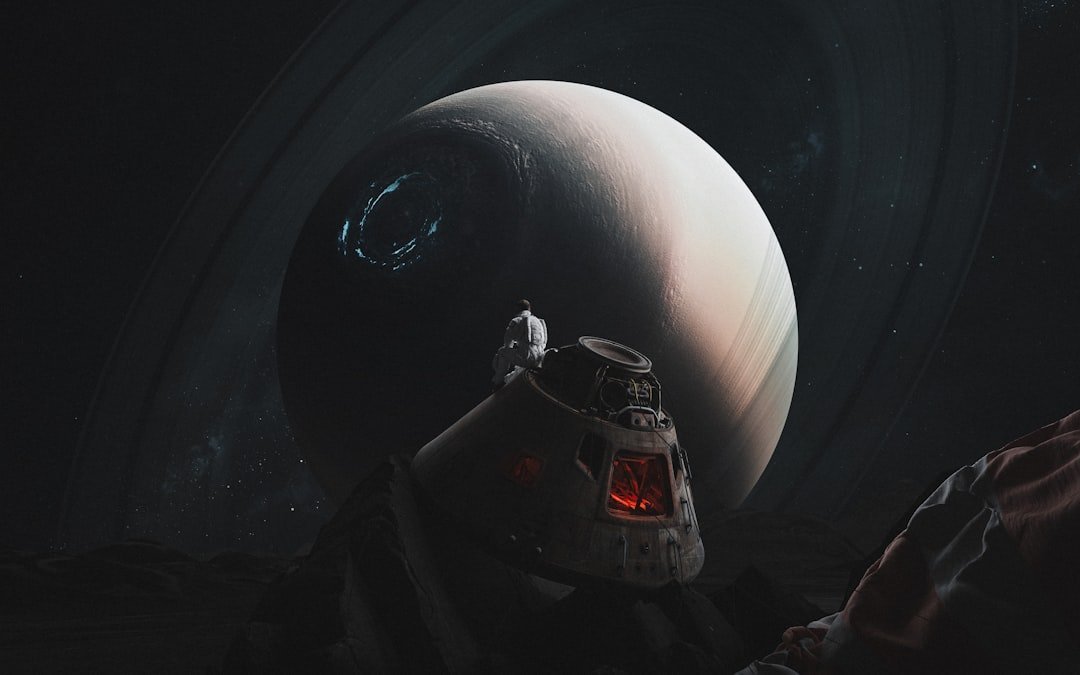
The hypothesis derives its name from Liu Cixin’s 2008 novel The Dark Forest, although similar concepts predate the work. In this context, the Dark Forest model of the universe is an extension of the older Berserker explanation of the Fermi paradox: the idea that one or more alien species is actively hunting out any sentient life that might challenge it, leaving a network of self-replicating probes to detect and destroy nascent interstellar species.
A similar hypothesis, under the name “deadly probes,” was described by astronomer and author David Brin in his 1983 summary of the arguments for and against the Fermi paradox. So the idea of a dangerous, predatory cosmos has been lurking in scientific literature for decades. Liu Cixin simply gave it the most haunting name imaginable. Differential rates of technological progress make an ongoing balance of power impossible, leaving the most rapidly progressing civilisations in a position to wipe out anyone else. In this ever-threatening environment, those who play the survival game best are the ones who survive longest. We have joined a game which has been going on before our arrival, and the strategy that everyone has learned is to hide.
The Science of Cosmic Silence: What SETI Has Actually Found
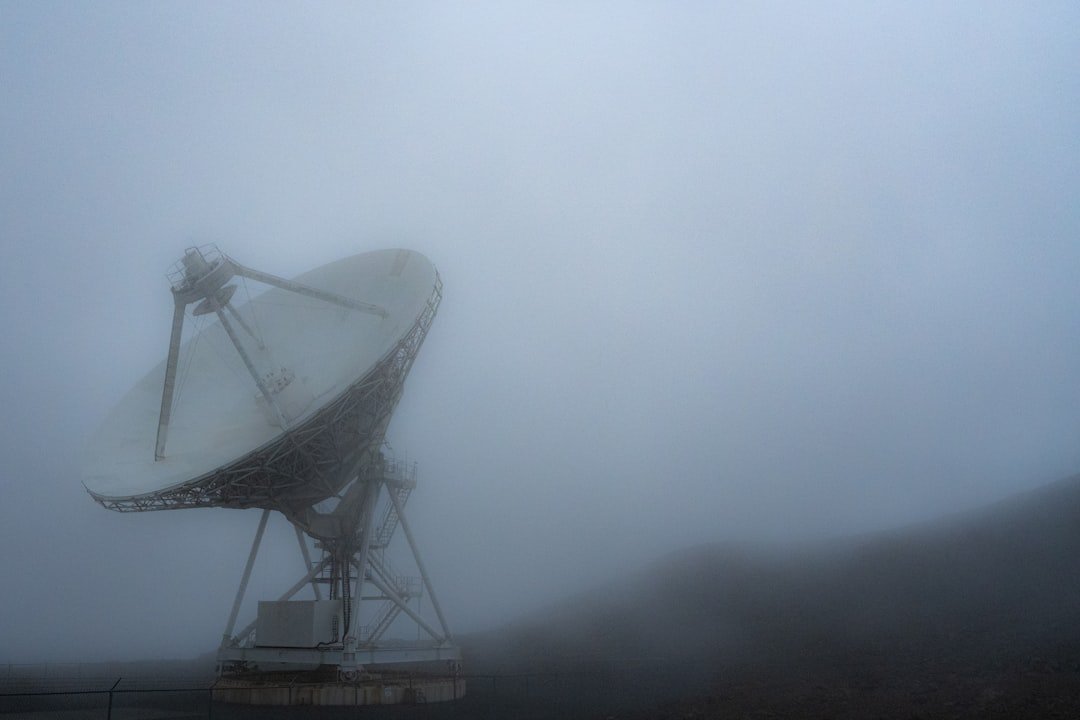
There is currently no known reliable or reproducible evidence that extraterrestrial life forms have visited or attempted to contact Earth. Despite systematic searches, no transmission and no firm evidence of intelligent extraterrestrial life has been detected. That’s a staggering result, given how hard we’ve been listening. SETI astronomer Jill Tarter is fond of saying that if the galaxy were an ocean, we’d have searched only a cup’s worth of it.
A 2025 report describes observations of over 950,000 unique pointings during the VLA Sky Survey, setting isotropic power limits for potential artificial transmissions. These results suggest that if galactic civilizations exist, they are either extremely rare, deliberately concealing their activities, or operating at power levels below our detection threshold. The implications of these null results for the Dark Forest Theory are complex and multifaceted. On one hand, the absence of detectable signals is consistent with the theory’s prediction that civilizations maintain strict silence to avoid detection. It’s hard to say which interpretation is more chilling.
The Math Behind the Fear: How Rare Are We?

David Kipping, an astrophysicist at Columbia University, noted that “the population of advanced civilizations out there is a balance of the rate at which they emerge and die. This ratio is all that really matters, but we have essentially no constraints on these terms. The birth rate could be one emergence per world per millennia or one per trillion worlds per trillion years.” That range is humbling. We’re working with variables we can barely estimate.
A 2024 analysis results in a “steady state Drake equation” involving the birth-to-death ratio, concluding that as SETI searches only investigate about a thousand to ten thousand star systems without finding any ETIs, the birth-to-death ratio must be much greater than a tiny fraction of those numbers. The paper argues that SETI searches are still important and vital, as while the odds of success are small, one successful find would be the greatest discovery in the history of the world. A long shot, sure. Yet completely worth taking.
The Latest Evidence: 3I/ATLAS and the Search for Technosignatures
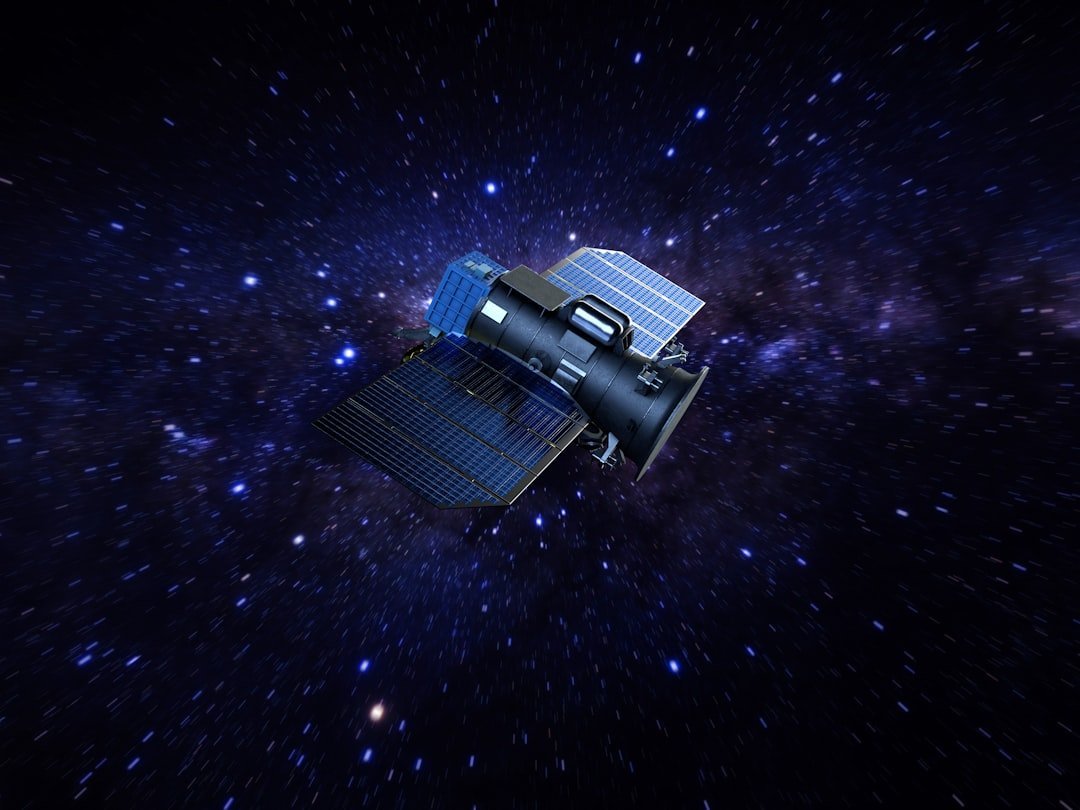
The interstellar object 3I/ATLAS was discovered on July 1, 2025. There is currently no evidence to suggest that it is anything other than a natural astrophysical object. Its arrival stirred enormous excitement in the scientific community, precisely because interstellar objects passing through our solar system represent one of the few opportunities to physically examine something from beyond our star. On December 18, 2025, the Breakthrough Listen program conducted a technosignature search toward 3I/ATLAS using the 100-meter Robert C. Byrd Green Bank Telescope at 1-12 GHz, reporting a nondetection of candidate signals down to the 100 mW level.
Even with its higher levels of sensitivity, the analysis found no candidate technosignature signals from 3I/ATLAS. The study authors write, “Our survey concludes that there are no isotropic continuous-wave transmitters above 0.1W at the location of 3I/ATLAS. For comparison, a cell phone is an approximately isotropic continuous-wave transmitter at a level of around 1W.” In other words, something quieter than a mobile phone. Zero signal. That’s the universe’s answer, at least for now.
A New Mathematical Framework for Cosmic Silence
Researchers published a stochastic model in 2025, inspired by the Dark Forest Hypothesis, to investigate probabilistic dynamics between civilizations in the cosmos. Each agent in the model is characterized by broadcasting behavior, strategic intent, and technological level. Interactions are governed by a simple probabilistic rule set, enabling both analytical insights and simulation-based exploration. Think of it like a cosmic game of poker, where the stakes are extinction.
The results show that civilizations adopting a quiet strategy dominate long-term survival, and that the presence of even a single malevolent actor can drastically reduce the success of noisy civilizations. These results offer a formal basis for the hypothesis that cosmic silence may not be puzzling, but rather a strategic necessity. That’s a remarkable finding. Science is now formally modeling the possibility that silence is not an absence of life, but a survival tactic.
The METI Problem: Are We Already Too Loud?
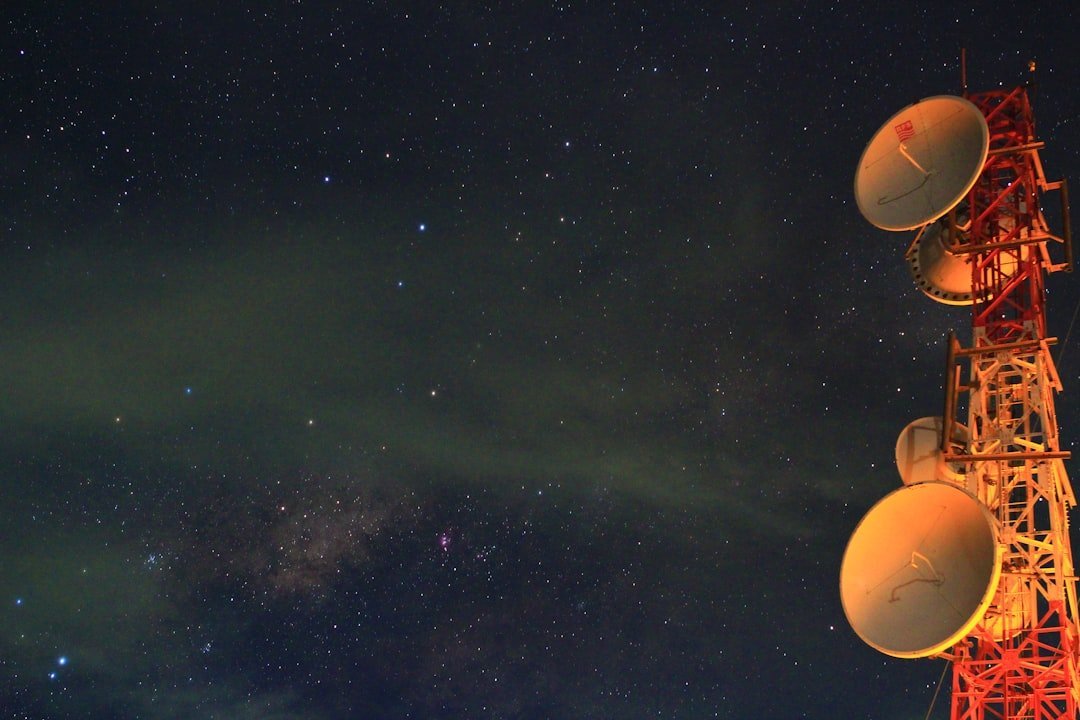
Perhaps even more chillingly, humanity has not been silent. We’ve announced our presence: both deliberately by sending messages and unintentionally through our “radio bubble” of radio and TV signals which leak into space. Here’s the thing, that bubble has been expanding at the speed of light since the early 20th century. There’s no taking it back.
The potential risk of METI is absolute. If we make contact with a hostile, or even just indifferent and careless, civilization, the downside is the total, irreversible extinction of our species. It could also mean colonization, enslavement, or the introduction of a pathogen that wipes out our biosphere. The risk is, in a word, existential. There is an ongoing debate pertaining to the question of whether Earth should be the party to initiate intentional and powerful radio transmissions to alien civilizations in the hope of attracting extraterrestrials’ attention, a practice known as messaging to ET intelligence, or more commonly by its acronym, METI. The debate has never been more urgent.
The Strongest Criticism: Why the Dark Forest May Still Be Wrong

Let’s be real, the hypothesis has serious scientific critics, and their arguments are worth examining carefully. Of all the posited answers, experts say the Dark Forest hypothesis seems less likely to be correct. It’s possible that several extraterrestrial intelligences would conceal themselves. But it’s improbable that all of them will come to the same fear-based conclusion and hide away.
Some ETIs might have members that all act in perfect unison. But other intelligent life will have divergent, independently behaving groups, some who trend more toward aggression or pacifism, curiosity, or reclusiveness. If one of them waves hello, then that Dark Forest will get a brightly lit campfire for us to see. It’s a compelling counter-argument. A universe full of billions of civilizations would statistically produce at least a few optimists. For this reason, the Dark Forest solution to the Fermi Paradox is unconvincing to some researchers. The fact that we do not hear anyone is just as likely to indicate that they are too far off, or we are listening in all the wrong ways, or else that there is no forest and nothing else to be heard.
The Detection Window and the Role of AI in the Search

Latest research argues that if we factor in the exponential rate of technology and consider the possibility that non-biological intelligence is common, then the observation horizon shrinks considerably. It could be as short as a decade or two. If that’s the case, then our chance of detecting an alien species is essentially nil. This adds a new layer of complexity to the entire debate. It’s not just that civilizations might be hiding, they might simply pass through a detectable phase so fast that we’d blink and miss them entirely.
Researchers at the Breakthrough Listen initiative, in partnership with NVIDIA, have achieved a groundbreaking advancement in the search for Fast Radio Bursts, developing an artificial intelligence system that dramatically outperforms existing detection methods while operating at unprecedented speeds. The new technology promises to revolutionize not only FRB astronomy but also the search for technosignatures, potential signals from extraterrestrial civilizations. The system achieved better accuracy than existing pipelines while reducing false positives by nearly ten-fold. This dramatic reduction in false positives is crucial for future surveys that may need to sift through millions of candidate signals, including potential technosignatures that could easily be lost in a sea of false alarms. If the Dark Forest is real, better tools to peer into its shadows might be our only chance at knowing.
Conclusion: The Forest, the Silence, and What We Do Next

The Dark Forest Hypothesis doesn’t need to be proven true to be profoundly important. It forces us to confront something deeply uncomfortable: that intelligence, across the cosmos, may not lead to cooperation, curiosity, or contact. It may lead to concealment, preemption, and destruction. Whether it’s the correct answer to the Fermi Paradox or not, the framework itself reveals something critical about the stakes of our situation here on Earth.
We’ve already spoken. Our radio signals have been drifting outward into the galaxy for over a century, carrying the noise of our civilization into whatever darkness surrounds us. Behind the word “intelligence” in SETI is a small but persistent worry that perhaps intelligent civilizations are not intelligent enough, that is, not intelligent enough to avoid destroying themselves. That thought applies just as well to us as to any civilization we might one day encounter.
I think the most honest position right now is one of cautious awe. We don’t know what’s out there. We don’t know if the silence is a predator’s patience or simply an empty stage. The Great Silence has profound implications for humanity’s future and our understanding of our place in the universe. If we are indeed alone, or if intelligent life is exceptionally rare, then our existence takes on a new level of cosmic significance. And if we’re not alone? Well. Maybe being quiet a little longer isn’t the worst idea humanity has ever had. What do you think: are we brave to keep broadcasting, or are we calling out in the dark without knowing what’s listening?