

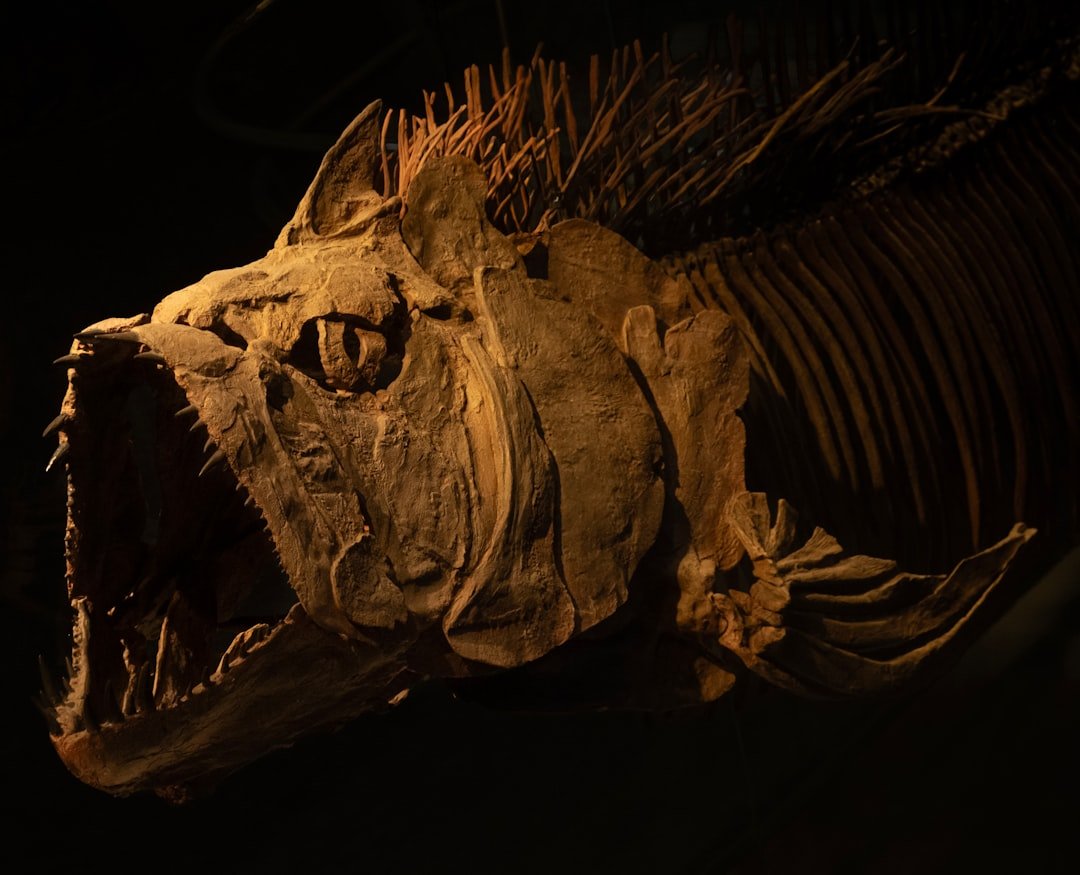
A Bizarre Menagerie Emerges from Ancient Rocks (Image Credits: Unsplash)
Eastern Yunnan, China – Paleontologists recently uncovered a trove of fossils from the Jiangchuan biota, dated to between 554 and 539 million years ago. These specimens reveal that the invertebrate ancestors of humans and other complex animals existed far earlier than scientists previously believed.[1]
The finds challenge long-held views of early animal evolution, bridging the gap between enigmatic Ediacaran organisms and the burst of life known as the Cambrian explosion. Researchers now trace key animal groups, including those leading to humans, back into the late Ediacaran period.[1]
A Bizarre Menagerie Emerges from Ancient Rocks
Picture worm-like creatures anchored to the seafloor, flipping their proboscises inside out to snag food particles – these are among the startling organisms preserved in the new fossils. Dubbed the “bugle worm,” one specimen resembles a complete organism previously known only in fragments.[1]
Other discoveries include primitive animals akin to the Cambrian Mackenzia, swimming predators called ctenophores, and stalked forms with tentacles related to now-extinct cambroernids. These cambroernids connect to modern starfish and acorn worms, part of the deuterostome lineage that includes humans. Fossilized burrows and trails further suggest active, mobile life on the ancient seabed. The collection paints a picture of a diverse community thriving alongside microbial mats.[1]
Reshaping the Dawn of Bilaterian Life
Scientists long debated whether bilaterians – animals with symmetrical bodies, brains, and complex muscles – diversified abruptly during the Cambrian explosion around 538 million years ago. These new fossils settle that question by showing bilaterian ancestors coexisted with Ediacaran biota for millions of years.[1]
The evidence fills a critical void between the Ediacaran (635-538 million years ago) and Cambrian periods. Previously, the oldest traces of deuterostomes came from Cambrian rocks. Now, clear signs of these human relatives appear 15 to 20 million years earlier. This discovery indicates complex animal life predated the famed evolutionary burst.[1]
From Fieldwork to Breakthrough Analysis
The journey began in spring 2023 when researchers split open Ediacaran rocks in eastern Yunnan, initially hunting for fossil algae. A team from Yunnan University, led by PhD student Gaorong Li, uncovered the unexpected animal fossils. In 2024, collaboration with the University of Oxford refined the analysis.[1]
Key contributors included supervisors Wei Fan and Peiyun Cong from Yunnan University, along with Luke Parry and Frankie Dunn from Oxford. They examined growth patterns, reproductive strategies, and body fossils to classify the organisms. The results appeared in a study published in Science.[1]
- Targeted rock splitting revealed whole organisms, not just fragments.
- Comparison to Cambrian fossils confirmed ancestral links.
- Burrow traces indicated behaviors like feeding and movement.
- Artist reconstructions aided visualization of soft-bodied forms.
- Integration of field data with lab scrutiny built a comprehensive biota profile.
Implications for the Human Evolutionary Tree
Humans belong to the deuterostomes, a group encompassing vertebrates and certain invertebrates like starfish. These fossils mark the oldest evidence yet for deuterostome-like cambroernids in the Ediacaran. They link simple, worm-shaped bilaterians to the complex forms that followed.[1]
Life had existed for billions of years before this – originating around 3.7 billion years ago in microbe-dominated oceans. Yet true animal complexity waited until the Ediacaran. The Jiangchuan finds suggest a gradual buildup rather than sudden emergence. Early cnidarians, resembling strange worms, also appear, hinting at broader animal diversification.[1]
| Animal Group | Previous Oldest Record | New Record (Jiangchuan) |
|---|---|---|
| Deuterostomes (e.g., cambroernids) | Cambrian (~538 Ma) | Ediacaran (554-539 Ma) |
| Bilaterians (worms, etc.) | Late Ediacaran | Mid-Ediacaran |
| Ctenophores | Cambrian | Ediacaran |
- Fossils from 554-539 million years ago predate the Cambrian explosion.
- Deuterostome ancestors, linking to humans, trace to worm-like Ediacaran forms.
- Bilaterian diversification began earlier, coexisting with mysterious Ediacaran life.
This breakthrough not only rewrites textbooks but invites fresh questions about life’s slow march from simplicity to complexity. As the fossil record sharpens, our place in deep time grows ever clearer. What do you think about these ancient roots? Tell us in the comments.