

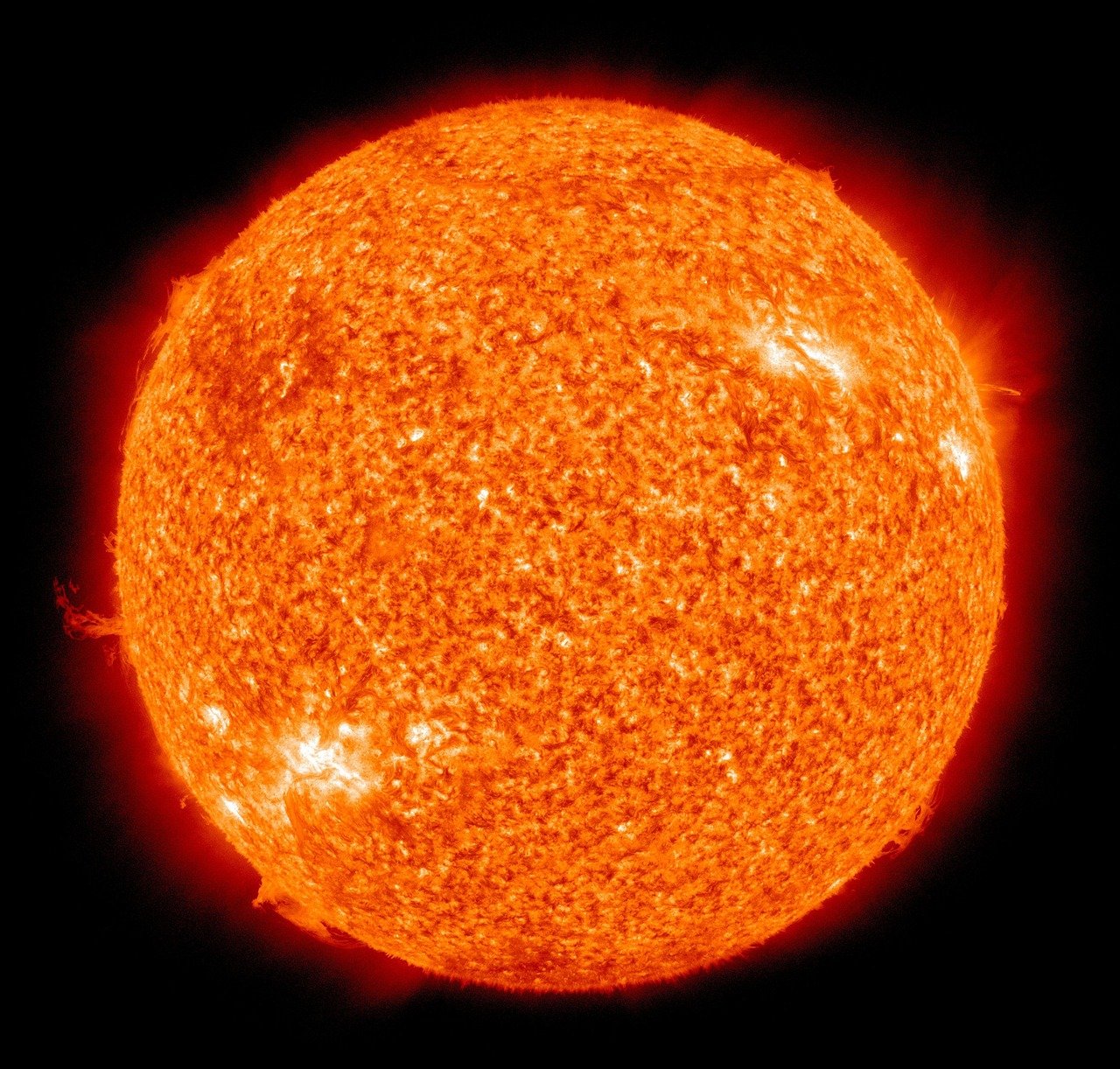
Stunning Eruptions Light Up the Limb (Image Credits: Pixabay)
Astronomers tracked heightened solar drama on April 8, 2026, as vivid prominences and jets erupted along the sun’s eastern limb. These events, captured by satellites, pointed to fresh active regions ready to swing into Earth’s line of sight within days. Such developments mark a subtle shift in solar behavior during Solar Cycle 25.[1][2]
Stunning Eruptions Light Up the Limb
A powerful jet burst forth around 23 UTC on April 7 from the northeastern horizon, linked to a C2.4 flare produced by newcomer sunspot region AR4414. NOAA’s GOES-19 satellite recorded the event in striking detail, showcasing long-lasting prominences that lingered over the edge. Observers noted multiple such displays in the prior 24 hours, underscoring the region’s vigor.[1]
These solar features arise from twisted magnetic fields along the sun’s surface. As the sun rotates, this eastern activity will gradually reveal itself fully to Earth-based telescopes. Experts anticipate more regions to follow suit, potentially amplifying flare risks.[2]
Active Regions Take Center Stage
Five numbered active regions now dot the Earth-facing solar disk, with AR4414 making its debut in the northeast. AR4409 stands out with its beta-gamma magnetic setup, a configuration prone to stronger eruptions. The region unleashed seven flares in the recent period alone.[1]
Prior counts showed six regions active over April 6-7. Here’s a snapshot of key players:
- AR4414: Fresh arrival, tied to the prominent jet and C2.4 flare.
- AR4409: Lead flarer, beta-gamma class, C5.7 peak event.
- Three others: Stable but monitored for changes.
Sunspot numbers for March climbed to 85.9, signaling sustained interest in Cycle 25 dynamics.[1]
Flare Surge and Near-Term Predictions
Solar flare levels edged from very low to low over the past day, tallying 11 events: eight C-class and three B-class. AR4409 drove the strongest at C5.7 around 18:32 UTC on April 7. No M- or X-class flares occurred, though potential lingers.[1]
Forecasts call for low-to-moderate activity on April 8, with a 35% chance of M-class flares and 10% for X-class. Coronagraphs confirmed no Earth-aimed coronal mass ejections (CMEs) in the last 24 hours. Updates from NOAA’s GOES X-ray flux will track evolutions closely.[3]
Aurora Prospects Amid Quiet Skies
Solar wind speeds held at moderate-low levels, paired with a weak interplanetary magnetic field showing mostly southward Bz components. This setup kept Earth’s magnetosphere quiet-to-unsettled, with Kp indices between 1 and 3. Current readings sat at 2.[1]
Three coronal holes near the solar disk’s center rotate toward geoeffective positions. Fast wind from them could spark a G1 minor geomagnetic storm around April 10, via a co-rotating interaction region. Aurora hunters at high latitudes might catch enhanced displays then. Projections outline:
| Date | Expected Kp | Aurora Potential |
|---|---|---|
| April 8 | 2-3 (quiet-unsettled) | Low |
| April 9 | 1-2 (quiet) | Minimal |
| April 10 | G1 possible | High latitudes |
Solar Cycle 25’s Ongoing Pulse
March’s sunspot number rose to 85.9 from February’s 78.2, though the cycle peaked at 216 in August 2024. Recent upticks in regions and flares reflect the sun’s dynamic phase. “Fiery activity is rotating our way,” noted contributors from EarthSky.[1]
Monitoring tools like NASA’s SDO and NOAA’s SUVI provide real-time glimpses. Such vigilance aids predictions for space weather impacts on satellites and power grids.
- Eastern limb jets from AR4414 herald new activity rotating Earthward.
- AR4409 leads flares; M/X-class chances rise today.
- Coronal holes may boost auroras by April 10.
As the sun’s eastern fireworks promise more visibility soon, skywatchers and scientists alike prepare for what unfolds. This rotation underscores the sun’s ceaseless motion and our need to stay alert. What do you think about these solar stirrings? Tell us in the comments.