

A Deadly Physics Puzzle (Image Credits: Upload.wikimedia.org)
Spacecraft hurtling back to Earth face temperatures exceeding 3,000 degrees Fahrenheit, a lethal barrier that has tested engineers since the dawn of human spaceflight. Thermal protection systems emerged as the critical innovation allowing capsules and orbiters to survive this fiery gauntlet. These shields not only safeguarded crews but also influenced program designs, budgets, and the very architecture of space missions.[1]
A Deadly Physics Puzzle
Reentering vehicles slam into the atmosphere at speeds around 17,500 miles per hour. Air compresses into a shock wave, generating intense heat from compression rather than friction. Engineers developed three core strategies to counter this: materials that absorb and radiate heat, ablative layers that char and erode to carry away energy, or insulators with low thermal conductivity.
Every crewed mission combined these methods. The choice dictated vehicle weight, reusability, and cost. Failures in this domain carried consequences far beyond a single flight, reshaping entire agencies.[1]
Pioneering Ablation in Early Capsules
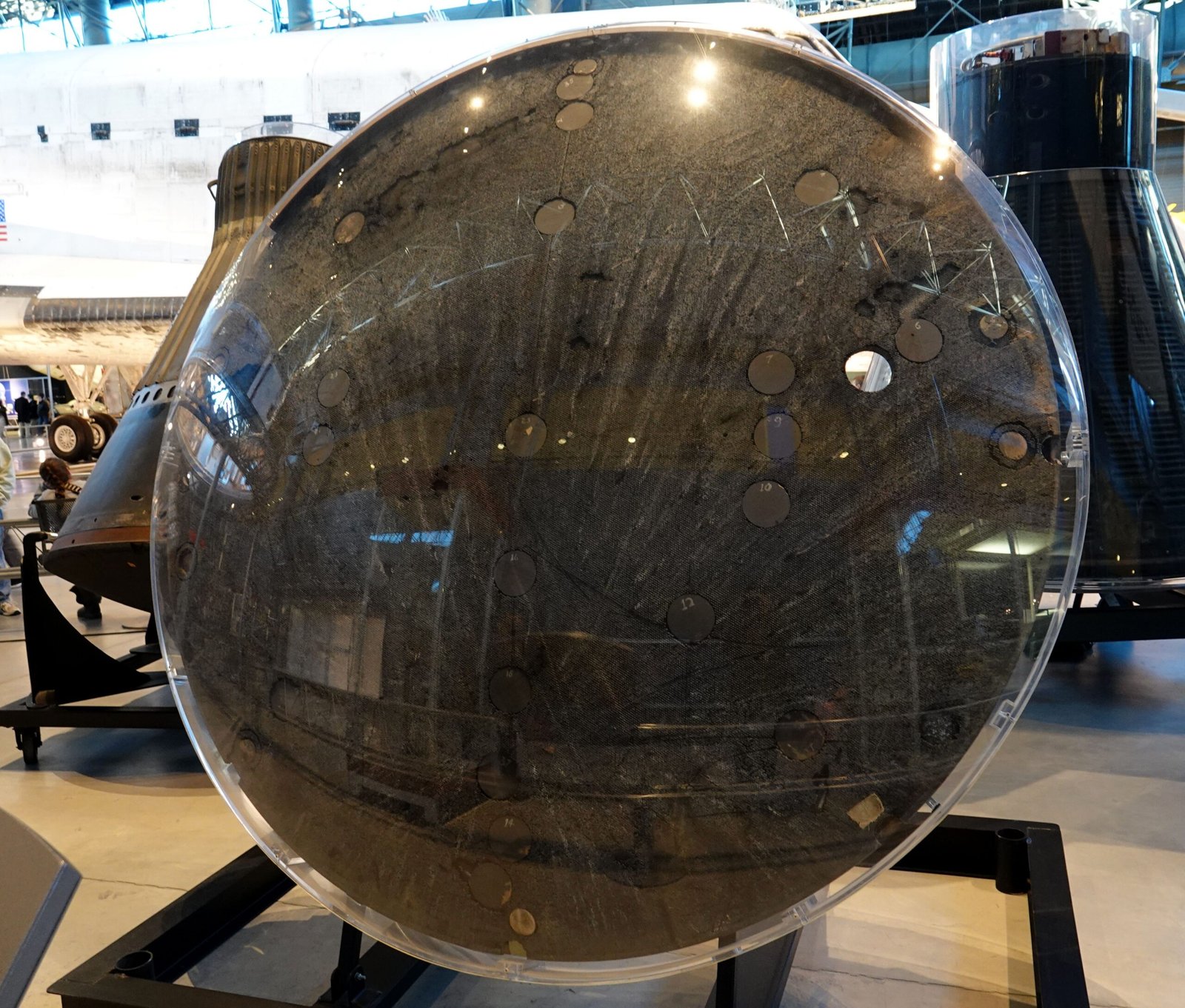
Project Mercury and Gemini capsules relied on ablative heat shields derived from missile technology. A fiberglass-resin composite coated the blunt base, charring and shedding under heat to dissipate energy. Precision application proved essential, as margins remained slim.
Apollo missions demanded more from lunar return speeds. An advanced ablative material in a honeycomb structure provided controlled ablation, ensuring safe returns for all crews. Despite success, the heavy, single-use design highlighted ongoing trade-offs in mass and manufacturing.
Decades later, NASA’s Orion capsule adopted similar ablatives. The shadow of past tragedies fostered conservatism, prioritizing proven reliability over untested alternatives. This approach elevated costs but minimized risks to human lives.[1]
Shuttle’s Ambitious Reusable Design
The Space Shuttle broke from tradition with a reusable thermal protection system. Over 24,000 silica tiles covered most surfaces, reinforced carbon-carbon panels protected high-heat nose and wing edges, and flexible blankets handled milder areas. The concept promised frequent flights without full shield replacement.
Reality proved harsh. Tiles demanded custom fitting and proved fragile – droppable by a wrench. Turnaround inspections and repairs consumed time and funds, thwarting rapid reuse goals pitched to Congress. Operational tempo suffered, undermining the program’s economics.
- Thousands of individually shaped tiles increased maintenance complexity.
- Reinforced panels vulnerable to impacts, as seen in foam strikes.
- Blankets suited lower-heat zones but added to overall intricacy.
The 2003 Columbia disaster exposed flaws. A 1.7-pound foam piece breached wing panels during launch. Reentry gases at over 3,000 degrees Fahrenheit invaded, disintegrating the vehicle over Texas and claiming seven lives. Investigations revealed normalized risks, halting flights and accelerating retirement in 2011.[1]
The Soviet Buran employed a comparable tile system but flew only once before abandonment for unrelated reasons.
Extreme Tests: Parker Solar Probe’s Shield
The Parker Solar Probe confronted solar proximity far beyond reentry demands. Instruments endured near 2,000 degrees Fahrenheit across repeated close passes at over 400,000 miles per hour. A 160-pound carbon composite foam shield, inches thick, shadowed the spacecraft body while the sunward face radiated heat.
Water circulated through solar arrays for cooling, a deceptively simple yet ingeniously engineered solution. The probe navigated coronal mass ejections unscathed. Its success earned the 2024 Robert J. Collier Trophy. Parker illustrated thermal protection as a holistic system, where materials intertwined with orientation and geometry to enable missions.[1]
| Mission | Key TPS Feature | Peak Heat Challenge |
|---|---|---|
| Apollo | Ablative honeycomb | Lunar reentry speeds |
| Shuttle | 24,000 silica tiles | 3,000°F plasma |
| Parker Probe | Carbon foam shield | 2,000°F solar radiation |
Shaping Tomorrow’s Missions
Thermal protection continues to constrain lunar returns, Mars ambitions, and commercial vehicles. Past failures like Columbia redirected billions toward successors like SLS and Orion. Policy debates hinge on balancing innovation with reliability.
Reusability remains elusive, yet drives private ventures. System-level integration – beyond materials – will define breakthroughs. As exploration expands, these shields stand as gatekeepers to deeper space.
Key Takeaways:
- TPS failures reshape programs, budgets, and architectures.
- Ablation suited early capsules; reusability challenged shuttles.
- Holistic design, as in Parker Probe, unlocks extreme environments.
Thermal protection systems turned potential fireballs into survivable returns, powering 70 years of progress. Their evolution underscores engineering’s triumph over physics – and policy’s enduring role. What advancements do you foresee next? Share in the comments.