

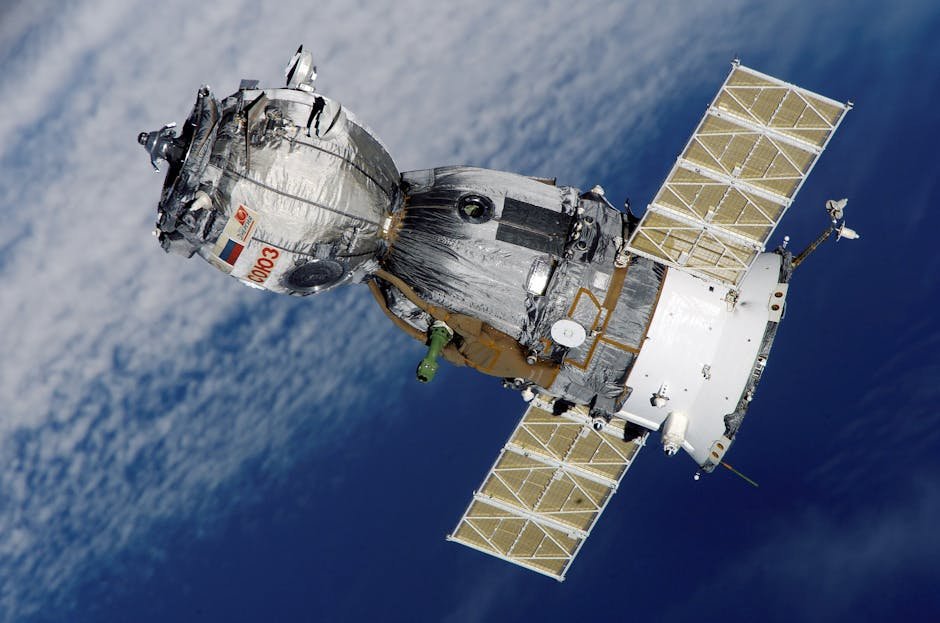
A Historic Mission Nears Completion (Image Credits: Pexels)
NASA’s Orion spacecraft, carrying four astronauts from the Artemis 2 mission, barrels toward Earth after circling the moon. The crew completed a landmark flyby earlier this week, marking humanity’s return to deep space after more than five decades. Tonight, skygazers can witness this dramatic phase through a specialized livestream from a remote telescope, offering a unique ground-based perspective on the capsule’s approach.[1][2]
A Historic Mission Nears Completion
Artemis 2 launched on April 1, 2026, propelling its crew beyond low Earth orbit for the first time since Apollo 17 in 1972. The astronauts looped around the moon, capturing stunning views including an “Earthset” during the flyby on April 6. They also observed a total solar eclipse from their vantage point, one of the rarest sights in spaceflight history.[1]
Now in the mission’s closing days, Orion races back from thousands of miles beyond the lunar surface. The spacecraft exited the moon’s sphere of influence earlier this week, setting the stage for reentry. Splashdown remains targeted for Friday evening, April 10, in the Pacific Ocean off San Diego at approximately 8:07 p.m. EDT.[2]
Spotting a Specks in the Sky: The Power of Remote Telescopes
Ground-based observation of fast-moving spacecraft like Orion presents unique challenges, yet proves possible with advanced equipment. The livestream captures Orion as a faint dot traversing the starry backdrop, visible only under clear skies. Weather remains the key variable, potentially offering one of the last glimpses before atmospheric friction ignites the capsule’s heat shield.[1]
Astrophysicist Gianluca Masi directs the effort, leveraging robotic telescopes to deliver real-time imagery. Such observations thrill audiences by bridging professional astronomy with public access. Previous sessions tracked Orion post-launch and during its outbound leg, building excitement for this return view.[3]
How to Join the Live Observation
The event kicks off at 10:45 p.m. EDT on April 9 (02:45 GMT on April 10), aligning with optimal viewing conditions. Viewers need only a web browser to tune in. Clear nights enhance the feed’s quality, though Masi’s team adapts to circumstances.
- Visit the Virtual Telescope Project WebTV page.
- Locate the Artemis II session listed among live events.
- Watch as the telescope locks onto Orion’s path across the sky.
- Follow NASA’s parallel coverage for mission updates via their live streams.
- Check the Space.com Artemis 2 blog for real-time commentary.[1]
Mission Milestones at a Glance
The 10-day journey tested critical systems for future lunar landings. Orion’s trajectory took it farther than any crewed vehicle since the Apollo era. Key phases included launch from Kennedy Space Center, translunar injection, and the powered flyby of the moon.
- April 1: Liftoff with four astronauts aboard.
- April 6: Lunar flyby and eclipse viewing.
- April 8: Exit from moon’s gravitational influence.
- April 9-10: High-speed return and reentry preparations.
- April 10: Splashdown off California coast.[1]
Recovery teams stand ready in the Pacific, with boats and aircraft positioned for the capsule’s descent. NASA broadcasts the finale starting at 6:30 p.m. EDT on April 10 across multiple platforms, including YouTube and streaming services.[2]
Key Takeaways
- Artemis 2 revives deep-space human exploration after 54 years.
- Tonight’s telescope stream at 10:45 p.m. EDT captures Orion visually from Earth.
- Splashdown set for April 10 at 8:07 p.m. EDT; watch NASA’s official feed too.
As Orion pierces the atmosphere at over 24,000 mph, it caps a pivotal step toward sustained moon presence. This telescope view reminds us how everyday stargazing connects to grand endeavors. What are your thoughts on the mission’s success? Share in the comments below.