


Imagine pulling a perfectly grooved, metallic-looking sphere out of rock that formed nearly three billion years ago, long before complex life had any business existing on this planet. That is exactly what miners in South Africa have been doing, quietly and routinely, for decades. These objects, known as the Klerksdorp spheres, sit at the center of one of archaeology’s most heated debates, straddling the uneasy border between hard geology and the wilder fringes of alternative history.
The story is stranger than fiction. It involves misquoted museum curators, unverified NASA claims, sensationalist tabloids, and some genuinely puzzling physical characteristics that even mainstream scientists took time to fully explain. Whether you lean toward the geological or the conspiratorial, one thing is certain: these spheres demand your attention. Let’s dive in.
Discovery in the Mines of Ottosdal

The Klerksdorp spheres are small objects, often spherical to disc-shaped, that have been collected by miners and rockhounds from pyrophyllite deposits mined by Wonderstone Ltd., near Ottosdal, South Africa. The name “Klerksdorp” has stuck even though the actual find site is the town of Ottosdal, which caused a fair amount of early confusion in the press. During the 1970s, miners near Klerksdorp in South Africa made an unusual discovery, finding spherical objects in pyrophyllite deposits ranging in size from a few millimeters to several centimeters in diameter. The sheer number of these objects, turning up again and again across the same strata, is what first raised eyebrows among researchers.
What Do They Actually Look Like?

The Klerksdorp spheres mystery revolves around the discovery of an array of small, unusual objects discovered by miners in pyrophyllite deposits. They range from about half a centimetre to ten centimetres across, some almost perfectly round, others pressed into squat, disc-like shapes. What makes them truly striking, though, are their surfaces. Many are marked by crisp, equatorial grooves or neatly parallel ridges that look as if they’ve been carefully incised rather than slowly sculpted by geology. Honestly, if you saw one sitting on a table without context, you might mistake it for a decorated stone bead or some ancient game piece.
Observations by Bruce Cairncross, Louis Taylor Nel, and Andrea Agangi demonstrate that the unoxidized and unaltered Klerksdorp spheres found in pristine pyrophyllite consist of diagenetic pyrite. These objects exhibit a metallic luster and pale brass-yellow color. That metallic sheen is a big part of why the “manufactured artifact” narrative took off so quickly in popular media.
The Age Problem That Changes Everything
For decades, the Klerksdorp spheres have puzzled scientists, geologists, and archaeologists alike. The spheres have captivated researchers due to their remarkable age, estimated to be around 2.8 billion years old. This places them in a geological era long before Earth’s complex life forms emerged. Let that sink in for a second. Nearly three billion years ago, Earth barely had oxygen in its atmosphere.
They’re thought to have developed between about 2.8 and 3.1 billion years ago, in a pre-oxygen atmosphere, through the precipitation of minerals such as hematite, pyrite, or goethite. This pre-oxygen context is actually crucial to understanding how these minerals could have crystallized in these particular forms, which mainstream geology has a clear explanation for, even if it takes some unpacking.
The Forbidden Archaeology Connection
Michael Cremo has traveled the world gathering information on out-of-place artifacts, known as OOPARTs, and compiled his findings in the popular book “Forbidden Archaeology: The Hidden History of the Human Race.” In 1984, while investigating the spheres, he contacted Roelf Marx, curator of the museum of Klerksdorp, South Africa, where some of the spheres are kept. Cremo used the spheres as a centerpiece of his argument that intelligent life existed on Earth long before conventional science places it.
The term “oopart,” or out-of-place artifact, is applied to dozens of prehistoric objects found in various places around the world that seem to show a level of technological advancement incongruous with the times in which they were made. OOPARTs often frustrate conventional scientists, delight adventurous investigators open to alternative theories, and spark debate. Here’s the thing though: the Klerksdorp spheres became almost the flagship exhibit of this genre, referenced again and again in alternative history circles.
The Misquoted Curator and the Rotating Sphere Legend

Roelf Marx, former curator of the Klerksdorp Museum, reports that he was misquoted regarding these objects. Marx was quoted in popular articles as saying that the objects rotated by themselves in vibration-free display cases in the Klerksdorp Museum. Instead, Marx stated that they rotated because of the numerous earth tremors generated by underground blasting in local gold mining. This is a great example of how a mundane detail gets transformed into a mystery through careless reporting.
The mystery of why the sphere supposedly spun “on its own” was explained by the curator of the Klerksdorp Museum. Marx explained that he once put a ball back to its original position on a glass shelf during a journalist’s visit, and that it naturally rotated a bit as it was round, and the area experiences many earth tremors due to gold mining activities. Simple physics, it turns out, not paranormal rotation.
The Hardness Controversy

According to Marx, the pyrophyllite deposit where the spheres were found is a relatively soft secondary mineral placed at number 3 on the Mohs scale. Meanwhile, the globes are very hard and cannot be scratched even by steel. Since steel ranks about 6.5 to 7.5 on the Mohs scale, the Klerksdorp spheres are harder than that, according to Marx. This hardness disparity became one of the most circulated talking points among alternative researchers.
However, scientific testing told a different story. Published descriptions of these spheres being harder than steel are definitively false in terms of the Mohs scale of mineral hardness. Steel can vary from 4 to 8 on the Mohs scale, depending on the type of alloy, heat treatment, and whether it is case-hardened or not. An examination of several Klerksdorp spheres found none to be harder than 5.0 on the Mohs scale. For comparison, common glass has a Mohs hardness of 5.5. So much for the “harder than steel” legend.
What Scientists Say About Their Composition
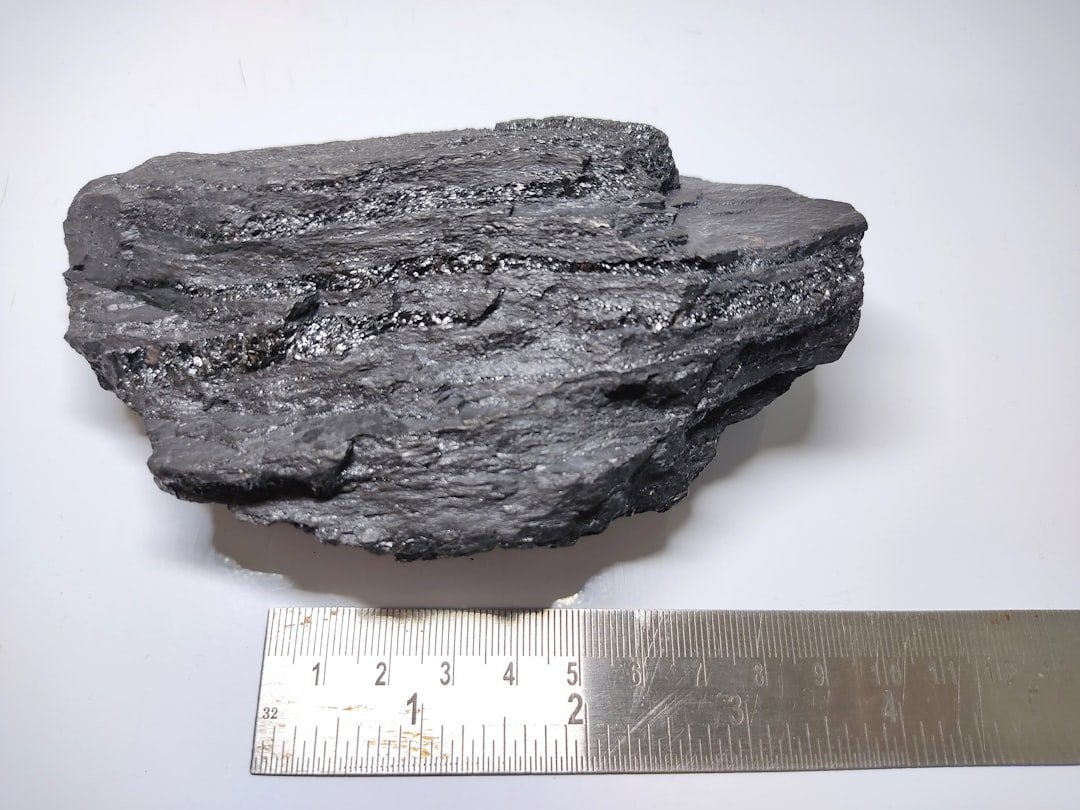
Heinrich’s tests on one of the Klerksdorp spheres showed it to be made of hematite, a mineral form of iron oxide. He found another Klerksdorp sphere consisted of the mineral wollastonite along with hematite and goethite, a hydrated iron oxide. These are all well-understood terrestrial minerals with completely natural origins. Nothing exotic, nothing unknown.
Various professional geologists agree that the Klerksdorp spheres originated as concretions, which formed in volcanic sediments after they accumulated 3 billion years ago. Heinrich argues that the wollastonite nodules formed by the metamorphism of carbonate concretions in the presence of silica-rich fluids generated during the metamorphism of the volcanic deposits. It was also argued that the hematite nodules represent pyrite concretions oxidized by weathering of near-surface pyrophyllite deposits. The internal chemistry is consistent with billions of years of geological transformation, nothing more, nothing less.
The NASA and California Space Institute Story

For a brief period, a Klerksdorp Museum web page contained the text from a letter from John Hund of Pietersburg, South Africa. This letter provided an account, which remains unsubstantiated, of the alleged results of an examination of an Ottosdal object by the California Space Institute. The letter stated that scientists concluded that the sphere’s balance “is so fine, it exceeded the limit of their measuring technology” and “to within one-hundred thousandths of an inch from absolute perfection.”
In 2002, the Klerksdorp Museum posted that letter on its website. The claims made in this letter were not verified, according to geologist Paul V. Heinrich, and the letter was later removed. A separate, unverified letter suggested that one of the Klerksdorp spheres was likely examined by staff at CalSpace, the California Space Institute at the University of California, although the extravagant “perfect balance” claim that circulated later was explicitly denied. Yet this story lives on across hundreds of websites to this day.
The Geological Explanation for the Grooves
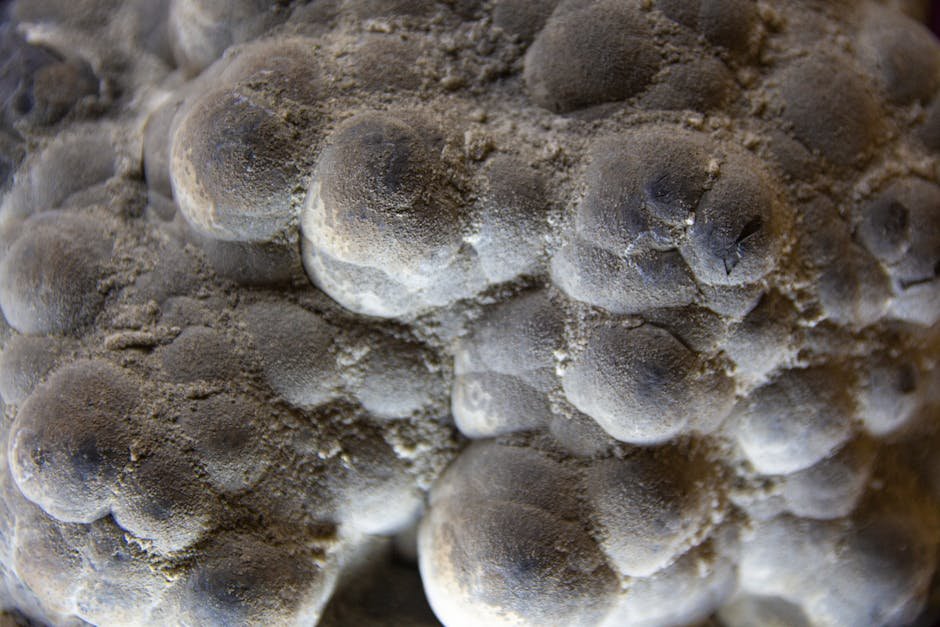
The internal structure of the Klerksdorp balls reveals radial patterns, expanding from a central point, which indicates a natural process rather than intelligent design. The grooves are believed to have resulted from layers of fine sediment in the ancient lakebed where they formed, while the variations in size, shape, and composition are consistent with known geological phenomena. Think of it like tree rings, except the record is written in rock and iron oxide rather than wood.
A more recent study by Agangi and her team examined the detailed geologic setting of the Klerksdorp spheres, confirming their formation in a Mesoarchaean terrestrial acid lake environment approximately 3.0 billion years ago, further refining the understanding of the paleoenvironment in which these concretions formed. This 2021 research is among the most detailed geological work conducted on the spheres to date and gives us the clearest picture yet of how they came to be.
Similar Spheres Found Around the World
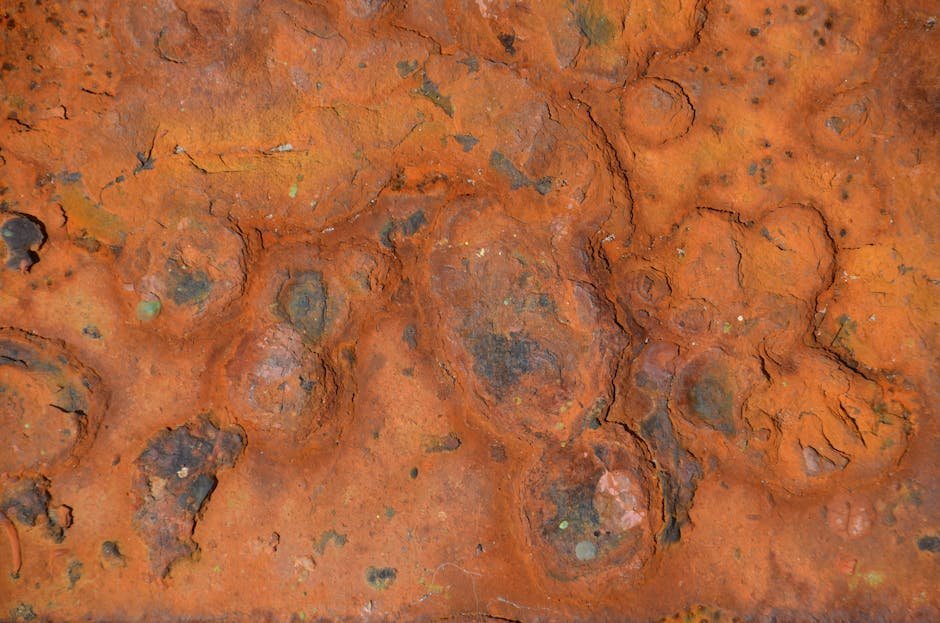
The Klerksdorp spheres are not exclusive to South Africa. Similar objects have been found in regions like the Czech Republic and Costa Rica. While they slightly differ in composition and appearance, the spheres share standard features, leading experts to speculate about potential global phenomena. This global distribution actually strengthens the geological argument, not the extraterrestrial one. Natural concretion processes occur wherever the right chemistry and sediment conditions exist.
A similar process in coarser-grained sediments created the latitudinal ridges and grooves exhibited by innumerable iron oxide concretions found within the Navajo Sandstone of southern Utah, called “Moqui marbles.” Latitudinal grooves are also found on carbonate concretions in Schoharie County, New York. Nature, it turns out, is an exceptionally consistent sculptor.
Where Science and Mystery Still Meet
The mystery of the Klerksdorp spheres baffles scientists and still inspires ongoing investigations and discussions. State-of-the-art analytical techniques like mineralogical studies, isotopic analysis, and advanced imaging offer promising avenues for further investigation. The science is largely settled, but the conversations they spark are anything but finished.
The popularization of the Klerksdorp sphere “mysteries” demonstrates a recurring pattern where initial, often unverified or misinterpreted, observations are seized upon and amplified by media outlets and individuals with pre-existing agendas. This creates a feedback loop that entrenches misinformation. Still, I think there is something genuinely valuable in these objects, not as proof of ancient civilizations, but as a mirror for how we interpret the unknown. They show us how quickly a mineral concretion becomes a cosmic artifact the moment someone with a camera and a dramatic narrator gets involved.
The Klerksdorp spheres are remarkable regardless of their origin. Objects forged by chemistry and geological pressure nearly three billion years before humans even existed are astonishing enough without any added mythology. What would you have thought if you pulled one out of ancient rock with your own hands?