

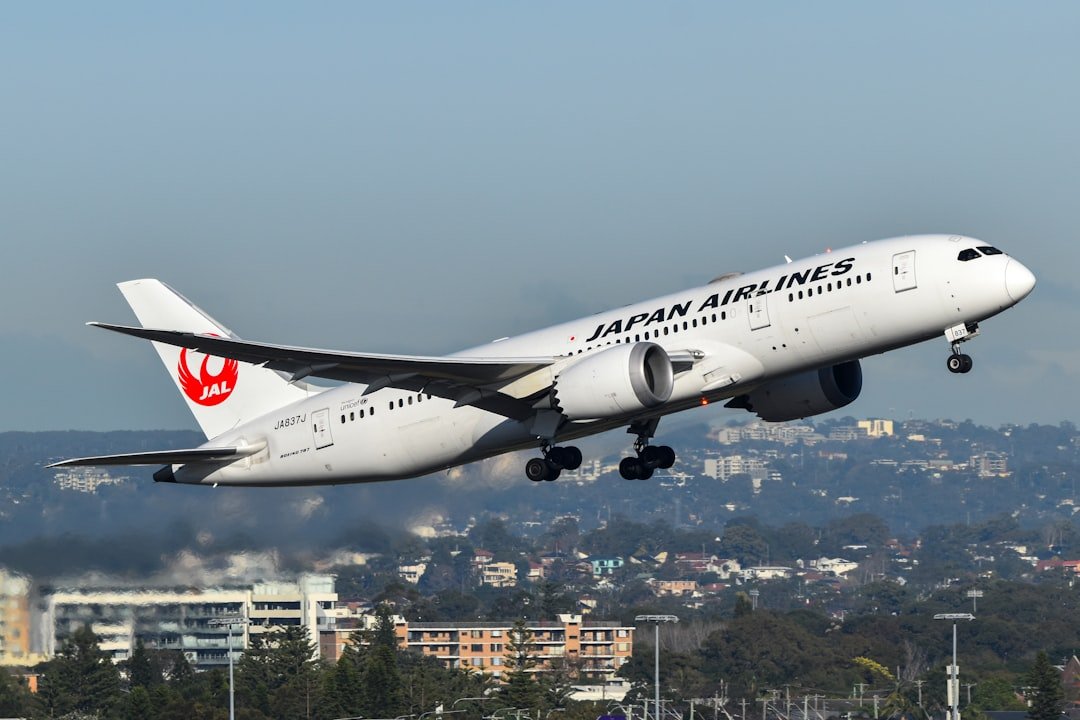
A Timely Ministerial Dialogue Ignites Progress (Image Credits: Unsplash)
Tokyo – Defense ministers from Japan and Australia convened in the Japanese capital in early April 2026, solidifying a partnership that extends beyond traditional alliances. The meeting occurred against a tense backdrop, as North Korea launched a ballistic missile just hours earlier, highlighting persistent regional threats. This collaboration represents a pivotal shift, where middle powers cultivate independent defense industrial capabilities to safeguard shared interests.[1][2]
A Timely Ministerial Dialogue Ignites Progress
Japanese Defense Minister Koizumi Shinjiro hosted his Australian counterpart, Richard Marles, for discussions under the Framework for Strategic Defense Coordination. The session marked the 50th anniversary of the 1976 Basic Treaty of Friendship and Cooperation between the two nations. Marles emphasized that the countries had never been closer, a bond now reinforced through practical defense measures.
The timing proved particularly poignant. North Korea fired a short-range ballistic missile from its eastern coast, reaching an altitude of about 60 kilometers and traveling over 700 kilometers before landing in the Sea of Japan. Such provocations have grown more frequent and sophisticated, prompting both ministers to stress the need for enhanced deterrence.[1]
Frigates at the Heart of Industrial Collaboration
Australia’s decision to procure next-generation frigates based on Japan’s Mogami-class design stands as a cornerstone of this partnership. Mitsubishi Heavy Industries will contribute to vessels tailored for distributed maritime operations in contested waters. This choice creates enduring ties in maintenance, upgrades, supply chains, and training, locking in decades of cooperation.
The Mogami-class frigates offer compact, multi-role capabilities suited to the Japan Maritime Self-Defense Force and the Royal Australian Navy. Procurement here functions as alliance-building in physical form, embedding Japanese expertise at the core of Australian naval power. Observers view this as a departure from past reliance on external suppliers.[1]
Strategic Framework Guides Deeper Integration
Launched in December 2025, the Framework for Strategic Defense Coordination facilitates joint planning, capability development, and interoperability standards. These elements operate independently of larger alliances, providing a robust structure for bilateral action. The framework ties abstract commitments to concrete timelines and contracts.
Both nations position this as essential scaffolding for a functional defense pact. Koizumi described regional conditions as increasingly severe and uncertain, while Marles pointed to a challenging global environment. Their remarks underscored a consensus: middle powers must prepare for scenarios where primary allies face competing demands.[1]
Addressing Escalating Threats Head-On
North Korea’s missile advancements, including evasive maneuvers against defenses, occur alongside closer ties to Russia for technology and support. These developments erode diplomatic isolation efforts and elevate the importance of military readiness. Japan leverages such incidents to bolster domestic support for higher defense budgets.
Australia similarly frames its investments through tangible partnerships. Broader instabilities, from Middle East disruptions to navigation threats, strain global resources. The ministers agreed that exclusive dependence on Washington no longer suffices across all theaters.[1]
Key aspects of the partnership include:
- Joint frigate procurement based on Mogami-class designs.
- Coordinated planning via the 2025 defense framework.
- Focus on interoperability without third-party involvement.
- Response to North Korean missile activities.
- Celebration of 50 years of diplomatic ties.
Outlook for Enduring Regional Stability
Australia plans to unveil its 2026 National Defence Strategy and Integrated Investment Program later in April, likely detailing frigate allocations and Japan-linked initiatives. This partnership fosters material interdependencies and institutional routines that transcend individual administrations. It emerges as a parallel network within frameworks like the Quad and AUKUS, yet stands ready to function autonomously.
Such developments signal a maturing Indo-Pacific security architecture, where bilateral ingenuity fills potential gaps. The model could inspire similar linkages among other middle powers.
Key Takeaways:
- Middle powers prioritize self-reliant defense industries amid U.S. constraints.
- Mogami-class frigates symbolize deep industrial integration.
- Recent frameworks ensure actionable, independent cooperation.
This evolving alliance offers a blueprint for resilience in uncertain times. How might it influence broader regional dynamics? Share your views in the comments.