

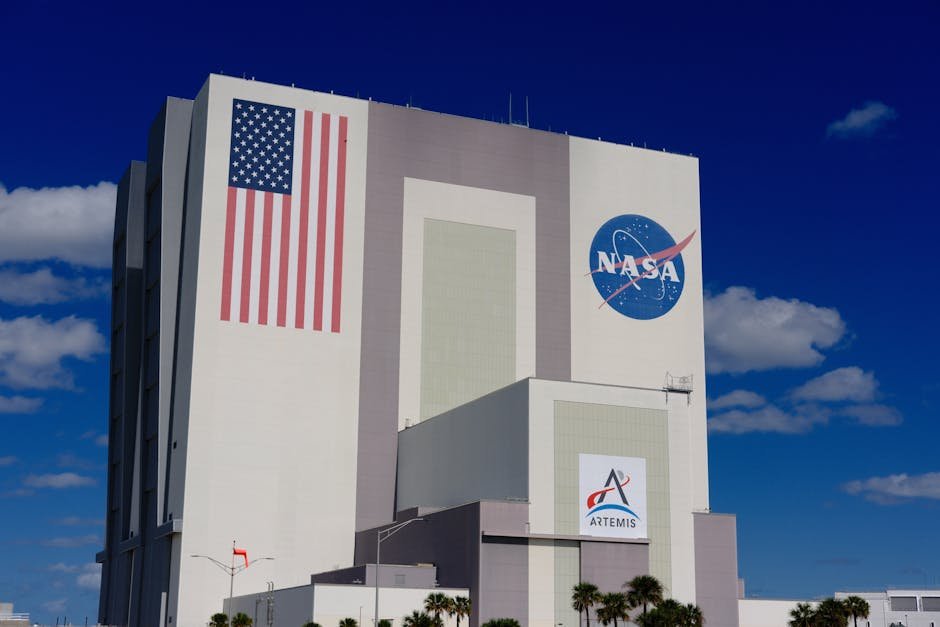
Milestones of a Trailblazing Flight (Image Credits: Pexels)
Off the coast of San Diego, recovery teams positioned themselves in the Pacific Ocean as NASA’s Artemis II astronauts neared the end of their pioneering 10-day voyage around the Moon. The mission marked humanity’s return to deep space after more than 50 years, with the crew testing critical systems aboard the Orion spacecraft. Viewers worldwide prepared to tune in this evening for broadcasts of the dramatic re-entry and splashdown, a testament to renewed lunar ambitions.[1][2]
Milestones of a Trailblazing Flight
The Artemis II mission launched on April 1, 2026, from Kennedy Space Center in Florida, propelling the Orion capsule toward the Moon atop the massive Space Launch System rocket. Four astronauts spent days in lunar orbit, conducting experiments and verifying spacecraft performance under real space conditions. On April 6, they achieved the farthest distance from Earth traveled by humans since Apollo 17 in 1972.[3]
Mission controllers monitored every phase closely, from outbound trajectory burns to the critical departure from the Moon’s gravitational influence. The crew stowed gear and ran final checks during their last full day in space on April 9. Engineers expressed high confidence in a safe return, citing flawless operations throughout the flight.[4]
Spotlight on the Four Astronauts
Commander Reid Wiseman led the team, drawing on his experience from prior spaceflights to guide the Orion through uncharted territory. Pilot Victor Glover handled spacecraft maneuvers, while mission specialists Christina Koch and Jeremy Hansen managed science payloads and systems tests. Hansen represented international partnership as the first Canadian astronaut on a lunar mission.[5][6]
The diverse crew brought unique perspectives: Koch holds the record for the longest single spaceflight by a woman, Glover became the first Black astronaut to venture beyond low-Earth orbit, and Wiseman commanded with steady precision. Their daily briefings captivated global audiences, sharing views of the lunar surface and deep space.[7]
Re-Entry Drama: From Orbit to Ocean
The Orion spacecraft approached Earth at speeds exceeding 25,000 miles per hour, generating intense heat during atmospheric entry – up to 5,000 degrees Fahrenheit on the heat shield. Skip re-entry techniques allowed precise targeting of the splashdown zone. Parachutes deployed in sequence, slowing the capsule to about 20 miles per hour before water impact at approximately 8:07 p.m. EDT.[8][9]
U.S. Navy vessels, including the USS John P. Murtha, stood ready for recovery operations. Divers and helicopters extracted the crew shortly after splashdown, ensuring medical checks and transport to shore. NASA emphasized the proven reliability of these procedures from uncrewed tests.[10]
Essential Guide to Tonight’s Broadcasts
Live coverage kicked off at 6:30 p.m. EDT across multiple platforms, building excitement through the re-entry burn, blackout period, and parachute deployment. NASA provided official streams on its website, YouTube, and TV channels, with commentary from mission control. Additional outlets like PBS News and space-focused networks offered parallel feeds.[11][12]
Key viewing highlights included:
- 6:30 p.m. EDT: Pre-splashdown briefing and spacecraft status updates.
- 7:30 p.m. EDT: Re-entry interface and plasma blackout begins.
- 8:05 p.m. EDT: Main parachutes visible, final descent.
- 8:07 p.m. EDT: Splashdown confirmation in Pacific waters.
- Post-8:07 p.m.: Crew extraction and post-landing news conference around 10:30 p.m. EDT.
International audiences adjusted for time zones, such as 1:07 a.m. GMT on April 11.[13]
Paving the Path for Lunar Landings
Artemis II validated technologies essential for Artemis III, the first crewed Moon landing planned in the coming years. Data from the heat shield, life support, and navigation systems informed refinements. The mission strengthened collaborations with partners like the Canadian Space Agency.
Success here bolstered confidence in sustainable lunar presence, including the Gateway station. Engineers already analyzed early telemetry for future iterations.
Key Takeaways
- Artemis II proved Orion’s readiness for deep space after a flawless lunar flyby.
- The crew’s safe return advances NASA’s goal of Moon landings by 2027.
- Global live viewership underscored public fascination with space exploration.
This splashdown not only closed a chapter of human achievement but opened doors to Mars and beyond. As the astronauts step onto solid ground, the world watches eagerly for the next giant leap. What moments from the mission inspired you most? Share in the comments below.