

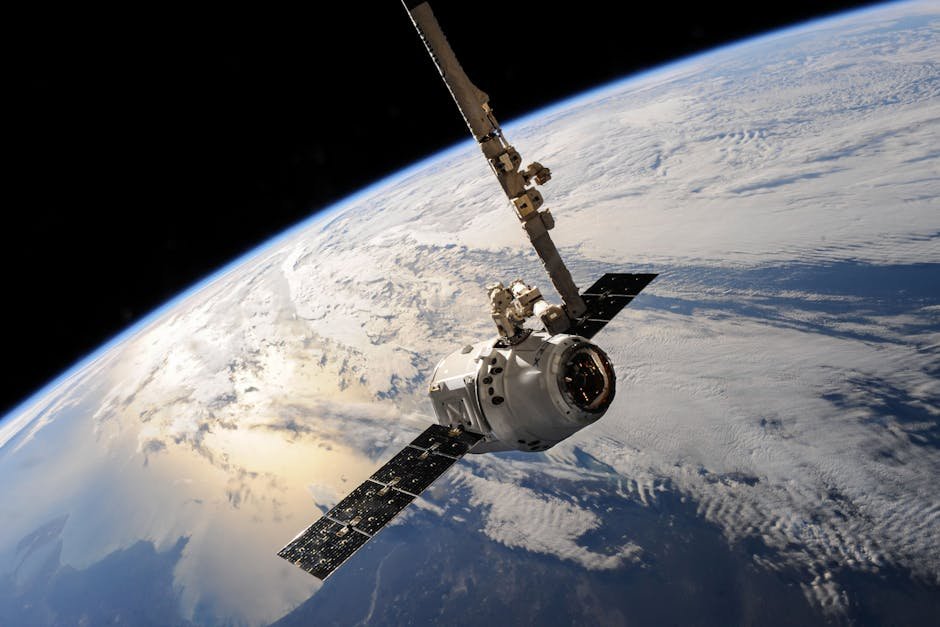
Breakneck Pace Marks a Tactical Shift (Image Credits: Pexels)
China executed two high-profile rocket launches within just over 30 hours this week, deploying a total of 23 satellites into low-Earth orbit. The missions advanced the nation’s primary space-based internet networks, Qianfan and Guowang, in a concentrated push toward operational scale. This rapid deployment underscores Beijing’s growing capabilities in orbital infrastructure amid intensifying global competition.[1][2]
Breakneck Pace Marks a Tactical Shift
The first mission lifted off from the Hainan Commercial Space Launch Site aboard a Long March 8 rocket. It carried satellites destined for the Qianfan constellation, operated by Shanghai Spacecom Satellite Technology, also known as Spacesail. Less than a day and a half later, a Long March 6A rocket roared from the Taiyuan Satellite Launch Center in Shanxi province, delivering payloads for the state-backed Guowang network.[3]
Observers noted the unusually tight timeline as one of China’s most intense orbital deployment efforts to date. Such cadence would have seemed improbable just five years prior. The back-to-back operations demonstrated enhanced coordination across launch facilities and rocket variants.
Unpacking the Constellations
Qianfan aims for a first-phase deployment of about 648 satellites, with plans scaling to 14,000 in total. Around 54 satellites from this network already orbit Earth following multiple prior missions since August 2024. Each launch typically adds roughly 18 satellites, signaling the need for dozens more flights to hit initial targets.
Guowang, meanwhile, trails with fewer than 30 satellites in orbit as of early 2026. International Telecommunication Union filings outline a network of approximately 13,000 satellites, including an initial shell of about 6,000. Both programs rely on satellites manufactured by the Innovation Academy for Microsatellites of the Chinese Academy of Sciences, fostering unified production efficiencies.
- Current combined fleet: Fewer than 100 satellites.
- First-phase goals: Roughly 6,648 satellites total.
- Ultimate ambition: Around 27,000 satellites across both networks.
Distributed Might Versus Integrated Power
China’s model diverges sharply from SpaceX’s Starlink blueprint. While SpaceX centralizes operations around its Falcon 9 family and a few U.S. launch pads, China distributes efforts across state enterprises, commercial entities, and diverse sites. This includes emerging facilities like Hainan for commercial volumes and Jiuquan for testing innovations.[1]
Starlink boasts over 6,000 operational satellites, serving more than 4 million users in over 100 countries. SpaceX launched more than 1,000 Starlink satellites in 2024 alone from limited pads. In contrast, China’s 2024 orbital launches totaled 68, carrying far less megaconstellation mass. Yet Beijing leverages geographic spread – coastal sites in Shandong, Ningbo, and Yangjiang – to sidestep bottlenecks.
| Aspect | China (Qianfan/Guowang) | SpaceX (Starlink) |
|---|---|---|
| Satellites in Orbit | <100 | >6,000 |
| Launch Sites | Multiple (Hainan, Taiyuan, etc.) | 3 primary U.S. pads |
| 2024 Launches | 68 total | >100 Starlink missions |
Path to Scale: Launches, Rockets, and Regulations
Industry leaders target over 100 orbital launches in 2026, up from recent years. A sustained rhythm of two launches per week could achieve this. New entrants like CAS Space’s Nebula-1 and private Tianlong-3 rockets promise added capacity, alongside reusable Long March upgrades.
Regulatory deadlines from the ITU impose “use-it-or-lose-it” pressure on Guowang’s frequency slots. Manufacturing ramps toward thousands of satellites annually, closing the gap with SpaceX’s daily output of six units. These constellations promise resilient communications for rural areas, Belt and Road partners, and beyond civilian applications.[1]
Key Takeaways
- China’s 23-satellite deployment halves the gap to first-phase constellation goals.
- Distributed launch infrastructure enables rapid scaling without single-point failures.
- Competition with Starlink highlights dual-use potential for national security and global connectivity.
China’s orbital sprint positions its megaconstellations as viable Starlink challengers, blending commercial innovation with state directive. As launch rates climb, the race for space-based internet enters a decisive phase. What implications do these developments hold for global connectivity? Share your thoughts in the comments.