


There is a quiet crisis unfolding in countries that have never been more connected by technology. People carry devices capable of reaching thousands of others within seconds, yet surveys from the United States and across the globe consistently show that feelings of deep isolation are rising, not falling. The numbers are striking enough to have caught the attention of governments, public health bodies, and neuroscientists alike.
What makes this moment different is not just the scale of the problem. It is the growing scientific consensus that human conversation is not a social luxury. It is, in a very real biological sense, something the body needs.
A Public Health Crisis Officially Recognized

In May 2023, U.S. Surgeon General Vivek Murthy called loneliness a public health epidemic. That declaration carried unusual weight because it came from the country’s top medical official, treating social disconnection with the same urgency typically reserved for infectious disease or substance abuse. The framing was deliberate: this is not a personal failing, it is a systemic problem.
The World Health Organization Commission on Social Connection has since released a global report revealing that one in six people worldwide is affected by loneliness, with significant impacts on health and well-being. The report launch followed the first-ever resolution on social connection, adopted by the World Health Assembly in May 2025, which urges Member States to develop and implement evidence-based policies and programs to promote positive social connection for mental and physical health.
In a joint statement published in January 2024, the governments of the U.S., Japan, Morocco, Sweden, Kenya, and Chile highlighted the importance of social connection to the health and well-being of individuals, communities, and societies. The convergence of so many governments on a single social issue within such a short window is, in itself, a meaningful signal.
The Numbers Behind the Crisis

Early in 2024, roughly three in ten adults said they had experienced feelings of loneliness at least once a week over the past year, while one in ten said they were lonely every day. These figures come from the American Psychiatric Association’s Healthy Minds Monthly poll, conducted across more than 2,200 adults.
Although progress has been made in reducing loneliness in the U.S. since the pandemic, a significant number of U.S. adults, an estimated 52 million based on Gallup’s current estimate, still struggle with it. The economic toll is real: loneliness costs the U.S. economy an estimated $406 billion annually in workplace absenteeism and lost productivity.
More than six in ten U.S. adults reported feeling isolated, left out, or lacking companionship often or some of the time, according to the APA’s 2025 Stress in America survey. Among more than 3,000 U.S. adults surveyed, nearly seven in ten said they needed more emotional support in the past year than they received, an increase from the previous year.
Loneliness Is a Biological Signal, Not Just an Emotion

Loneliness is a biological signal indicating that we need human connection, just like thirst is a signal telling us that we need water. This framing from Harvard researchers reframes the entire conversation. Feeling lonely is not weakness. It is the body correctly identifying a deficit and pushing the person to correct it.
The U.S. Surgeon General made an impactful declaration in the 2023 advisory that social connection, or human relationships, is a human need equivalent to water, food, and shelter. Social connection is widely acknowledged to be a fundamental human need, linked to higher well-being, safety, resilience, and prosperity, and to longer lifespan.
Social isolation and loneliness, often framed as societal and emotional challenges, are now recognized as significant biological threats with profound implications for health and aging, revealing links to chronic inflammation, dysregulated gene expression, neuroendocrine dysfunction, and accelerated biological aging. These are not soft, psychological side effects. They are measurable changes happening inside the body at the cellular level.
What Real Conversation Does to Your Brain Chemistry

Speech between trusted individuals is capable of reducing levels of salivary cortisol, often considered a biomarker of stress, and increasing levels of urinary oxytocin, a hormone involved in the formation and maintenance of positive relationships. This is a direct, measurable biochemical shift triggered by something as simple as talking with someone you trust.
Children who instant-messaged their mothers after undergoing a stressor did not release oxytocin; instead, these participants showed levels of salivary cortisol as high as control subjects who did not interact with their parents at all. The implication is important: text-based digital communication does not appear to produce the same physiological calming response that voice does.
Whereas cortisol mediates energy mobilization during stress, oxytocin has anti-inflammatory, anxiolytic, and analgesic effects that support social connection and survival across the lifespan. Salivary cortisol levels were suppressed by social support in response to stress, and the combination of oxytocin and social support exhibited the lowest cortisol concentrations as well as increased calmness and decreased anxiety.
The Physical Health Stakes Are Higher Than Most People Realize

Research has found that social isolation is associated with approximately a fifty percent increased risk of dementia, a twenty-nine percent increased risk of heart disease, and a thirty-two percent increased risk of stroke. These are not marginal increases. They are on a par with risks that prompt doctors to prescribe medication and recommend lifestyle overhauls.
The Surgeon General noted that lacking adequate social connection carries health risks equivalent to smoking fifteen cigarettes a day. That comparison has been cited widely, and for good reason. Most people would never accept a smoking habit as inevitable, yet millions quietly accept chronic disconnection as just how modern life is.
Loneliness and social isolation increase the risk of stroke, heart disease, diabetes, cognitive decline, and premature death, and people who are lonely are twice as likely to become depressed. The full list of mental and physical health conditions associated with loneliness and poor social connection runs from impaired cognitive function, depression, anxiety, and increased risk of suicide, to cardiovascular disease, diabetes, and infectious diseases.
Generation Z: The Loneliest Generation on Record

Research conducted in November 2024 representing over 1,800 Gen Zs around the world shows that eight in ten Gen Z respondents agree they’ve felt lonely in the past twelve months, a stark contrast to just forty-five percent of baby boomers. That gap is wide enough to constitute a generational difference in lived experience, not just a statistical variation.
Younger people are more likely to experience feelings of loneliness, with roughly three in ten Americans aged 18 to 34 saying they are lonely every day or several times a week. Young people today spend nearly a thousand fewer hours per year hanging out with friends in person than they did twenty years ago.
The downward trend of young adult well-being is so widespread and intense that it has reshaped the landscape of happiness. In the past, happiness across the adult lifespan took on a U-shaped curve. Young adults were among the most content with their lives, happiness dipped in middle age and then rose again among older adults. In recent years, this decades-old curve has shifted into a straight, upward line, with young adults now less happy than either older or middle-aged groups. Stanford researcher Jamil Zaki documented this shift in work contributing to the 2025 World Happiness Report.
The Social Media Paradox
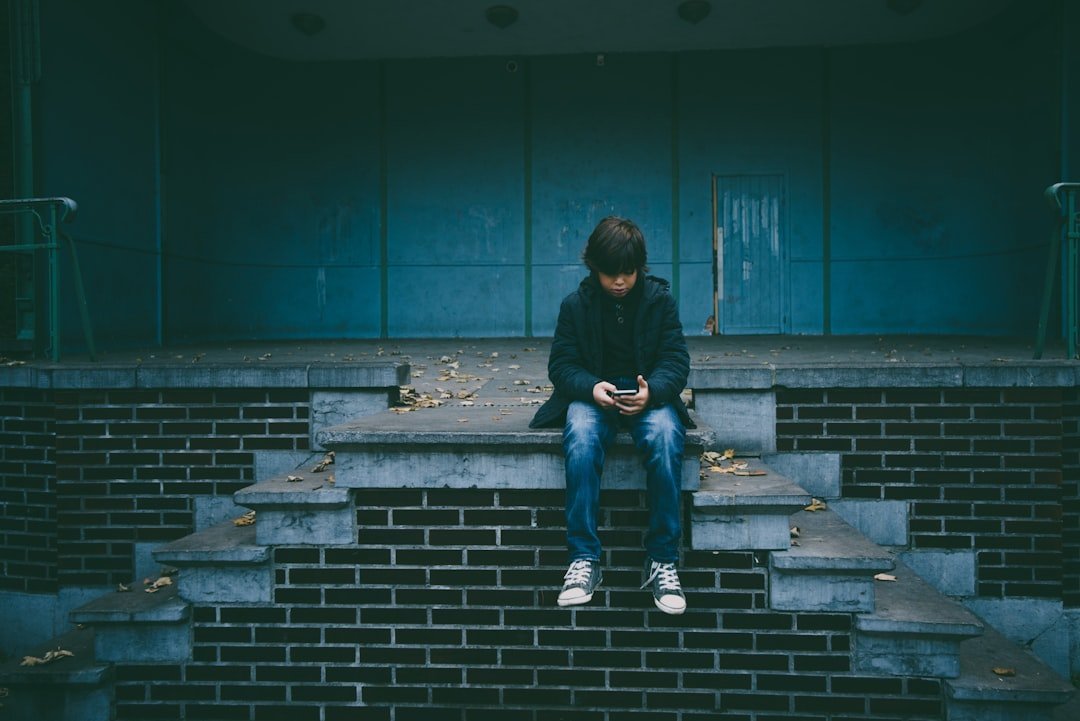
Despite being digital natives, Gen Z is more disconnected than ever. While social media is central to their lives, it often amplifies feelings of inadequacy and isolation, with highlight reels and influencer culture leaving many feeling like they’re falling short. The platforms designed to connect people appear, in many cases, to be doing the opposite.
According to a survey by the health insurer Cigna, those aged 18 to 22 have the highest average loneliness scores, and loneliness was found to be more common among people with high levels of engagement with social media compared with those with low levels. More time on platforms does not equal more connection. It often means less of it.
While digital communication has merits, face-to-face interaction remains unparalleled, allowing for nuanced communication through body language and facial expressions. The richness of in-person exchange, including tone, gesture, shared silence, and proximity, cannot be replicated by a notification or a reaction emoji. The body notices the difference even when the mind tells itself otherwise.
The Compounding Problem: Loneliness Breeds More Loneliness

Respondents who reported loneliness were far more likely to also report anxiety, depression, a lack of meaning and purpose. For example, roughly four in five lonely adults reported anxiety or depression, and about three quarters of lonely adults reported having little or no meaning or purpose. Harvard’s Making Caring Common project, which surveyed a nationally representative sample in May 2024, documented this troubling overlap.
Poor social connection can dysregulate our physiology and behavior in ways that put us at risk of developing poorer health. Poorer health may reduce people’s willingness, ability, or access to connect socially, resulting in greater isolation, which in turn impedes their ability to manage. It is a cycle that reinforces itself, making early intervention far more effective than waiting until isolation becomes entrenched.
Americans who had a lonely childhood are much more likely to report feeling lonely or isolated as adults, with two-thirds of Americans who felt lonely every day during childhood saying that today they feel lonely or isolated all or most of the time. The patterns set early in life echo forward in ways that deserve far more attention than they currently receive.
Why 15 Minutes of Real Conversation Matters

Research reveals that meaningful relationships stimulate the growth of new neural connections and support neuroplasticity in the brain. This is not poetry. It is neuroscience. The brain physically changes in response to genuine human interaction, and those changes support memory, emotional regulation, and cognitive resilience.
Social connection influences health in three ways: biologically, psychologically, and behaviorally. Specifically, social connection decreases stress hormones, provides a sense of purpose, and can be connected to more healthy behaviors. Even a brief, genuine exchange with another person can interrupt the cortisol cycle and restore a sense of being seen and belonging.
Robust evidence documents social connection factors as independent predictors of mental and physical health, with some of the strongest evidence on mortality. The fifteen-minute threshold is not a magic number backed by a single definitive study. Rather, it reflects the growing evidence that small, regular doses of real human exchange, voice, presence, genuine attention, are enough to trigger meaningful biological responses and protect health over time.
What the Research Says Actually Helps

When respondents were asked who or what contributes to loneliness in America, technology topped the list at nearly three quarters of responses. The solution people endorsed most, including lonely adults themselves, was simple: taking time each day to reach out to a friend or family member. The fix, in many cases, is lower-tech than the problem.
Social connection can protect health across the lifespan. It can reduce inflammation, lower the risk of serious health problems, foster mental health, and prevent early death. It can also strengthen the social fabric, contributing to making communities healthier, safer, and more prosperous. The WHO’s 2025 report frames these benefits not just as personal rewards but as community-level outcomes worth investing in at a policy level.
Despite a high prevalence of loneliness, millennials appear to be better able to mitigate its negative impacts than members of other generations. Lonely millennials are more likely to participate in activities that interest them, prioritize their physical health, and foster social connections. They are the most likely generation to feel they can build connections and friendships with others. This suggests attitude and agency matter alongside structural factors, which is an important and genuinely hopeful finding.
Conclusion: Connection Is Not Optional

The science here is not ambiguous. Across dozens of studies, from large-scale epidemiological data to biochemical lab research, the conclusion is consistent: human beings need real, face-to-face, voice-based connection to function well, not as a nice addition to a healthy lifestyle but as a core requirement.
High-quality social connections are essential to our mental and physical health and our well-being. Social isolation and loneliness are important yet neglected social determinants for people of all ages. The neglect is the problem. We have built lives, workplaces, and cities that make genuine daily connection increasingly difficult to sustain, then are surprised when the health consequences arrive.
Fifteen minutes of real conversation will not solve the structural forces driving this crisis. However, it may be one of the most evidence-backed, zero-cost interventions available to any individual right now. The body is not asking for much. It is asking for what it has always needed: the presence of another person, a real voice, and the simple act of being heard.