


Most people think lasting change requires dramatic effort. A complete diet overhaul, a rigorous new workout regime, a total personality reset. The science quietly disagrees. A growing body of neuroscience research suggests that the smallest, most seemingly trivial behaviors, ones that take less than a minute, can physically alter the architecture of your brain over time. That’s not a metaphor. That’s neuroplasticity in action.
The idea behind micro-habits isn’t new, but the research supporting it has become considerably more precise in recent years. What scientists now understand about how the brain encodes routine behavior explains why a 60-second task repeated consistently can carry more long-term weight than an ambitious goal you abandon after three weeks.
What a Micro-Habit Actually Is

Micro-habits are consistent, low-effort actions that stack over time. Built on the principle that small wins trigger dopamine and reinforce the habit loop, they differ from regular habits in being hyper-specific and quick, typically taking between 30 seconds and two minutes. Think one focused breath before a meeting, writing a single sentence each morning, or doing a brief stretch after sitting down at your desk.
Habits, at their core, are behaviors triggered by contextual stimuli, developed through frequent repetition, that often persist regardless of current beliefs and goals. Micro-habits work within this same framework, but they lower the activation threshold so far that the brain barely registers resistance. That’s precisely their advantage.
The Brain Structures Behind Every Habit You Have

Habits are the behavioral output of two brain systems: a stimulus-response system that encourages us to efficiently repeat well-practiced actions in familiar settings, and a goal-directed system concerned with flexibility, prospection, and planning. These systems compete constantly, and understanding that competition is key to understanding why habits form at all.
While both habitual and goal-directed behavior involve connections between the cortex and striatum, they are represented by distinct pathways. Goal-directed behavior has been linked to the corticostriatal associative loop, which connects the prefrontal cortex and orbitofrontal cortex with the dorsomedial striatum. Habitual behavior, on the other hand, has been linked to the corticostriatal sensorimotor loop, which connects the sensorimotor cortex to the dorsolateral striatum.
The basal ganglia, structures deep in the forebrain already known to control voluntary movements, also may play a critical role in how people form habits, both bad and good, and in influencing mood and feelings. This dual role, both motor and emotional, explains why habit formation reaches far beyond simple behavior and into how we feel about our daily lives.
Neuroplasticity: The Biological Engine of Change

The brain’s ability to reorganize itself, known as neuroplasticity, underpins habit formation. Repeated behaviors strengthen neural pathways, making them more efficient. This process, often described as “neurons that fire together, wire together,” explains why habits become automatic over time.
Habits don’t form overnight. They require consistent repetition to rewire the brain through a process called neuroplasticity. The more you repeat a behavior, the stronger the brain pathways related to that behavior become, making the action easier and more automatic with time.
Synaptic plasticity refers to changes in the strength of connections between neurons. Repeated behaviors increase the synaptic strength of habit-related circuits, embedding the habit in the brain. Long-term potentiation (LTP) is a process that enhances signal transmission between neurons, making neural circuits more robust. It plays a critical role in the long-term establishment of habits.
How Small Wins Activate the Dopamine System

In this context, dopamine plays a crucial dual role. As both a neurotransmitter and a neuromodulator, it provides the neural “currency” for the reward system, critically appraising and encoding the desirability of outcomes associated with behaviors. Each time a micro-habit is completed and a small reward follows, that circuit gets chemically reinforced.
When you reach for your morning coffee, the resulting pleasure isn’t merely a sensory experience but also a dopaminergic signal reinforcing the habit’s value through the ventral tegmental area and substantia nigra pars compacta activation. Over time, as the association between action and reward is consistently reinforced by dopaminergic neurons, the behavior is neurochemically tagged for repetition, a process facilitated by the ventral striatum in the basal ganglia.
Researchers have discovered that neurons firing in a coordinated pattern can amplify dopamine activity in a surprising way. Short bursts of dopamine appear to serve as potent learning signals that help the brain assign meaning and value to shared experiences. This is exactly the mechanism that micro-habits exploit through their brevity and repeatability.
How Long Does It Actually Take?
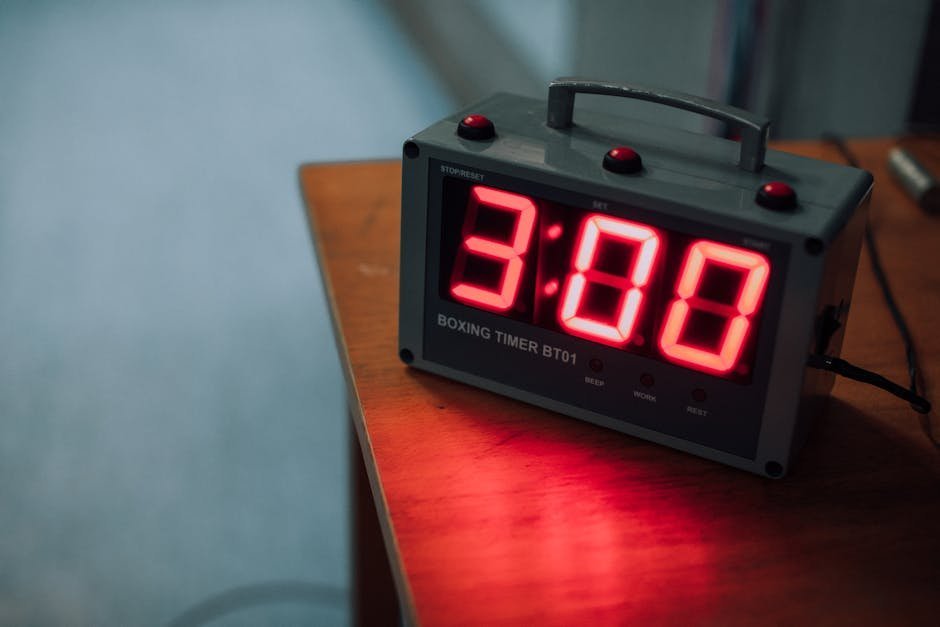
A study on health-related dietary or activity habits found that the duration necessary to form a habit varies considerably between individuals. Participants took anywhere from 18 to 254 days to reach 95% of their asymptote in terms of automaticity, with a median of 66 days. The popular claim that habits form in 21 days has no reliable scientific basis.
Contrary to common wisdom, there is no single “magic number” for how long it takes to form a habit. The speed of habit formation appears to vary significantly between behavioral domains: gym habits take months to form and handwashing habits take weeks to form. Micro-habits, precisely because they are simpler and shorter, tend to sit at the faster end of that spectrum.
The variability in both the number of repetitions and the time required for habit formation may stem from multiple factors, such as cue intensity and specificity, repetition frequency, and the strength of intrinsic and extrinsic motivations. Starting with smaller behaviors stacks the odds in your favor on nearly all of these dimensions.
The Habit Loop and Why Context Is Everything

The transition from deliberate action to automatic behavior is facilitated by the consistent pairing of cues and routines, which strengthens the neural pathways associated with the behavior. Studies indicate that participants who utilized trigger events to initiate behaviors reported higher levels of automaticity compared to those who relied solely on reminders.
Making habits is facilitated by repetition, reinforcement, disengagement of goal-directed processes, and stable contexts. This is why the same micro-habit performed at the same time, in the same place, embeds faster than one performed randomly across the day.
Contextual overtraining can accelerate habit formation, indicating that repeated exposure to specific stimuli in a consistent context can strengthen the association between cues and responses. For micro-habits, this means attaching a 60-second task to an already-established anchor, like making coffee or opening a laptop, dramatically reduces how long it takes for the new behavior to feel automatic.
Habit Stacking: Linking Small Behaviors Into Chains

Stable cues and reduced action monitoring facilitate habit stacking, a strategy where new habits are linked to existing ones, such as flossing after brushing teeth. In habit stacking, the old habit serves as a cue for expressing the new habit. This technique works because it exploits an existing neural pathway rather than demanding the brain build one from scratch.
Stable contextual cues reduce the need for action monitoring and promote chunking, the integration of multiple actions into a sequence, such as an experienced driver changing gears in a manual car. Chunking has been shown to be dopamine-dependent. Stacking micro-habits together essentially lets you build behavioral chains that become increasingly automatic as a unit.
The Two-Circuit System: Repetition and Breaking Free

At the core of the brain’s behavioral control system are two complementary neural circuits: a repetition circuit and a switching circuit. The repetition circuit, which connects the motor cortex to the dorsolateral striatum, helps maintain habits and behavioral stability. The switching circuit, which runs from the prefrontal cortex to the dorsomedial striatum, enables us to break routines and adapt to changing circumstances.
Researchers found that these circuits don’t function in isolation. The switching circuit can actively suppress the repetition circuit. This one-way inhibitory relationship allows the brain to override habitual behavior when flexibility is needed, forming the neural basis for adaptive decision-making. Understanding this means that building good micro-habits and dismantling bad ones are both active, neurologically distinct processes.
Stress, Automaticity, and Why Bad Days Don’t Have to Derail You

A potential complicating factor in habit formation is that habitual behavior is highly regulated by stress. Just as nervousness before a major event might lead you to rely more on your morning routine, acute and chronic stress has been shown to increase subjects’ reliance on habitual strategies in both animal and human studies. In practical terms, this cuts both ways.
A longitudinal study showed habit expression in chronically stressed participants, but importantly, habit expression ceased after a six-week stress-free period. Well-established micro-habits provide a structural advantage here: because they are so small, they persist even under stress, keeping a positive behavioral thread intact even on difficult days.
Generally, individuals perform well at inhibiting overtrained responses; however, goal-directed capacities can be compromised under conditions such as time pressure, working memory load, and stress. This is why building habits during low-stress periods, and keeping them small enough to survive high-stress ones, matters far more than motivation alone.
Practical Architecture: Building Habits That Stick
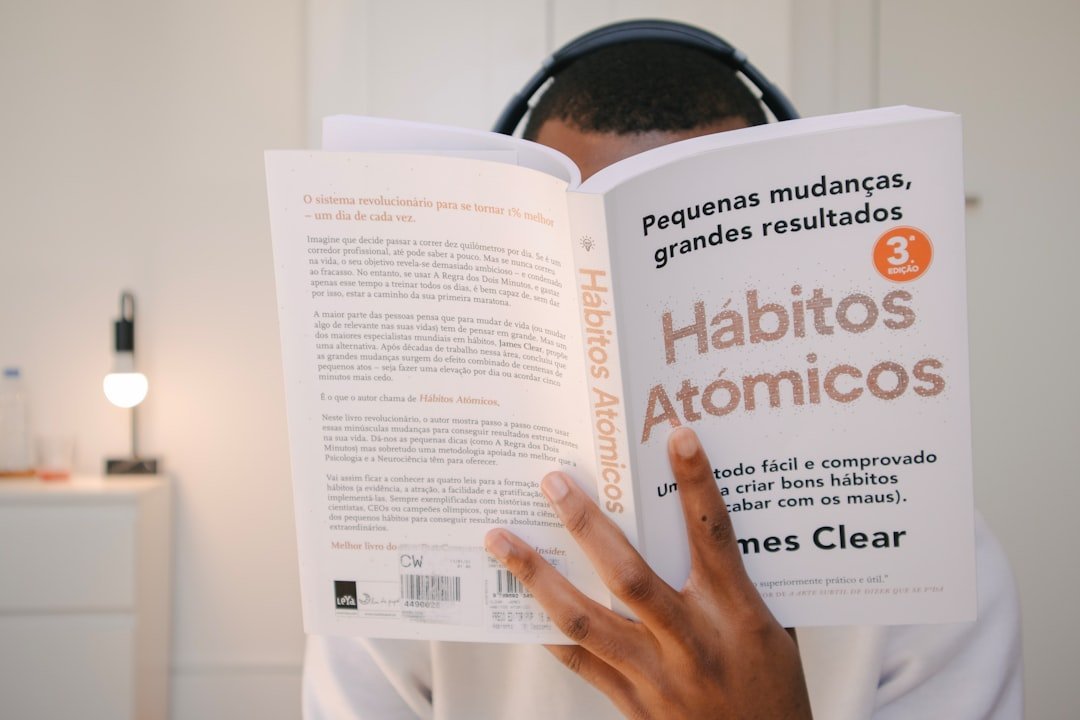
Motivation and discipline are critical components of habit formation, with systems-oriented approaches often proving more effective than goal-oriented strategies. While goals can guide behavior, the development of habits is more reliant on consistent practice and the establishment of routines. This is a subtle but important distinction: aiming to be a person who does a thing daily is more durable than chasing a one-time outcome.
Decades of psychological research consistently show that mere repetition of a simple action in a consistent context leads, through associative learning, to the action being activated upon subsequent exposure to those contextual cues. Once initiation of the action is “transferred” to external cues, dependence on conscious attention or motivational processes is reduced.
Studies show that starting with micro-habits, such as meditating for just one minute or doing five push-ups, triggers the brain’s reward system, reinforcing the behavior. Once these small wins are established, you can gradually increase the challenge. The 60-second task isn’t the destination. It’s the doorway. The neural pathway you build in that first minute is the same one you’ll walk through for years.
The science of micro-habits doesn’t promise shortcuts. It reveals something more useful: that the brain changes through repetition, not intensity, and that even the smallest consistent action rewires how easily the next one begins. When transformation feels impossible, 60 seconds is always available.