

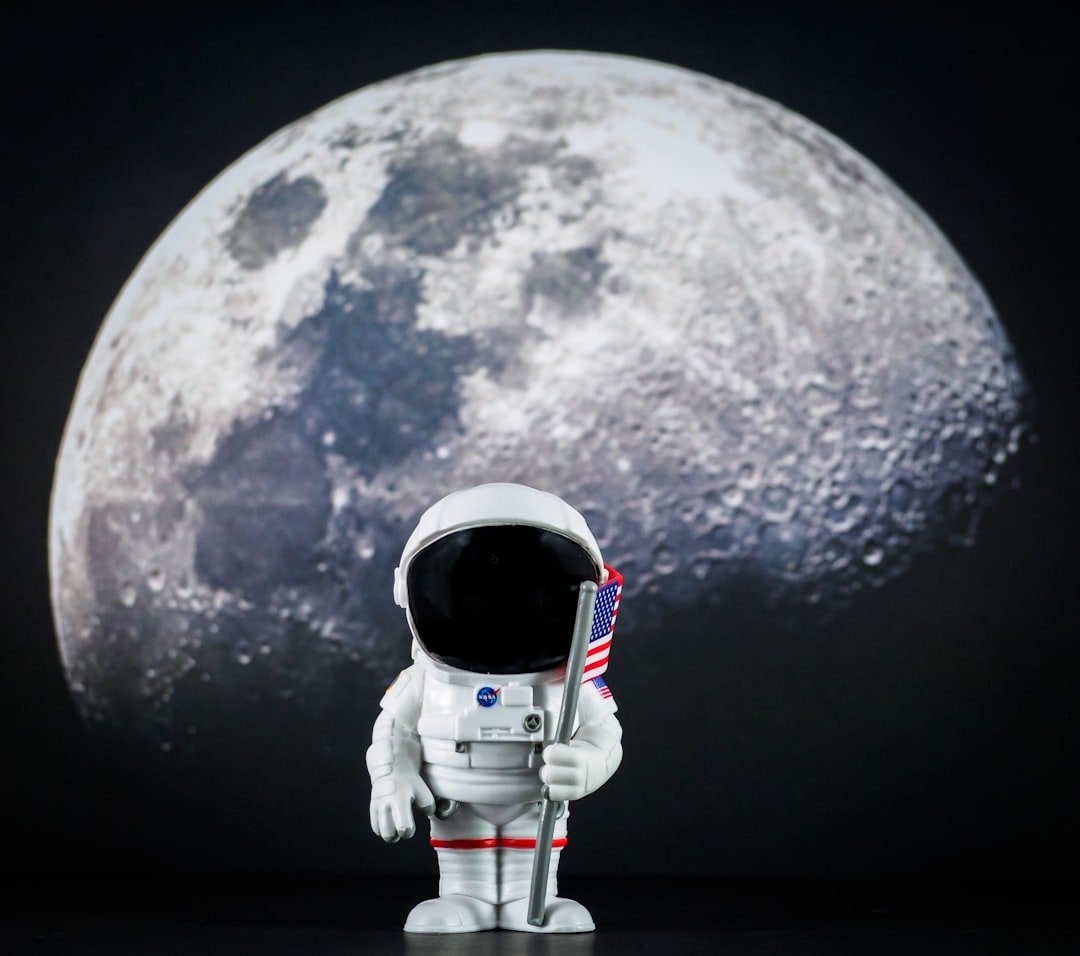
A Plush Icon Emerges from Thousands (Image Credits: Unsplash)
The successful splashdown of NASA’s Orion spacecraft Integrity marked the end of Artemis II, the first crewed lunar mission in over five decades. Crew members emerged from the Pacific Ocean waters off California, greeted by Navy helicopters and a waiting world. Among the triumphs, a small plush moon named Rise captured global attention, thanks to commander Reid Wiseman’s determination to keep it close.
A Plush Icon Emerges from Thousands
Thousands of young minds submitted designs for NASA’s Moon Mascot contest, sparking creativity across more than 50 countries.[1][2] Lucas Ye, an eight-year-old from Mountain View, California, crafted Rise – a smiling plush moon donning a cap inspired by the Apollo 8 Earthrise image. The design featured a blue-green brim highlighting Africa, rockets symbolizing Apollo and Artemis, and stars of the Orion constellation, with a boot print evoking Neil Armstrong’s first step.
The Artemis II crew – Reid Wiseman, Victor Glover, Christina Koch, and Jeremy Hansen – sifted through 25 finalists before selecting Rise as their zero-gravity indicator.[3] NASA produced just two versions: one for flight and another for pre-launch displays. A zippered pocket held a microchip bearing over 5.6 million names from the public “Send Your Name with Artemis” campaign.[4]
Rise Floats into Mission Spotlight
On April 1, 2026, shortly after launch from Kennedy Space Center, Rise floated free inside Orion, signaling the crew’s entry into weightlessness. Tethered for safety, the mascot appeared in livestreams and crew chats with Earth, endearing itself to viewers worldwide.[3] During the 10-day journey, it symbolized human exploration and joined playful moments amid the historic lunar flyby.
The crew integrated Rise into their routine, from zero-gravity demos to social media posts. Mission specialist Christina Koch noted its tie to the Earthrise ethos embedded in their patch. As the spacecraft looped the moon, Rise represented not just functionality but the mission’s spirit of inspiration.[2]
Post-Splashdown Drama Unfolds
Splashdown occurred on April 10, 2026, in the Pacific, where Navy helicopters from Helicopter Sea Combat Squadron 23 lifted the crew to the USS John P. Murtha. Standard protocol dictated leaving non-essential items like Rise inside Orion for later recovery teams. Yet Wiseman tucked the mascot into a dry bag from the survival kit and secured it to his suit.
Rise bobbed briefly on a raft before joining Wiseman and Hansen in the helicopter. The next day, at Naval Air Station North Island in San Diego, Wiseman tethered it to a water bottle. It even traveled with him to Houston for celebrations at Ellington Field near Johnson Space Center.[3]
Wiseman’s Personal Bond Shines Through
Wiseman’s attachment stemmed from more than protocol defiance. An early prototype bore the name “Carroll,” honoring his late wife who passed from cancer in 2020. During a lunar flyby livestream on April 6, the crew proposed naming a moon crater after her, sharing an emotional group hug on camera.[3]
On April 11, Wiseman posted on X: “It’s hard not to love this little guy. I can’t let Rise out of my sight.”[3] The image of him with Rise alongside his daughters underscored the mascot’s role as a bridge between mission rigor and human warmth. Public reactions poured in, with fans dubbing it the crew’s “fifth member.”
Key Takeaways
- Rise carried 5.6 million names, turning a plush toy into a global symbol.
- Designed by child artist Lucas Ye from 2,600+ contest entries.
- Wiseman’s choice prioritized sentiment over strict procedure, highlighting astronaut humanity.
As NASA weighs Rise’s future under space artifact laws, its legacy endures – a reminder that even in the vastness of space, small gestures forge deep connections. What role should such mascots play in future missions? Share your thoughts in the comments.