

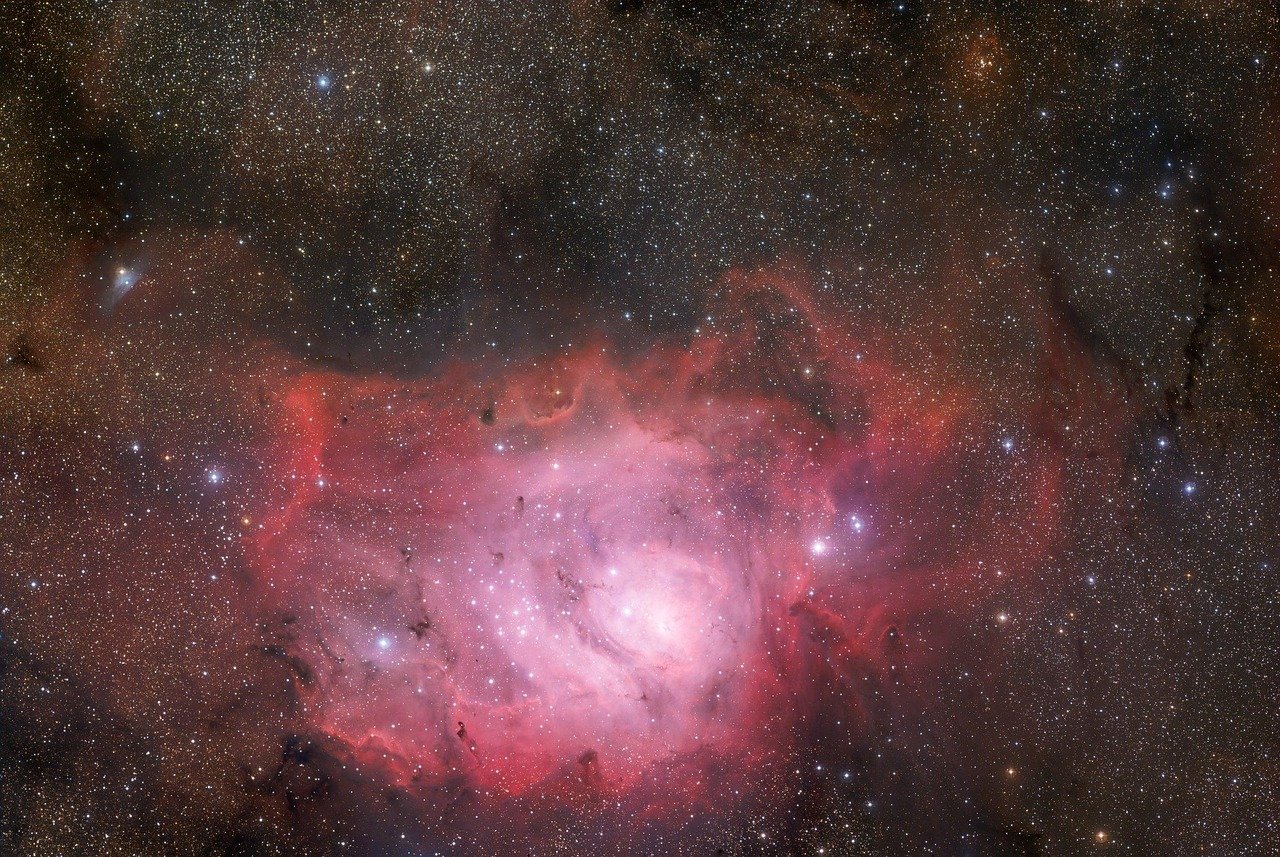
Barnard’s Groundbreaking Contribution to Astronomy (Image Credits: Pixabay)
Edward Emerson Barnard’s pioneering atlas of dark nebulae turned 99 years old this year, reminding astronomers of the shadowy structures that punctuate the Milky Way. These cosmic clouds, once mysterious voids, now captivate observers and imagers alike. A new publication, “The Barnard Album,” steps in as a timely companion, blending historic plates with contemporary enhancements, as highlighted in a recent review by Astronomy Magazine’s editor emeritus, Dave Eicher.[1]
Barnard’s Groundbreaking Contribution to Astronomy
Barnard essentially pioneered the systematic study of dark nebulae in the early 20th century. His *Atlas of Selected Regions of the Milky Way*, published in 1927, featured photographic plates that captured these obscuring clouds against the starry backdrop. Original editions commanded high value because Barnard personally pasted the prints into each copy, a labor-intensive process that added to their rarity.[1]
A 2011 reprint by Cambridge University Press made the atlas accessible to a broader audience without sacrificing affordability. Among its highlights stood Barnard’s 33rd object, the iconic Horsehead Nebula, which remains one of the most recognized dark features in the sky. This work laid the foundation for understanding interstellar dust as a key galactic component. Yet, nearly a century later, detailed resources on these phenomena remained scarce.
Introducing ‘The Barnard Album’ as a Vital Update
Produced by a team of dedicated astronomy enthusiasts, “The Barnard Album” forms part of the Patrick Moore Practical Astronomy Series. It faithfully reproduces Barnard’s plates at a reduced scale of about five inches square, preserving most original details despite the smaller size compared to the eight-inch-plus originals. Coauthor Tim Hunter contributed vivid color images of select regions, transforming the stark black-and-white views into dynamic portrayals of surrounding star fields.[1]
The volume pairs these visuals with informative text that explains the composition of dark nebulae as clouds of tiny dust grains. Though the uncoated, thinner paper reflects publishing challenges, it does not detract from the content’s quality. Readers gain annotated guides that contextualize Barnard’s discoveries within modern knowledge. This approach makes the book particularly appealing for both historical appreciation and practical use.
Tools for Today’s Skywatchers and Imagers
Modern astronomers benefit immensely from the book’s enhancements, which bridge a century-old gap in dark nebulae literature. Color companions illuminate the environments where these shadows reside, aiding identification during observations. The annotations provide insights into current understandings of these structures’ roles in star formation and galactic evolution.[1]
For astrophotographers, the scaled plates serve as precise references, while Hunter’s images inspire techniques for capturing subtle contrasts. Eicher emphasized how the publication enriches libraries of those who photograph or ponder these distant clouds. Key features include:
- Reproduced Barnard plates with retained fine details.
- Color enhancements of notable regions.
- Explanatory text on dust cloud properties.
- Annotations linking history to contemporary astronomy.
- Guidance tailored for visual and imaging pursuits.
Comparing Classics: Original Atlas vs. Modern Supplement
The two works complement each other seamlessly, as shown in this overview:
| Aspect | Barnard’s 1927 Atlas | ‘The Barnard Album’ |
|---|---|---|
| Plate Size | Over 8 inches square, hand-pasted | About 5 inches square, reproduced |
| Visual Style | Black-and-white photography | B&W plates plus color images |
| Accessibility | Rare originals; 2011 reprint | Current publication in series |
| Added Value | Pioneering documentation | Annotations and modern context |
This table underscores how the new book extends Barnard’s vision without overshadowing it. Eicher described it as an “extremely helpful and illuminating work” that fills a persistent void in the field.[1]
- ‘The Barnard Album’ supplements a 99-year-old classic with color and annotations.
- It targets observers and imagers seeking practical dark nebulae resources.
- Despite minor production notes, its educational impact stands strong.
As dark nebulae continue to reveal secrets about our galaxy’s structure, “The Barnard Album” ensures Barnard’s legacy endures for new generations. This publication not only honors the past but equips enthusiasts to explore the shadows themselves. For the full review, see Astronomy.com.[1] What are your favorite dark nebulae to observe? Share in the comments.