

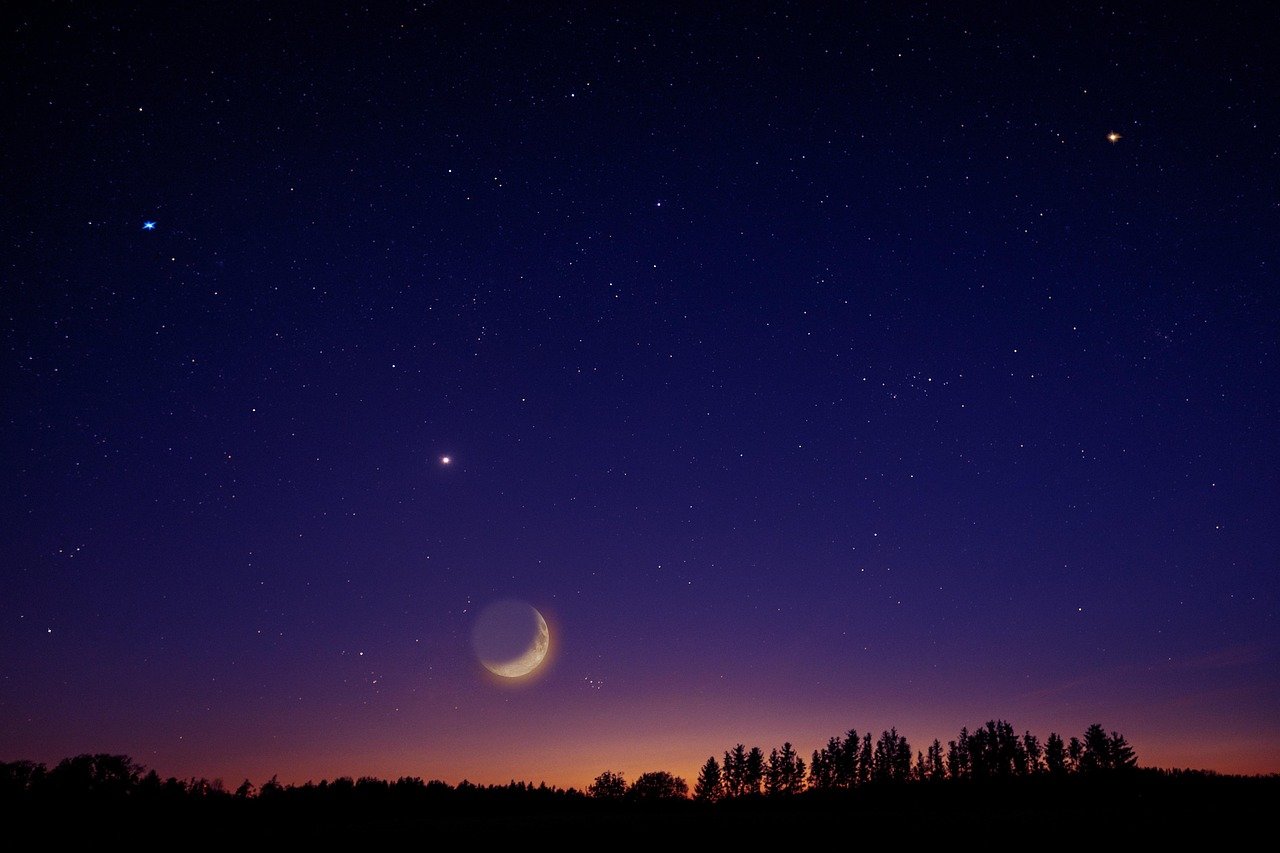
Venus Takes Its Place in Taurus (Image Credits: Pixabay)
Stargazers across the Northern Hemisphere prepare for a captivating display in the western sky this evening, April 18, 2026. Brilliant Venus has shifted into the constellation Taurus, drawing the eye alongside a delicate waxing crescent Moon bathed in earthshine. Above them, the Pleiades star cluster adds a shimmering backdrop, creating one of the year’s most accessible celestial gatherings shortly after sunset.
Venus Takes Its Place in Taurus
One hour after sunset, Venus dominates the scene at 11 degrees above the western horizon. The planet’s intense brightness makes it unmistakable even in twilight. Observers will note its recent entry into Taurus, where it now gleams among the Bull’s stars.
This positioning enhances Venus’s visibility during evening hours. The planet remains well-placed for observation until it sets later in the night. Taurus provides a stable backdrop, with its V-shaped Hyades cluster nearby, though Venus steals the spotlight tonight.
Crescent Moon Steals the Show with Earthshine
Positioned 6 degrees to Venus’s lower right, the Moon appears as a thin sliver, roughly one-and-a-half days old. Only 4 percent of its eastern edge catches direct sunlight, yet the full disk glows softly. Earthshine accounts for this effect, as sunlight reflected from our planet illuminates the shadowed portions.
The Moon remains visible until shortly before 10 p.m. local time, offering extended viewing opportunities. This phase highlights the interplay between Earth, Moon, and Sun, a reminder of our place in the solar system. Binoculars reveal subtle details in the lunar terrain under this gentle light.
Pleiades: The Seven Sisters Overhead
Sitting 7 degrees above Venus, the Pleiades emerge as darkness deepens. Known as M45 or the Seven Sisters, this open star cluster spans about 110 arcminutes across the sky. To the naked eye, it resembles a small dipper or spoon, occasionally mistaken for the Little Dipper farther north.
Young hot stars define the cluster, visible without aid but transformed through binoculars or a low-power telescope. The view captures a wide field of sparkling points against the Taurus backdrop. This grouping invites contemplation of stellar birth and evolution.
Optimal Viewing Times and Locations
Sunset occurs at 7:42 p.m. local time from central latitudes around 40 degrees north and 90 degrees west longitude. Sunrise stands at 6:17 a.m., with moonrise at 6:36 a.m. and moonset near 9:44 p.m. These timings shift slightly by location, but the western view holds universally after dusk.
| Event | Time (Local, 40°N 90°W) |
|---|---|
| Sunrise | 6:17 a.m. |
| Sunset | 7:42 p.m. |
| Moonrise | 6:36 a.m. |
| Moonset | 9:44 p.m. |
Seek clear western horizons free of trees or buildings. Rural spots enhance the experience, especially with the prior evening’s zodiacal light setup still fresh in mind.
Essential Tips for Skywatchers
Patience pays off as twilight fades. Start scanning one hour post-sunset when Venus pops first.
- Use binoculars for Moon details and Pleiades depth.
- Avoid light pollution; head to darker sites if possible.
- Track the scene nightly as positions shift.
- Combine with naked-eye views for simplicity.
- Note earthshine’s subtle glow on the Moon.
These steps ensure success for beginners and experts alike. The alignment rewards minimal equipment.
- Venus at 11° high, Moon 6° below right, Pleiades 7° above.
- Waxing crescent Moon at 4% illumination with earthshine.
- Best after sunset until ~10 p.m. local time.
This convergence of Venus, Moon, and Pleiades underscores the sky’s reliable beauty, accessible to all on clear evenings. It bridges everyday life with cosmic wonder, inviting a pause amid spring’s bustle. What captured your attention in tonight’s sky? Share your observations in the comments.