

Most people can name Stonehenge. Far fewer can tell you about the Octagon Earthworks in Newark, Ohio, a site that, by some measures, outperforms its famous British counterpart in astronomical precision. Built roughly two thousand years ago by a people who left no written records, this massive geometric construction still stands as one of the most quietly astonishing places in North America.
What makes it so remarkable isn’t just the scale, though that alone is staggering. It’s the fact that the whole thing is engineered around the moon, specifically around a lunar cycle so long and so complex that tracking it would have required careful observation passed down across multiple generations.
A Monument Born From the Newark Earthworks
The Newark Earthworks, located in Newark and Heath, Ohio, consist of three preserved sections: the Great Circle Earthworks, the Octagon Earthworks, and the Wright Earthworks. This complex was built by the Hopewell culture between 100 BCE and 400 CE and contains the largest earthen enclosures in the world, originally spanning about 3,000 acres. To put that in perspective, that’s a landmass roughly the size of a small city, shaped into precise geometric forms by hand, without metal tools or wheeled vehicles.
Less than ten percent of the total site has been preserved since European-American settlement, with only about 206 acres surviving intact today. What remains is a fragment of something once far grander. The full complex was composed of four colossal sites: the Great Circle Earthworks, the Octagon Earthworks, the Cherry Valley Ellipse, and the Wright Earthworks, all interconnected by parallel walls and earthen embankments. Even in its diminished state, it commands attention.
Who Built This, and When
The Hopewell culture was not a single tribe, rather a vast network of prehistoric Native American societies that thrived in parts of eastern North America from 100 BCE to 500 CE, during what is known as the Middle Woodland period. They were not an empire or a centralized state. These earthworks served as ceremonial centres, built by dispersed, non-hierarchical groups whose way of life was supported by a mix of foraging and farming.
The people of the Hopewell culture were farmers, fishers, hunters, and gatherers of wild plant foods. They lived in small villages scattered along the major tributaries of the Ohio River, especially the Great and Little Miami, the Scioto, and the Muskingum rivers. There was no single ruler commanding this construction. Their economy was a mix of foraging, fishing, farming, and cultivation, yet they gathered periodically to create, manage, and worship within these massive public works. The earthworks were a collective achievement, and that makes them all the more remarkable.
The Physical Scale of the Octagon

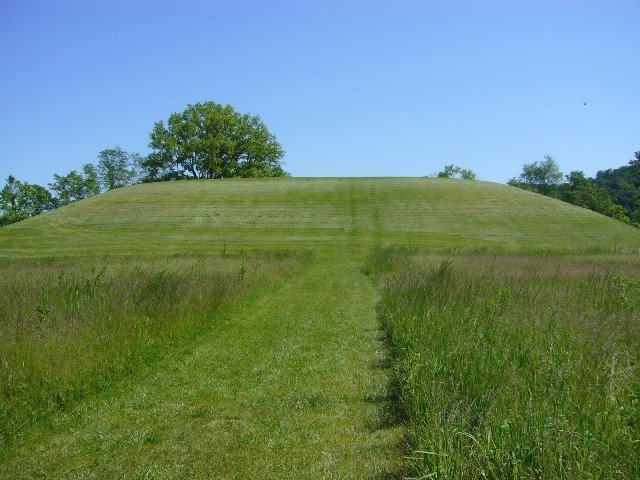
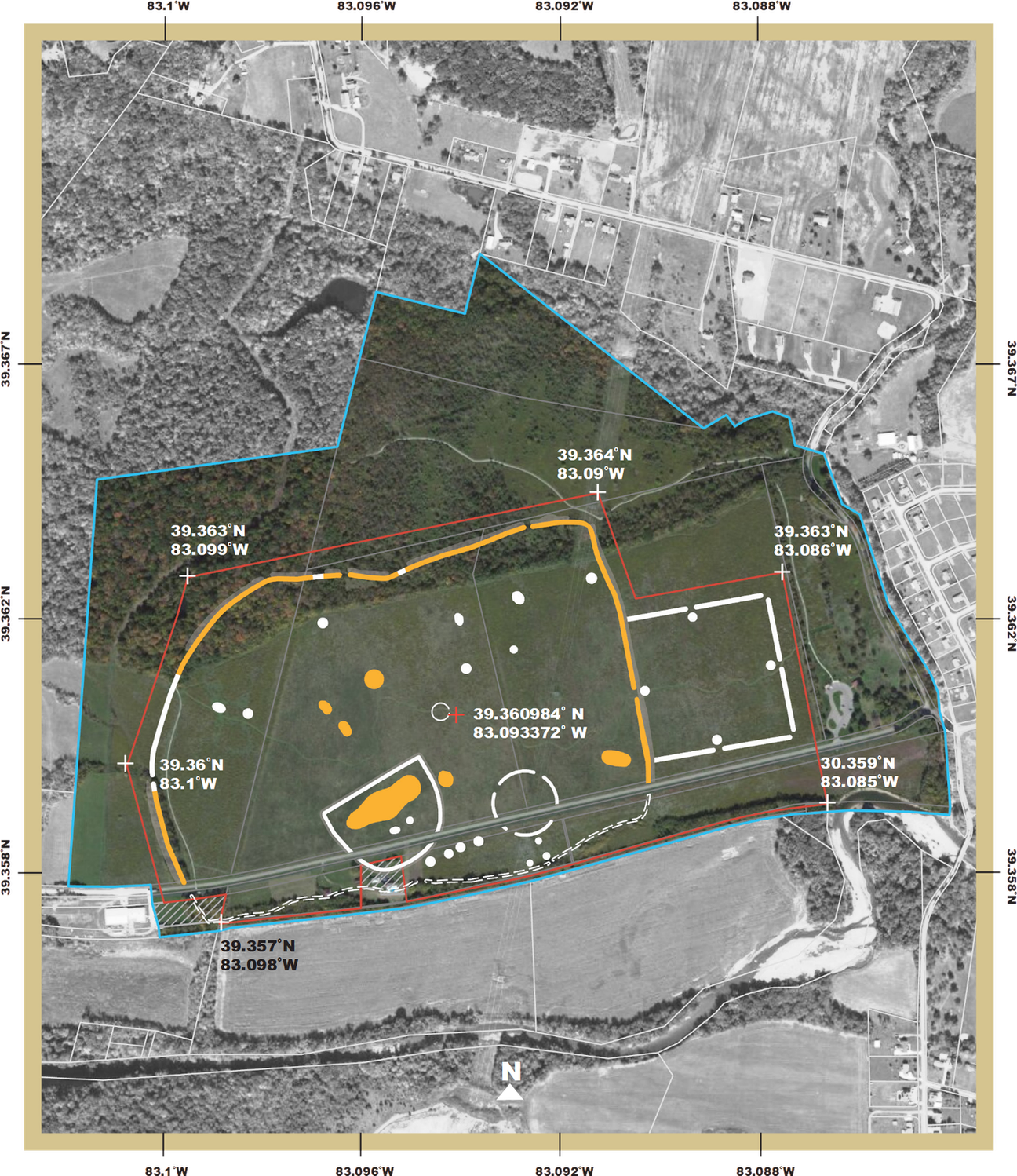
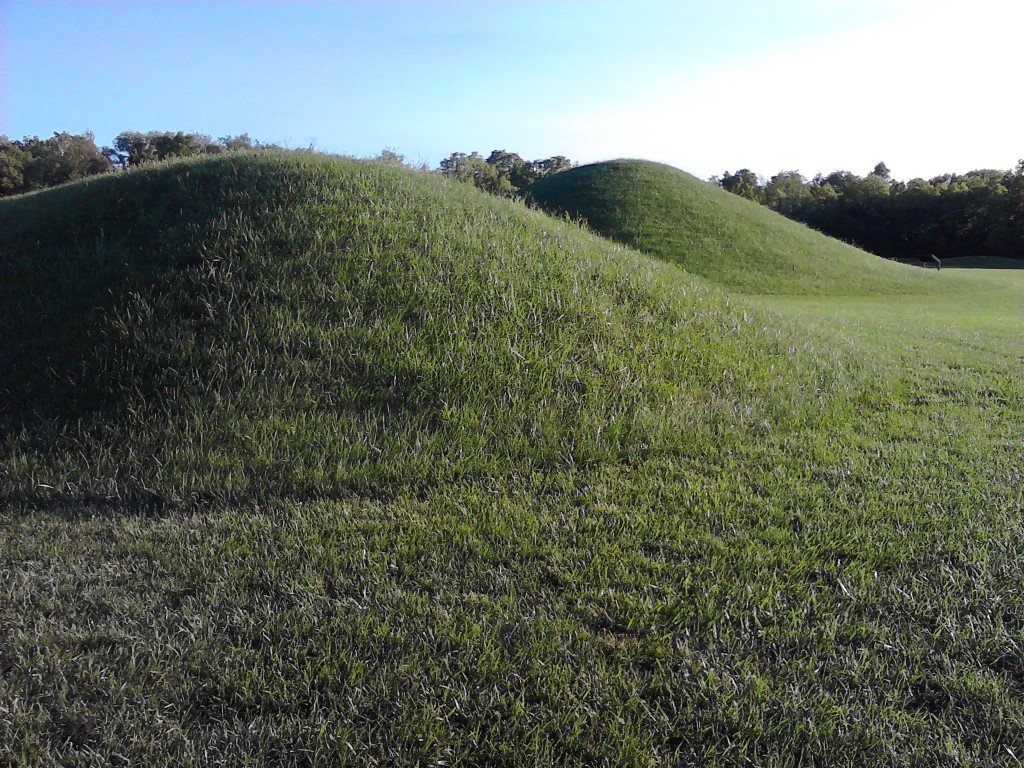
The Octagon Earthworks consists of an Observatory Mound, an Observatory Circle covering 20 acres, and the connected Octagon covering 50 acres. The Octagon itself has eight walls, each 550 feet long and ranging from 5 to 6 feet high. Walking among those walls today gives you a sense of enclosure, of being held within a deliberate geometry. The Octagon is joined by parallel walls to the Observatory Circle.
The Octagon Earthworks is made of two geometric enclosures: a large circle enclosing 20 acres, and an even larger octagon enclosing 50 acres, connected to one another by an avenue. The combination of shapes is not accidental. The architecture of the Octagon Earthworks encodes a sophisticated understanding of geometry and astronomy. Each angle, each gateway, each segment of wall appears to have been placed with a specific intention that researchers are still working to fully understand.
The Moon’s 18.6-Year Cycle, Encoded in Earth

The moon moves through a complicated 18.6-year cycle called the “lunar standstill cycle.” In this cycle, there are four moonset points and four moonrise points. Over that span, the moon’s rising and setting positions drift along the horizon to extreme northern and southern limits before reversing. Ray Hively and Robert Horn, professors at Earlham College, found that the Octagon Earthworks, in particular, encode this complicated 18.6-year-long cycle of moon rises and sets in the design of the walls and gateways.
There are eight points where the moon appears to reverse direction along the horizon during this long, complex cycle. Remarkably, all eight are marked precisely by these earthen walls and gateways. The architecture reveals which one mattered most: the extreme northernmost moonrise perfectly aligns along the central axis of the Octagon. This happened only once every 18.6 years, or 6,789 days. Generations of sky-watchers would have had to track and record this patiently before a single shovel of earth was moved.
The Engineering Precision Behind the Alignment

The precise geometry of Newark’s circle-octagon centers on its axial centerline, beginning at the center of the Observatory Mound and pointing 38 degrees north of east. It’s a long line of sight which, if the site were cleared of trees, would lead the eye to a precise point on the distant horizon. That level of precision did not happen by accident. In 1982, researchers from Earlham College concluded that the complex was a lunar observatory designed to track the motions of the moon, including the northernmost point of the 18.6-year cycle of the lunar orbit. When viewed from the observatory mound, the moon rises at that time within one-half of a degree of the octagon’s exact center.
The earthwork is twice as precise as the complex at Stonehenge, assuming Stonehenge is an observatory, which remains a disputed theory. That’s a claim worth sitting with for a moment. They are exceptional amongst ancient earthworks worldwide not only in their enormous scale and wide geographic distribution, but also in their geometric precision. These features imply high-precision techniques of design and construction and an observational knowledge of complex astronomical cycles that would have required generations to codify.
Proving It Wasn’t Coincidence

Researchers performed a “Monte Carlo” analysis in which a computer randomly generated more than 10 billion equilateral octagons, randomly aligned them to a compass bearing, and then checked how many astronomically significant alignments resulted. They determined that, even making the most generous plausible combination of assumptions favoring chance alignments, the odds that the alignments at Newark are merely accidental are about one in a thousand. Using more reasonable assumptions, the odds are more like one in 40 million.
This analysis does not even take into account several other lunar alignments incorporated more subtly into the earthworks, nor does it consider the fact that High Bank Works in Chillicothe, the only other circle and octagon combination built by the Hopewell culture, is also aligned to the same series of lunar rise and set points. Two sites, the same design, the same astronomical precision. The fact that the only other octagonal enclosure built by the Hopewell also encoded those alignments into its design makes the argument utterly convincing.
A Place for People, Not Permanent Settlement
Built by the Hopewell culture, the earthworks were used by the indigenous Native Americans as places of ceremony, social gathering, trade, worship, and honoring the dead. There is no evidence of long-term habitation at the site. Instead, the Octagon appears to have been a destination, a place people traveled to rather than lived in. Archaeologist Brad Lepper thinks that the Hopewell built these ceremonial spaces on such a large scale because they weren’t built just for the needs of the locals but for people from hundreds if not thousands of miles away.
Artifacts found at these sites are made from unusual raw materials such as mica from Appalachia, seashells from the Gulf of Mexico, and obsidian from the Rocky Mountains. This shows that people traveled here from the ends of the Hopewell world bringing with them rare and precious gifts. The earthworks functioned as a continental crossroads of ceremony and exchange. According to Lepper, the parallel walls that extended in a straight line from the Octagon at the Newark Earthworks may have connected the site to the many Hopewell mounds and enclosures near Chillicothe, nearly 60 miles away. He calls this the “Great Hopewell Road,” which may have been a route of pilgrimage connecting the two grandest centers of the Hopewell world.
Knowledge Passed Through Generations
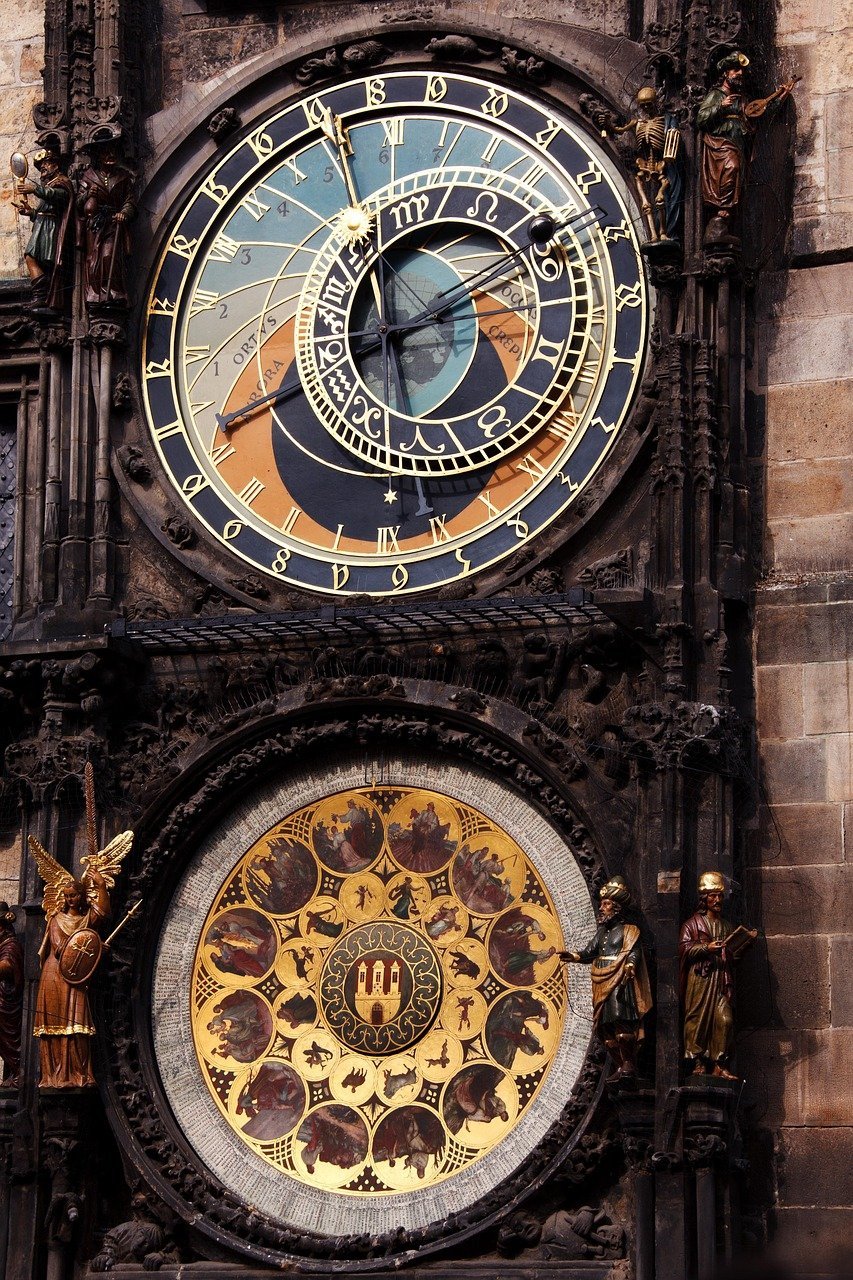
Understanding the lunar standstill cycle requires patient observation that spans far longer than a single human lifetime. The major lunar standstill occurs only every 18.6 years, which translates to roughly 18 years and 200 or more days, a recurring cycle. That means any individual builder would likely witness just one or two complete cycles during their entire life. From this site, as a result of generations of careful measurements and designing, the American Indians 2,000 years ago could predict, and bear witness to, the return of the moon to its northernmost position, just once every 6,789 days.
The knowledge required for this was clearly institutional, carefully curated and transmitted across time. Historical records of Native traditions elsewhere show that Indigenous astronomers and ceremonial leaders did track lunar events with great sophistication, and if researchers Hively and Horn are even close to being right, Ohio’s Hopewell societies must have had their own noted astronomers. The precision of their carefully composed earthen architecture reflected an elaborate ceremonialism and linked it with the order and rhythms of the cosmos. These weren’t casual builders. They were thinkers with a long view of time.
UNESCO Recognition and Global Standing
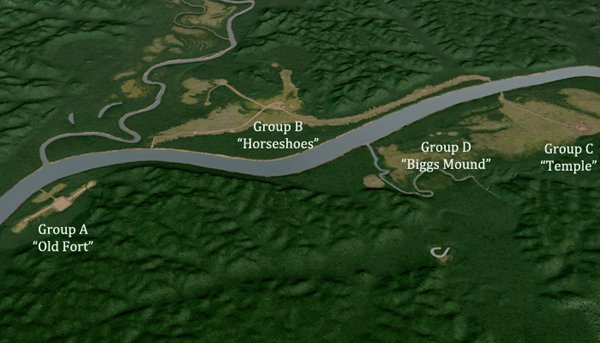
The World Heritage Committee made the decision to inscribe the Hopewell Ceremonial Earthworks on the highly selective World Heritage List by consensus at its 45th session in Riyadh, Saudi Arabia on September 19, 2023. The designation placed these Ohio earthworks in the same company as some of the world’s most celebrated ancient sites. The World Heritage Committee members agreed that these earthworks deserve to be recognized alongside such places as Stonehenge in England and the Nazca Lines in Peru, as well as other iconic places in the United States, including Independence Hall and the Grand Canyon.
The property is a series of eight monumental earthen enclosure complexes built between 2,000 and 1,600 years ago along the central tributaries of the Ohio River. They are the most representative surviving expressions of the Indigenous tradition now referred to as the Hopewell culture. Their scale and complexity are evidenced in precise geometric figures as well as hilltops sculpted to enclose vast, level plazas. There are alignments with the cycles of the Sun and the far more complex cycles of the Moon. Recognition came late, but it was definitive.
A Troubled Modern History

The Octagon’s post-contact story is a difficult one. From 1892 to 1908, the state of Ohio used the Octagon Earthworks as a militia encampment. Immediately after this, the Newark Board of Trade owned the property until 1918. In 1910, the property was leased to the Moundbuilders Country Club, which developed the site as a golf course. For over a century, one of the most astronomically sophisticated earthworks in the world doubled as a place to play golf.
In 2022, the Ohio Supreme Court ruled that the historical society could use eminent domain to buy out the lease from the Moundbuilders Country Club. A deal was reached in August 2024, and the Country Club left the site on January 1, 2025. It was a long fight. Farming, mining, road work, and urban development have destroyed most of these structures, but those that remain bear witness to Native American engineering, scientific observation, and resilience. The fact that so much survives at all is something close to a miracle.
What This Site Says About Indigenous Intelligence
Researchers have used archaeogeodesy and archaeoastronomy to analyze the placements, alignments, dimensions, and site-to-site interrelationships of the earthworks. This research has revealed that the prehistoric cultures in the area had advanced scientific understanding which they used as the basis of their complex construction. The data is clear, even if the full cultural meaning of the site remains harder to reconstruct. Some archaeologists have had a strong reaction against archaeoastronomical claims, especially when they involve ancient North American societies, and this can go beyond legitimate skepticism, crossing into ethnocentrism or even outright racism.
Ray Hively and Robert Horn have changed the way researchers think about the Hopewell culture. Thanks in large measure to their careful and well-reasoned research, most archaeologists have become convinced that the Hopewell constructed their monumental architecture in alignment to the cosmic rhythms of the moon and sun. Built with astonishing mathematical precision as well as complex astronomical alignment, these are the largest geometrical earthworks in the world that were not built as fortifications or defensive structures. There is no military purpose here, only an extraordinary intellectual one.
Visiting the Site Today
With the golf course era now officially over, the Octagon Earthworks has entered a new chapter. The Octagon Earthworks in Newark has been voted the country’s best new attraction for 2026 in USA TODAY’s 10Best Readers’ Choice Awards. The Octagon won the popular vote and was first among the ten new attractions voted on by USA TODAY and Gannett readers. Public access has expanded significantly since January 2025, and interest has grown steadily in the years since the UNESCO designation.
The Hopewell Ceremonial Earthworks are gigantic earthen enclosures built by American Indians 2,000 years ago. They were places of ceremony connected to the cosmos by alignments to key risings and settings of the moon and sun. Visitors today can walk the same ground that pilgrims walked two millennia ago, stand at the Observatory Mound, and look toward the horizon where that rare northernmost moonrise still occurs, right on schedule, every 18.6 years, whether anyone is watching or not.
Conclusion: Geometry as Memory
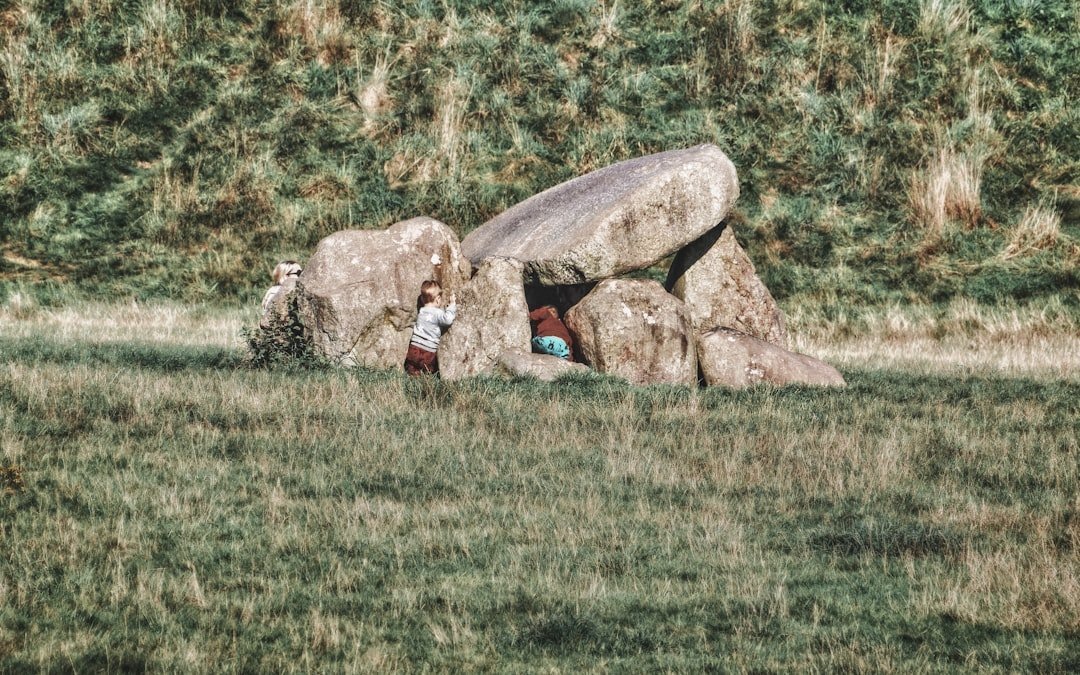
The Octagon Earthworks is not simply an ancient curiosity. It is a record. A civilization with no writing system used earth itself to preserve precise astronomical knowledge, shaping it into a form so durable that it has lasted two thousand years and still works as intended. Hopewell Ceremonial Earthworks comprises highly complex masterpieces of landscape architecture. They are exceptional amongst ancient earthworks worldwide not only in their enormous scale and wide geographic distribution, but also in their geometric precision. These features imply high-precision techniques of design and construction and an observational knowledge of complex astronomical cycles that would have required generations to codify.
There’s something quietly humbling about that. Modern observers tend to think of advanced astronomical knowledge as a recent achievement, tied to telescopes and computers and written science. The Octagon reminds us that careful, sustained observation and the will to encode what you learn can produce something extraordinary, even without any of those tools. The moon keeps rising over the octagon’s center, indifferent to the centuries, just as its builders intended.