

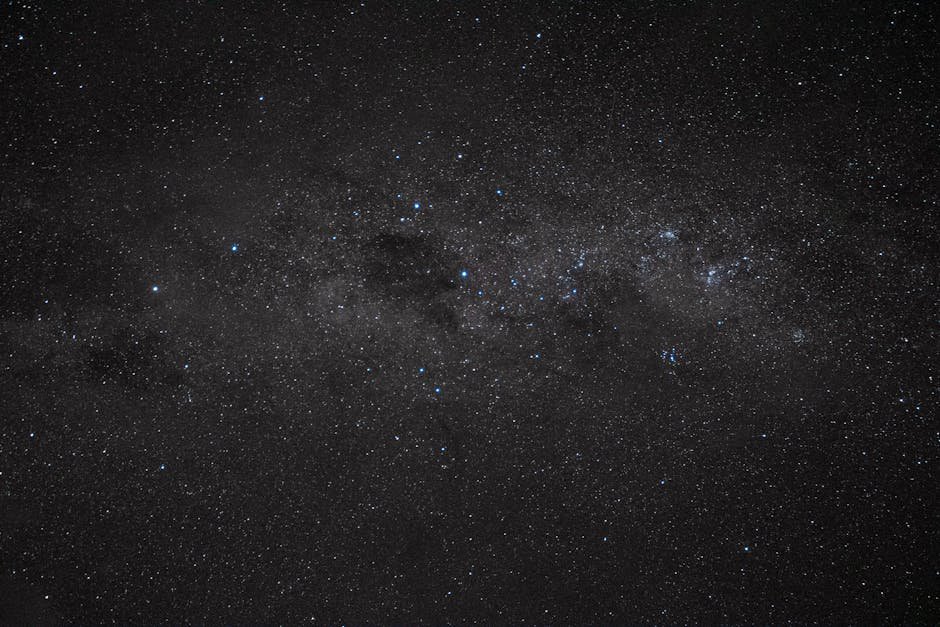
Leo’s Sickle: The Sky’s Reversed Question Mark (Image Credits: Pexels)
As spring evenings lengthen in April, the constellation Leo emerges prominently overhead, captivating stargazers with its unmistakable sickle shape. This celestial lion, crowned by the dazzling star Regulus, serves as a gateway for beginners to explore deeper cosmic wonders. Beyond the bold pattern lie treasures like a striking double star and a celebrated trio of galaxies, making Leo a highlight for nighttime observers worldwide.
Leo’s Sickle: The Sky’s Reversed Question Mark
Picture a gleaming hook suspended among the stars – that’s the forward sickle of Leo, a pattern so distinctive it guides countless first-time skywatchers. Anchored at its base by the brilliant white-blue spark of Regulus, the sickle arcs gracefully, mimicking the outline of a lion’s head. Observers often locate it high in the southern sky after dusk, where it stands out against fainter stars.
This asterism, or star grouping, spans about 15 degrees and reveals itself even from moderately light-polluted areas. Regulus, the constellation’s alpha star, shines at magnitude 1.4, outpacing neighbors and drawing eyes upward. Seasoned astronomers appreciate how the sickle’s curve transitions seamlessly into Leo’s body, outlining the full lion form for patient viewers.
Regulus: The Heart of the Lion
Regulus commands attention as Leo’s regal centerpiece, a star four times larger than our Sun and 79 light-years distant. Its rapid spin, completing a rotation every 16 hours, flattens it into an oblate shape, a fact confirmed by modern telescopes. This beacon not only punctuates the sickle but also marks the ecliptic, occasionally hosting planetary conjunctions.
Through binoculars, Regulus reveals a subtle companion, adding intrigue for those scanning its glow. Ancient cultures revered it as a royal star, associating it with kingship across civilizations. Today, it remains a reliable anchor for navigating spring constellations, linking Leo to nearby Virgo and Coma Berenices.
Discovering Leo’s Great Double Star
Within the sickle’s curve hides one of Leo’s finest double stars, a pair resolvable with small telescopes and offering a thrilling split of golden hues. This binary system challenges observers to steady their gaze, rewarding them with colors that evoke twin suns dancing in harmony. Positioned near the lion’s mane, it transforms a simple starfield into a study in contrasts.
Amateur astronomers prize this sight for its accessibility – magnitude 2.2 and 2.6 components separate by just 4 arcseconds. Steady skies enhance the view, where the primaries’ warm tones stand apart from cooler backgrounds. Such doubles underscore Leo’s appeal, blending naked-eye grandeur with telescopic precision.
The Galactic Trio: Leo’s Distant Jewels
Deeper still in Leo lurks a famous galactic trio, three edgewise spirals huddled 35 million light-years away, visible as a faint smudge through binoculars. This group, spanning a mere degree, showcases interacting galaxies locked in gravitational embrace. Mid-sized scopes unveil their elongated forms, hinting at cosmic collisions unfolding over eons.
The trio’s members vary in brightness, with the brightest pair dominating amateur views while the third adds asymmetry. Dark rural skies prove essential, as urban glow washes out their subtlety. Capturing this cluster evokes the universe’s vast scale, where island universes neighbor like fireflies in the void.
Tips for Maximizing Your Leo Observations
April’s clear nights provide prime windows, especially from midnight onward when Leo culminates high overhead. Seek horizons free of city lights, using apps or star charts to pinpoint the sickle amid passing clouds. Binoculars suffice for Regulus and the double star, while a 4-inch telescope unlocks the galactic trio’s finesse.
- Arrive early to let eyes adapt – 20 minutes yields sharper contrasts.
- Face south, tracing from Regulus upward along the sickle’s arc.
- Pair with a red flashlight to preserve night vision.
- Log sightings in a journal, noting equipment and conditions.
- Check moon phases; new moon periods minimize interference.
Key Takeaways
- Leo’s sickle, led by Regulus, offers an easy entry for spring stargazing.
- A great double star and galactic trio reward telescope users with vivid details.
- Dark skies and basic gear unlock these wonders for all skill levels.
Leo reminds us that the night sky holds endless stories, from ancient patterns to modern galactic insights. Whether you’re a novice tracing the sickle or a veteran chasing faint galaxies, this constellation delivers timeless awe. What celestial sight in Leo excites you most? Share in the comments below.