

The Enduring Puzzle of Moving Rocks (Image Credits: Unsplash)
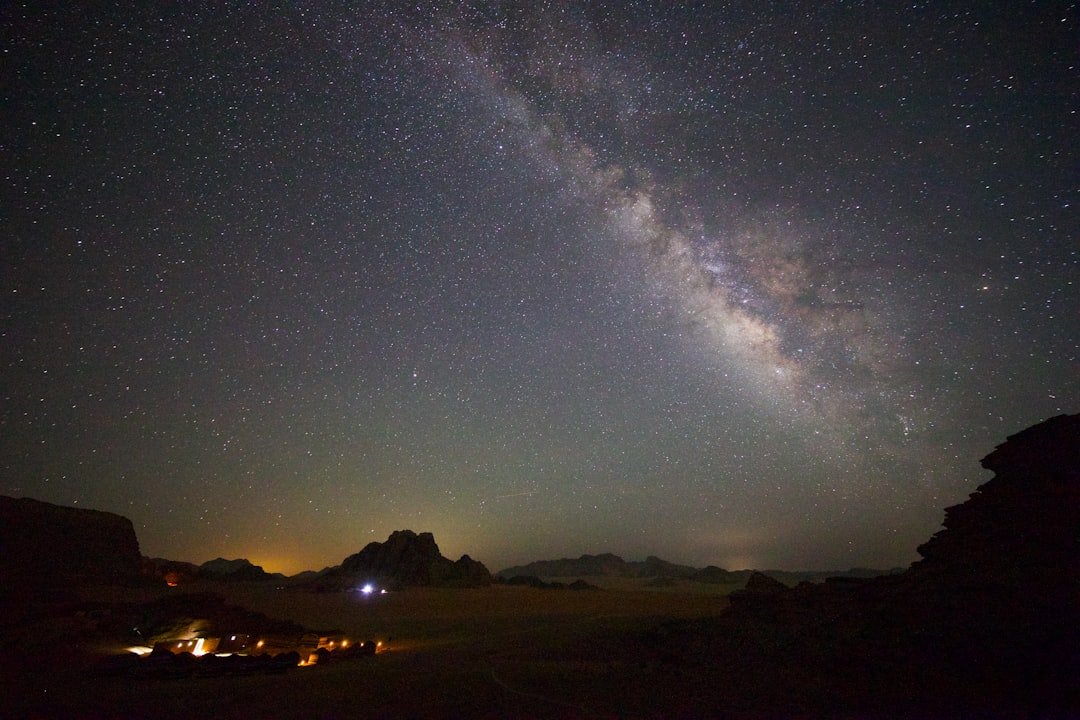
Death Valley National Park, California – The Milky Way stretches in a luminous arc above Racetrack Playa, a vast dry lakebed etched with mysterious trails left by moving rocks. This remote site blends geological intrigue with pristine night skies, drawing photographers to capture its otherworldly beauty. Chris Cook, an astrophotographer from Long Beach, documented the scene in a striking panorama that showcases both the cosmos and the playa's secrets.[1][2]
The Enduring Puzzle of Moving Rocks
Rocks at Racetrack Playa have baffled visitors since the early 1900s. Prospectors first noted the stones in 1915, observing trails up to 100 meters long carved into the flat clay surface.[2] Geologists proposed various theories over decades, from powerful winds to supernatural forces, yet none fully explained the phenomenon. The playa's southern section hosts most stones, which range from 15 to 46 centimeters in diameter and leave tracks 8 to 30 centimeters wide.
Monitoring efforts intensified in the 1960s and 1970s. Researchers tracked over 30 stones, some traveling hundreds of meters cumulatively. Despite these observations, the mechanism eluded confirmation until modern technology intervened. The site's isolation preserved the mystery, making each discovery a milestone in earth science.
Science Cracks the Code
A team led by Richard Norris solved the riddle in 2014 through GPS tracking and time-lapse cameras. They witnessed over 60 rocks shift during winter events from December 2013 to January 2014, some moving up to 224 meters.[2] Movements occurred rarely, about once every two to three years, lasting mere minutes under precise conditions. Speeds reached 5 meters per minute as ice panels propelled the stones across the slick surface.
The process demands a rare alignment of winter weather. Rain fills the playa with a shallow pond over its thin clay layer. Overnight freezes form large, millimeter-thick ice sheets around the rocks. Light winds, gusting up to 90 miles per hour across the flat expanse, drive these panels. Morning sunlight then melts the ice, allowing momentum to carry the stones forward.[3]
- Shallow water pond from rainfall (a few millimeters deep).
- Thin floating ice sheets (millimeter-thick panels).
- Sustained winds for initial push.
- Sun-induced melting for low-friction glide.
- Soft clay bed for track formation.
Rock Varieties on the Playa
Three main lithologies dominate the stones. Syenite proves most abundant on the west side, while dolomite appears as subrounded blue-gray pieces with white bands. Black dolomite, angular and jointed, fills nearly the northern half, originating from a nearby promontory.[2]
| Rock Type | Characteristics | Prevalence |
|---|---|---|
| Syenite | Common igneous rock | West side, abundant |
| Dolomite | Blue-gray, banded | Scattered |
| Black Dolomite | Angular blocks | Northern half dominant |
Smooth-bottomed stones create wandering paths, while rough ones leave straight striations. Larger examples, like the 320-kilogram Karen, form impressive but less frequent trails. These details emerged from the 2014 study published in PLoS ONE.[2]
Prime Skies for Celestial Photography
Racetrack Playa ranks among the darkest spots on Earth, earning a Bortle Class 1 rating. Minimal light pollution enhances the Milky Way's visibility, making it a top destination for astrophotographers.[4][5] The remote access demands a rugged 4×4 vehicle and careful navigation over rough roads. Yet the reward lies in unobstructed horizons and crystal-clear transparency.
Death Valley hosts events like night sky photography meet-ups, capitalizing on its status.[6] The playa's flat expanse provides stable foregrounds for wide-angle shots. Combined with the sailing stones, it offers a unique canvas where earthly and stellar wonders converge.
Chris Cook's Technical Triumph
Chris Cook crafted his panorama from five 20-second exposures. He employed an astromodified Canon DSLR camera at ISO 6400 with a 15mm lens set to f/2.8.[1] This setup captured the Milky Way's glow against the playa's subtle textures. The image appeared as Astronomy Magazine's Picture of the Day.
Cook's work exemplifies skillful nightscape composition. Timing aligned the galactic core overhead, framing the sailing stones below. Such captures inspire explorers to venture into dark-sky havens.
Key Takeaways
Racetrack Playa endures as a testament to nature's subtle forces, where patient observation reveals profound truths. Both scientists and stargazers find endless fascination here. What draws you to remote skies like these? Share your thoughts in the comments.