

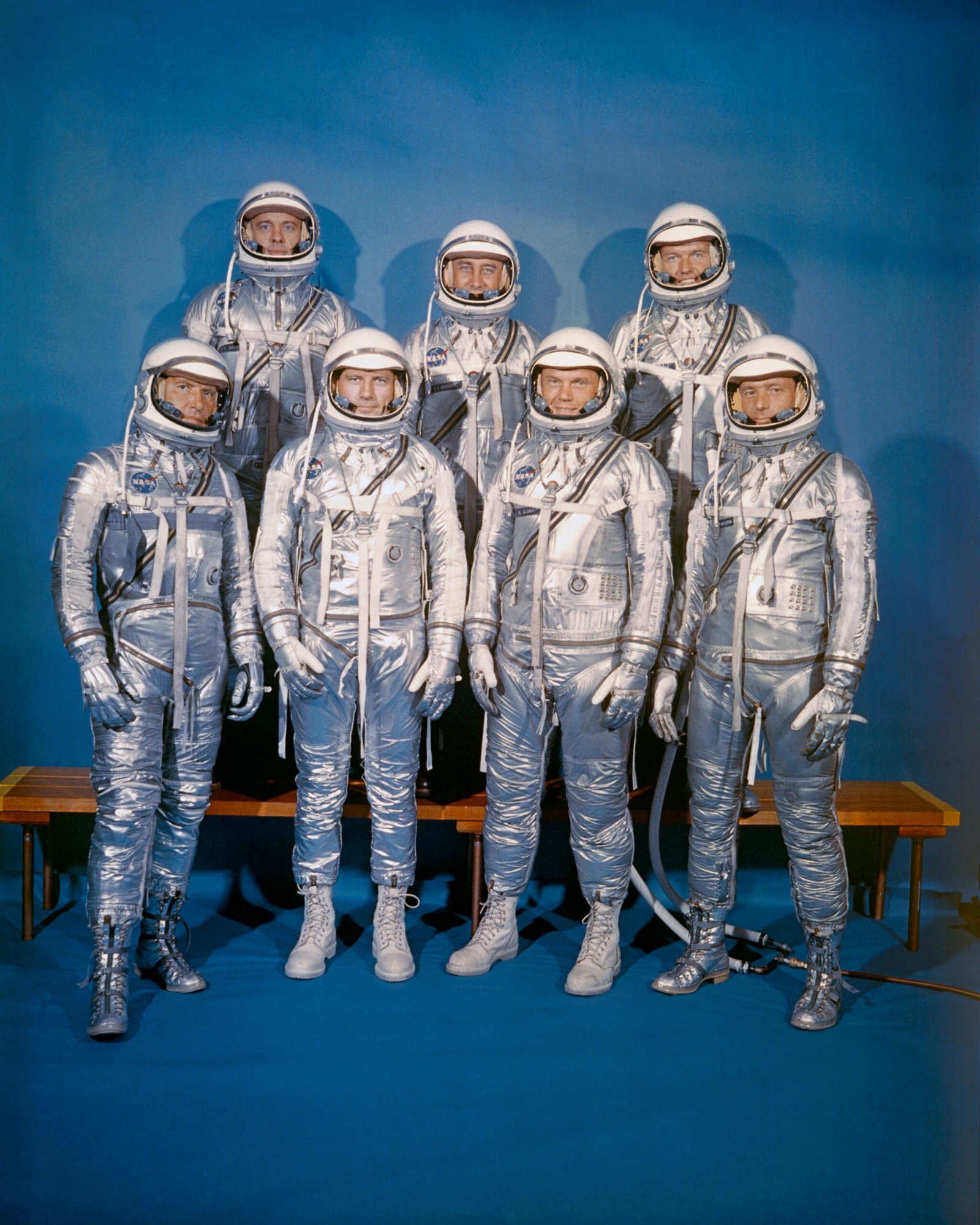
A Meticulous Hunt for the Best (Image Credits: Upload.wikimedia.org)
The Space Race gripped the world in 1959, with the United States racing to catch the Soviet Union in human spaceflight. NASA administrators turned to experienced military test pilots, convinced they possessed the skills needed for the perilous task ahead. On April 9, 1959, the agency publicly introduced its first seven astronauts – the Mercury 7 – during a packed press conference that captured national attention.[1][2]
A Meticulous Hunt for the Best
NASA launched its astronaut selection in early 1959 with a clear vision. Officials reviewed service records from across the military branches, targeting men who had logged extensive flight hours in high-performance jets. This initial pool included 508 candidates, each scrutinized for qualifications like engineering degrees, physical fitness, and proven performance under pressure.[1]
The process demanded precision from the start. Psychologists, physicians, and engineers devised tests to simulate the extreme conditions of space travel. Candidates faced isolation chambers, high-altitude simulations, and grueling physical exams designed to reveal any weaknesses.
Narrowing the Elite Field
From the original 508, NASA invited 110 men for initial interviews and written examinations. These sessions probed technical knowledge, decision-making, and adaptability. Only those who excelled advanced further.[1]
Next came the most intense phase: 32 finalists endured weeks of comprehensive evaluations at the Lovelace Clinic in New Mexico and Wright-Patterson Air Force Base. Tests measured everything from cardiovascular endurance to psychological resilience. By April 1, 1959, the selection committee finalized its choice of seven men, keeping names secret until the public reveal.[1]
Meet the Mercury 7 Astronauts
The chosen pilots hailed from diverse backgrounds but shared unbreakable determination. All held college degrees, mostly in engineering, and boasted thousands of hours in fighter jets. Their selection marked a turning point in NASA’s ambitions.[3]
Here are the seven trailblazers announced that day:
- Scott Carpenter, Navy lieutenant commander
- Gordon Cooper, Air Force captain
- John Glenn, Marine Corps lieutenant colonel
- Gus Grissom, Air Force captain
- Walter Schirra, Navy commander
- Alan Shepard, Navy commander
- Deke Slayton, Air Force major
The Historic Press Conference
Washington, D.C., buzzed with anticipation on April 9 as reporters gathered for the unveiling. NASA Administrator T. Keith Glennan and other officials introduced the astronauts, who then fielded questions for a full 90 minutes. The event showcased their poise and camaraderie, instantly elevating them to celebrity status.[1][2]
To manage the media frenzy, NASA secured an exclusive deal with LIFE magazine. The arrangement covered training, missions, and even family life, ensuring controlled yet captivating public access. This move fueled widespread fascination with the space program.
A Lasting Legacy in the Stars
Over the next four years, the Mercury 7 drove Project Mercury forward. Their suborbital flights and orbits proved Americans could survive and thrive in space. Successes built momentum for Gemini and Apollo programs.[1]
Several astronauts extended their contributions. Gordon Cooper, Gus Grissom, and Walter Schirra flew Gemini missions, while Schirra, Alan Shepard, and Deke Slayton later joined Apollo efforts. The group became enduring symbols of innovation and courage, inspiring generations.
Today, 67 years after their debut, the Mercury 7 story reminds us of bold beginnings. Their path from test pilots to national heroes shaped the future of exploration. What do you think about their groundbreaking journey? Tell us in the comments.
Key Takeaways
- NASA screened 508 military pilots, narrowing to 7 through rigorous tests.[1]
- Selected on April 1, 1959; publicly announced April 9.
- The Mercury 7 paved the way for all U.S. human spaceflight.