

Frozen in permanent darkness, billions of years old, and potentially worth more than gold in the context of space exploration – the water ice locked inside the Moon’s south pole craters has become the most contested resource in the solar system. Nobody has successfully extracted a single drop of it yet. Still, nations, corporations, and international lawyers are already fighting over who has the right to.
Here’s the thing: the legal battle over lunar water is not some distant sci-fi scenario. Missions are launching now, real money is being invested, and the framework governing who owns what is, to put it bluntly, a mess. Let’s dive in.
What Is Actually Down There? The Science of Lunar South Pole Ice
The unique lighting conditions and environmental characteristics of the lunar polar region create favorable conditions for the accumulation and preservation of water ice, making detection in the permanent shadow regions a matter of significant scientific and practical importance. Think of it like a cosmic freezer that has never been opened – sealed for eons.
The Shackleton crater, located near the south pole of the Moon, is believed to be rich in large amounts of water ice deposits within its permanently shadowed regions, making it a promising potential landing site for the future Chinese Chang’E-7 mission. Results from multiple studies suggest the probable presence of water ice in the Shackleton crater, possibly distributed locally from the surface to several meters deep.
Prior studies found signs of ice in the larger permanently shadowed regions near the lunar south pole, including areas within Cabeus, Haworth, Shoemaker and Faustini craters. A 2024 study from NASA’s Goddard Space Flight Center found widespread evidence of water ice within permanently shadowed regions outside the South Pole, towards at least 77 degrees south latitude.
Ice could become implanted in lunar regolith through comet and meteor impacts, released as vapor from the lunar interior, or formed by chemical reactions between hydrogen in the solar wind and oxygen in the regolith. The permanently shadowed regions’ continuously cold surfaces can preserve ice molecules near the surface for perhaps billions of years, where they may accumulate into a deposit rich enough to mine.
Why This Water Is Worth Fighting Over

Water is a critical material for NASA’s plans to develop an enduring presence on the Moon. Instead of relying solely on resources carried from Earth, astronauts could use the Moon’s water for breathable air, rocket fuel, and more. Honestly, when you frame it that way, this is not just water. It is the infrastructure of a future civilization.
If water ice exists in sufficient quantities, it could be a source of drinking water for moon exploration and could help cool equipment. It could also be broken down to produce hydrogen for fuel and oxygen to breathe, supporting missions to Mars or lunar mining.
Water ice at the lunar south pole is the resource most likely to trigger the first real territorial disputes. The Moon is not short of interesting materials – it has uranium, potassium, phosphorus, platinum-group metals, and helium-3. Yet water remains the centerpiece because it enables everything else. Without it, a permanent Moon base is just fantasy.
The 1967 Outer Space Treaty: The Old Law That Still Rules
The 1967 United Nations Outer Space Treaty prohibits any nation from claiming ownership of the Moon. However, there is no provision that would stop commercial operations. That gap – between national sovereignty and commercial extraction – is where today’s legal chaos lives.
The Outer Space Treaty laid down the foundational principles for human space exploration – it should be peaceful and benefit all mankind, not just one country. But the treaty has little in the way of detail. It was written in 1967, when the idea of a private company drilling for water on the Moon would have sounded like a joke at a cocktail party.
The Outer Space Treaty does offer some wiggle room. Article IX requires countries to show “due regard” for the corresponding interests of others. It is a legally vague standard, although the Permanent Court of Arbitration has suggested that due regard means simply paying attention to what’s reasonable under the circumstances. That is a very wide door, and everyone is walking through it at their own pace.
The 1979 Moon Agreement: Ambitious but Ignored
The Moon Treaty was finalized and endorsed by the UN General Assembly in 1979 and, after satisfying the condition requiring five ratifying states, it entered into force for the ratifying parties in 1984. It was supposed to be the solution. It was not.
The Moon Treaty has not been ratified by any state that engages in self-launched human spaceflight – including the United States, Russia, or China – since its creation in December 1979, and thus it has little to no relevancy in international law. So the treaty that was specifically designed to govern lunar resources has been brushed aside by every major spacefaring power on Earth.
The Moon and its natural resources are the common heritage of mankind, as stated in the Agreement’s provisions. One of the major objections often raised is that the Agreement mandates that extracted resources, along with the technology used to achieve that end, should be shared with developing nations that have not invested funds or assumed risks to enable use of lunar resources. Rich spacefaring nations want their reward. That tension killed the treaty’s relevance before it ever had a chance.
National Space Resource Laws: Everyone Writing Their Own Rules

The U.S. Commercial Space Launch Competitiveness Act of 2015 granted American citizens the right to own, transport, use, and sell resources extracted from asteroids or the Moon, while explicitly stating that this right does not constitute a claim of sovereignty over the celestial body itself. This was a landmark move. Basically, you can mine the Moon – you just can’t call it yours.
Luxembourg enacted similar legislation in 2017, the United Arab Emirates followed in 2019, Japan in 2021, Brazil in 2024, and Italy passed its own law on June 11, 2025. Six nations have now enacted domestic legislation permitting space resource extraction under their own legal frameworks. These laws share the position that the Outer Space Treaty prohibits territorial appropriation but not resource extraction. They do not share consistent implementation frameworks, licensing regimes, or environmental standards.
Six countries writing six slightly different versions of the same rulebook – that is a recipe for conflict, not cooperation.
The Artemis Accords: A Framework With Gaps
The Artemis Accords are a set of non-binding multilateral arrangements between the United States government and other world governments that elaborate on the norms expected in outer space. They are related to the Artemis program, an American-led effort to return humans to the Moon by 2028, with the ultimate goal of expanding exploration to Mars and beyond.
As of January 26, 2026, with the accession of Oman, 61 countries have signed the Accords, including 28 in Europe, 15 in Asia, seven in South America, five in North America, four in Africa, and two in Oceania. That is a significant coalition. Still, participation does not equal legal certainty.
Russia and China, both major spacefaring states, are not parties to the Artemis Accords. Russia criticized the accords as a U.S.-led framework, and China did not participate, partly because U.S. legislation bars NASA from cooperation with China. Chinese government-affiliated media called the Accords “akin to European colonial enclosure land-taking methods.” That is a serious accusation – and it signals just how geopolitically charged this issue has become.
China, Russia and the Competing Lunar Vision
China and Russia instead pursued a separate initiative, the International Lunar Research Station plan, which aims to establish a lunar base in the 2030s. This is not just a scientific project. It is a geopolitical statement.
China has announced an intention to land astronauts on the Moon by 2030, with plans for robotic precursor missions and lunar base construction as part of the International Lunar Research Station project targeting establishment by 2035. The Chang’E-7 mission will begin with landing on the lunar south pole in 2026, with the primary objective of finding direct evidence of water ice.
China has not signed the Artemis Accords and plans to launch its own international lunar research station in the 2030s. The ILRS has 13 partner countries, including Russia, none of which have signed the Artemis Accords. The Moon is starting to look like a mirror of geopolitics on Earth – split into competing blocs with rival rule systems and rival ambitions.
Private Companies in the Mix: The New Wild West
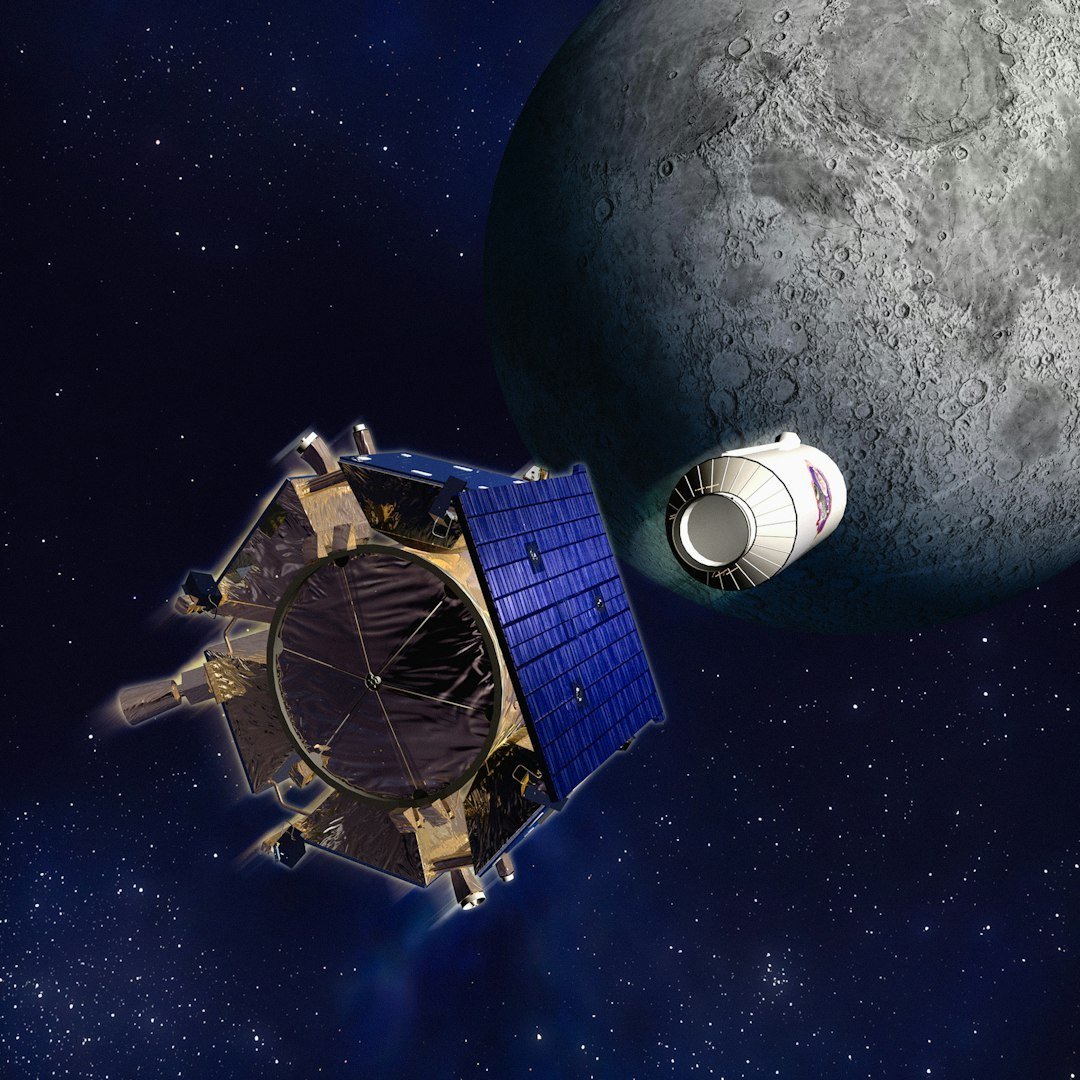
On February 22, 2024, Intuitive Machines’ IM-1 mission successfully landed its Odysseus module at 80 degrees south latitude on Malapert-A crater near the lunar south pole. This marked the first soft landing of a probe built by a private space company on the Moon. That moment quietly changed history.
In 2020, Japanese company ispace signed a contract with NASA under which it would collect a small sample of lunar regolith and transfer ownership to NASA for a nominal payment of $5,000. The contract was designed primarily to establish the legal principle that a commercial company can extract and sell lunar resources. Five thousand dollars for the legal foundations of an entire industry. Not bad.
Beyond the potential for conflicts between international governments, previous space agreements have declared that governments are liable for private companies’ activities in outer space. However, this seems to lack coherence in domains such as space travel, where jurisdictional issues are far more ambiguous. In short, a private company drilling for water on the Moon exists in a legal grey zone that no existing treaty fully addresses.
The UN Tries Again: Draft Principles Released in 2025
A group at the United Nations was contemplating a critical issue for the future of space exploration: the discovery, extraction and utilization of natural resources on the Moon. At the end of April 2025, a dedicated Working Group of the UN Committee on the Peaceful Uses of Outer Space released a draft set of recommended principles for space resource activities – essentially rules to govern mining on the Moon, asteroids and elsewhere in space.
The draft UN principles released in April 2025 do not directly address the opposing concepts of access and protection. Instead, they defer to Article I of the Outer Space Treaty and reaffirm that everyone has free access to all areas of the Moon and other celestial bodies.
Despite the increasing number of space launches, the growth of the commercial space sector, the signing of the Artemis Accords, and a comprehensive body of international law, an intergovernmental governing authority has yet to be established to manage mining activities on the Moon. Researchers have proposed a Lunar Mining Code to regulate and manage prospecting and exploration activities for water ice at the Moon’s poles, composed of a notification system, a contract system for issuing exploration licenses, and best mining practices to promote equal access and safeguard the lunar environment. Whether that proposal gains traction is a different story entirely.
The Race Is On: Who Gets There First May Decide Everything
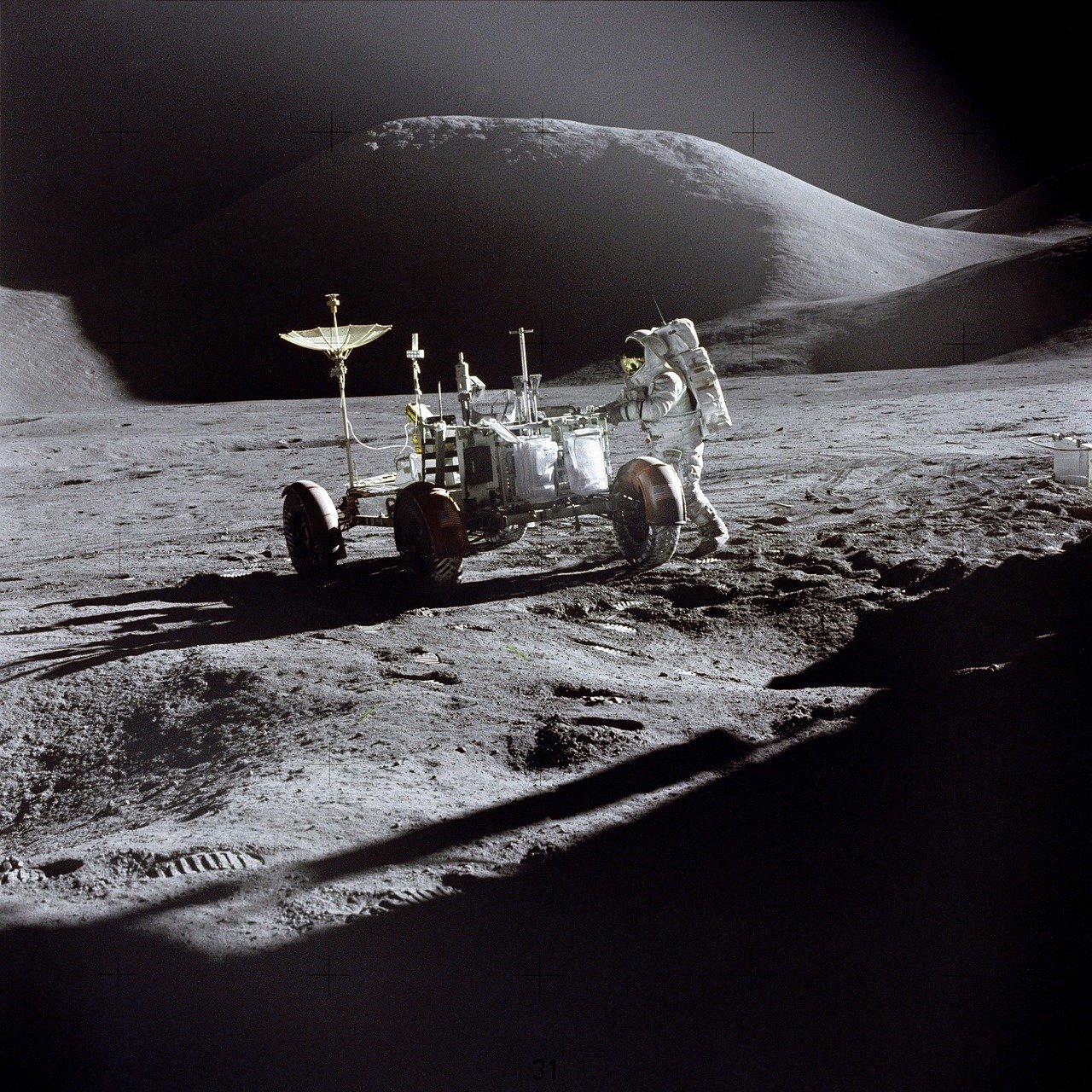
The treaty’s broad language encourages a race to the Moon. The first entity to any spot will have a unilateral opportunity to determine what’s legally “reasonable” – for example, creating an overly large buffer zone around equipment might be justified to mitigate potential damage from lunar dust.
NASA is providing a water-detecting instrument, the Neutron Spectrometer System, to the Lunar Polar Exploration mission led by JAXA and ISRO. The instrument, which detects ice under the lunar surface, will be installed on the mission’s lunar rover planned to arrive at the Moon no earlier than 2028. NASA also awarded Intuitive Machines a $180.4 million contract in March 2026 for the IM-5 mission, which will deliver payloads including an Australian Space Agency rover to Mons Malapert near the lunar south pole.
The speed of missions is outpacing the speed of law. I think that is the most honest summary of where things stand in 2026. Nations and corporations are racing to establish a physical presence on the south pole before the legal framework catches up – because whoever controls the ground may control the narrative of what is “reasonable.” The water hasn’t been extracted yet. The legal battle over it, however, is already well underway. What do you think: should space resources belong to all of humanity, or to whoever gets there first? Drop your take in the comments.