
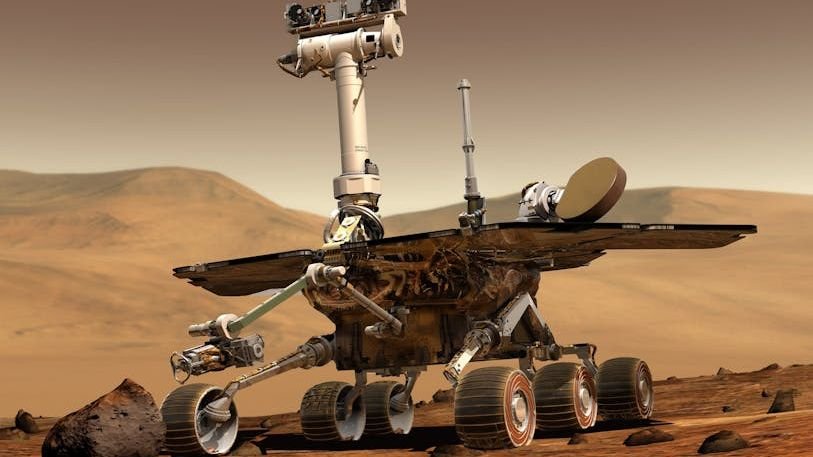

There is something almost unreal about the idea that the future home of humanity on another planet might be a cave. Not a gleaming sci-fi dome. Not a pressurized glass tower. A cave. Hidden beneath a rust-colored volcanic landscape, carved out billions of years ago by rivers of molten rock, and now waiting in the dark for us to find it.
Scientists are increasingly convinced these underground tunnels, known as lava tubes, are the single most realistic candidate for human habitation on Mars. The evidence has been building for years, the imagery is starting to come into focus, and the robots are already training for the descent. Here is everything you need to know about one of the most quietly thrilling stories in space exploration.
What Exactly Is a Martian Lava Tube?
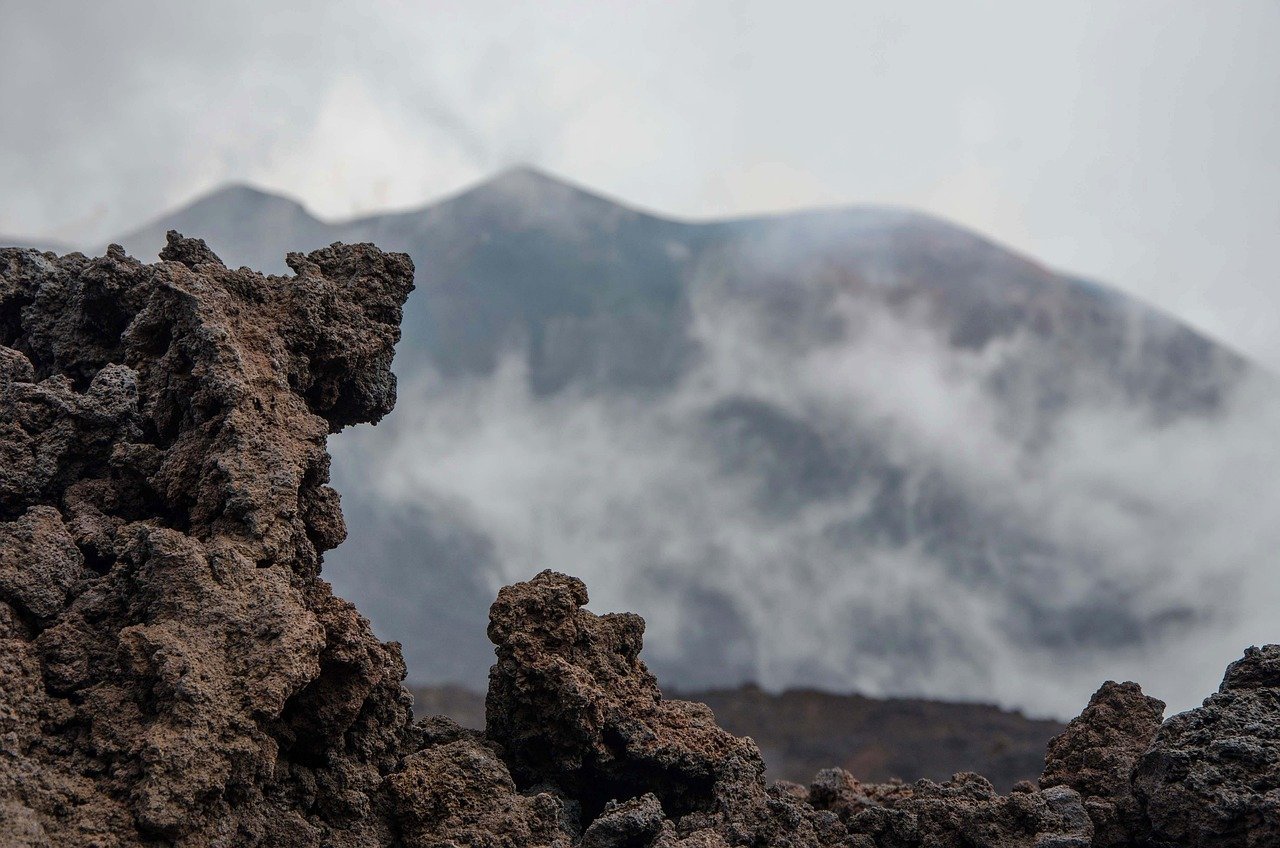
Think of a lava tube like a frozen river channel. Martian lava tubes are volcanic caverns that are believed to form as a result of fast-moving, basaltic lava flows associated with shield volcanism. They form when the external surface of lava channels cools more quickly and forms a hardened crust over subsurface lava flows, and once the flow ceases and drains out of the tube, a conduit-shaped void space is left, usually several meters below the surface.
Gravity on Mars is about 38% that of Earth’s, allowing Martian lava tubes to be much larger in comparison. That detail alone is staggering. It is the reason scientists get genuinely excited when they start talking about these structures. What would be a modest tunnel on Earth becomes something almost incomprehensible in scale on the Red Planet.
Researchers found that Martian and lunar tubes are respectively roughly a hundred and a thousand times wider than those on Earth, which typically have a diameter of 10 to 30 meters. You could fit entire neighborhoods inside some of these things. Not metaphorically. Literally.
The First Real Photos: What We Have Actually Seen So Far
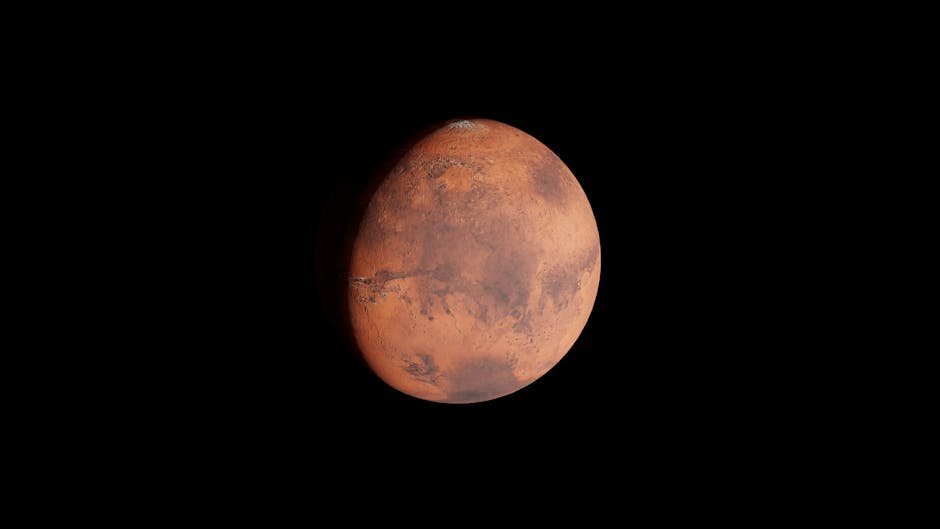
Lava tubes and related flow structures were first recognized upon examination of Viking orbiter images, and later identified using orbiter imagery from Mars Odyssey, Mars Global Surveyor, Mars Express, and Mars Reconnaissance Orbiter. Scientists have been piecing together this underground picture for decades, one satellite pass at a time.
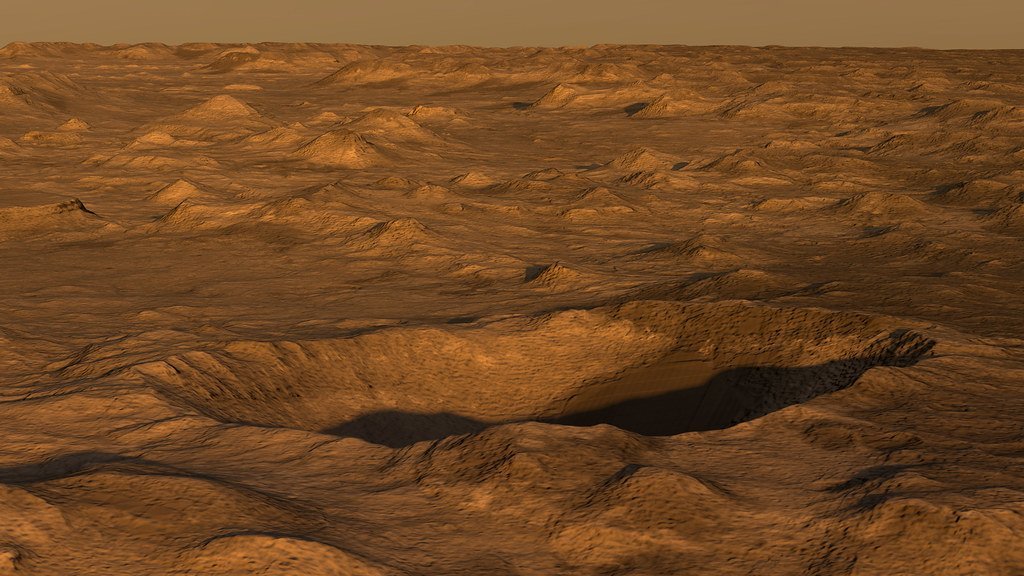
A pit crater created by an empty lava tube in Mars’ Arsia Mons region was captured by NASA’s Mars Reconnaissance Orbiter on August 16, 2020, using the orbiter’s High-Resolution Imaging Science Experiment, or HiRISE, camera. The pit is about 50 meters across, meaning the underground tube is likely at least this big, which is much bigger than similar caves on Earth.
Six excerpts of images taken by NASA’s Mars Odyssey spacecraft show seven openings in the Martian ground on the north slope of the volcano Arsia Mons. The holes range in diameter from about 100 meters to about 225 meters. These are not subtle features. They are dark, gaping mouths in the surface of another world, and they have been photographed from orbit in striking detail.
The Arsia Mons Mystery: The Hole That Has Everyone Talking
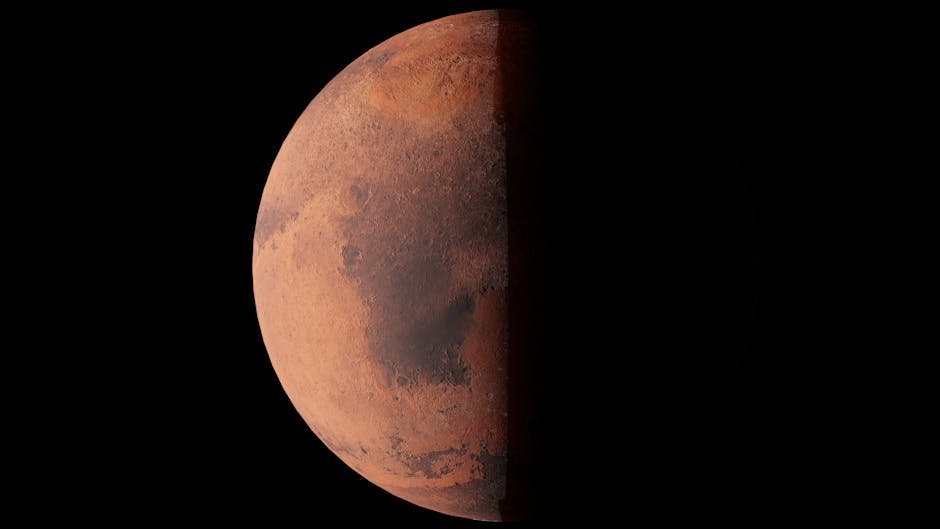
The hole shown in one celebrated HiRISE image is located in the Arsia Mons region of Mars. It is only a few meters across and is not guaranteed to be a skylight. However, Arsia Mons is one of three dormant volcanoes in the Tharsis Montes volcano range on Mars, and the hole may well have been created by ancient lava streams.
Honestly, the uncertainty itself is part of what makes this so fascinating. Several pits in the Arsia Mons region may be collapsed skylights or openings into subterranean lava tubes, though there is much uncertainty, and one of the images captured shows an illuminated sidewall, which could indicate it is just a cylindrical pit. Science in action, messy and unresolved.
The region hosting the pit received a stunning visual update in May 2025, when Arsia Mons was captured before dawn on May 2, 2025, by NASA’s 2001 Mars Odyssey orbiter while the spacecraft was studying the Red Planet’s atmosphere. NASA’s Mars Odyssey orbiter captured a rare panorama showing the volcano’s summit poking through a vast blanket of morning clouds.
A Skylight Near Pavonis Mons: The Most Famous Entrance
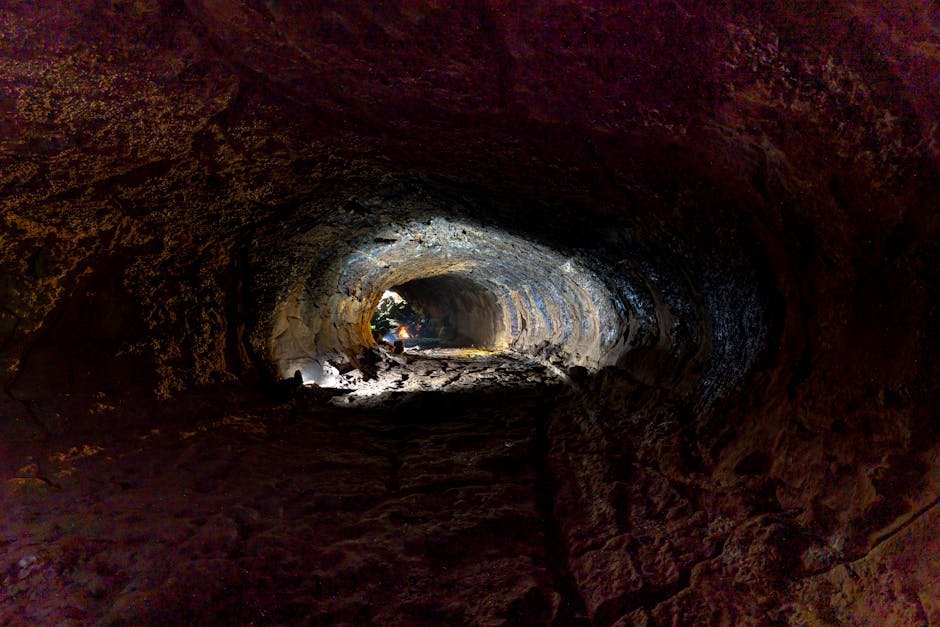
The skylight near the Martian volcano Pavonis Mons is estimated to have a diameter of 160 to 190 meters and a depth of at least 115 meters. To put that in perspective, that is deeper than a 35-story building. The darkness at the bottom is total, and no current orbital camera can see inside.
In June 2010, a group of seventh grade science students at Evergreen Middle School in Cottonwood, California, participating in the Mars Student Imaging Project, helped researchers discover a new series of lava tubes near Pavonis Mons through identification of this skylight. That is not a joke. Schoolchildren made a genuine contribution to Martian cave science.
NASA’s Mars Reconnaissance Orbiter took a photo of a cave skylight on the southeastern flank of Pavonis Mons. The pit is about 180 meters wide. These images are the closest thing we have to a “first real photo” of where humans may one day live. They are haunting, dark, and completely alien.
Why the Surface of Mars Is Basically Unlivable
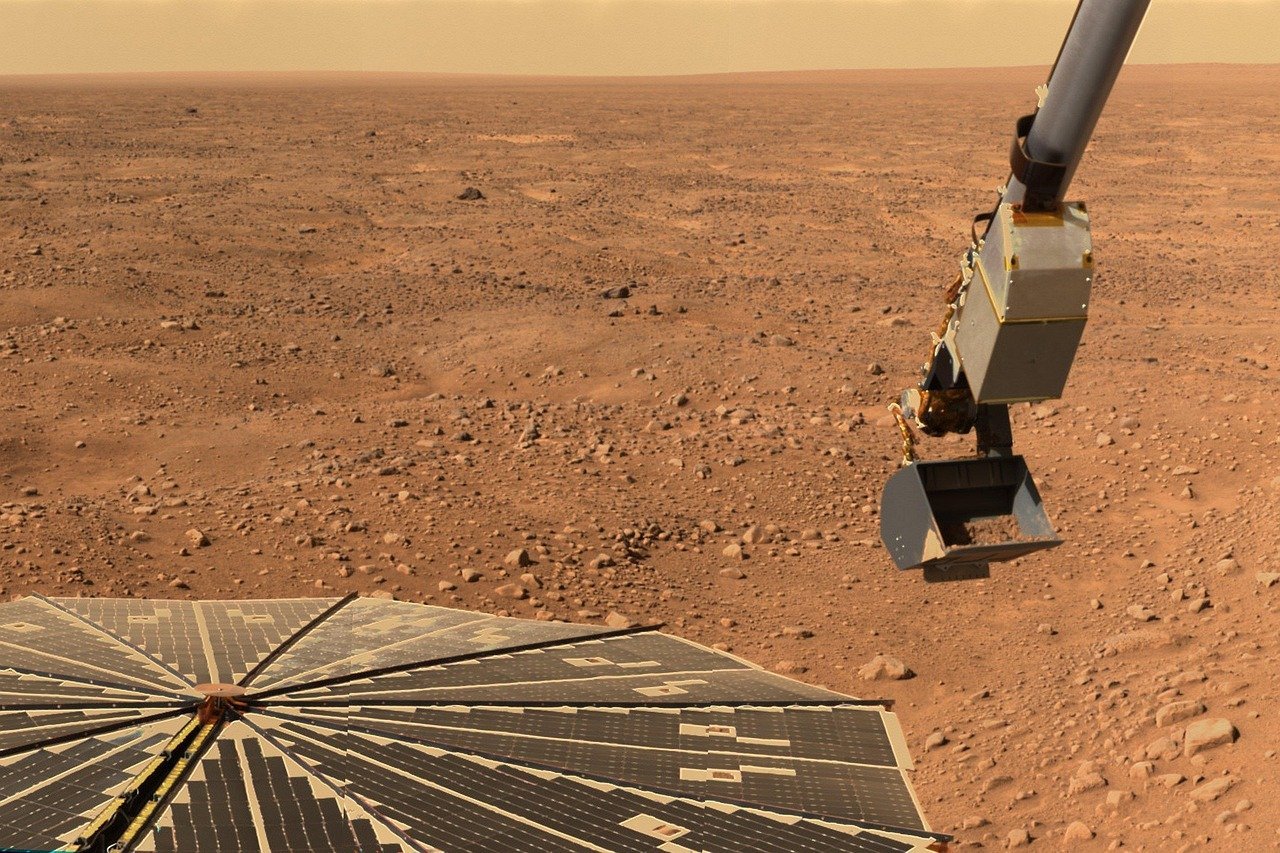
The surface of Mars experiences extreme temperature fluctuations and receives a high amount of ionizing radiation due to the lack of a magnetic field and the planet’s thin atmosphere. Temperatures near the equator can get up to 21°C during a summer day and then drop down to minus 73°C at night. That kind of swing would destroy most life-support technology over time.
With Mars having only 0.7% of Earth’s sea-level pressure, humans would have to don a full pressure suit or live inside a specialized chamber. Without these precautions, oxygen wouldn’t circulate in the bloodstream, with potentially fatal consequences. Every minute spent on the Martian surface is a calculated risk.
Radiation remains the primary concern. Although Mars is farther from the Sun than Earth, the absence of a magnetic field and its thin atmosphere mean it is exposed to much higher radiation levels than Earth. The planet essentially has no radiation shield at all. A lava tube roof changes that equation entirely.
Why Lava Tubes Solve Almost Every Problem
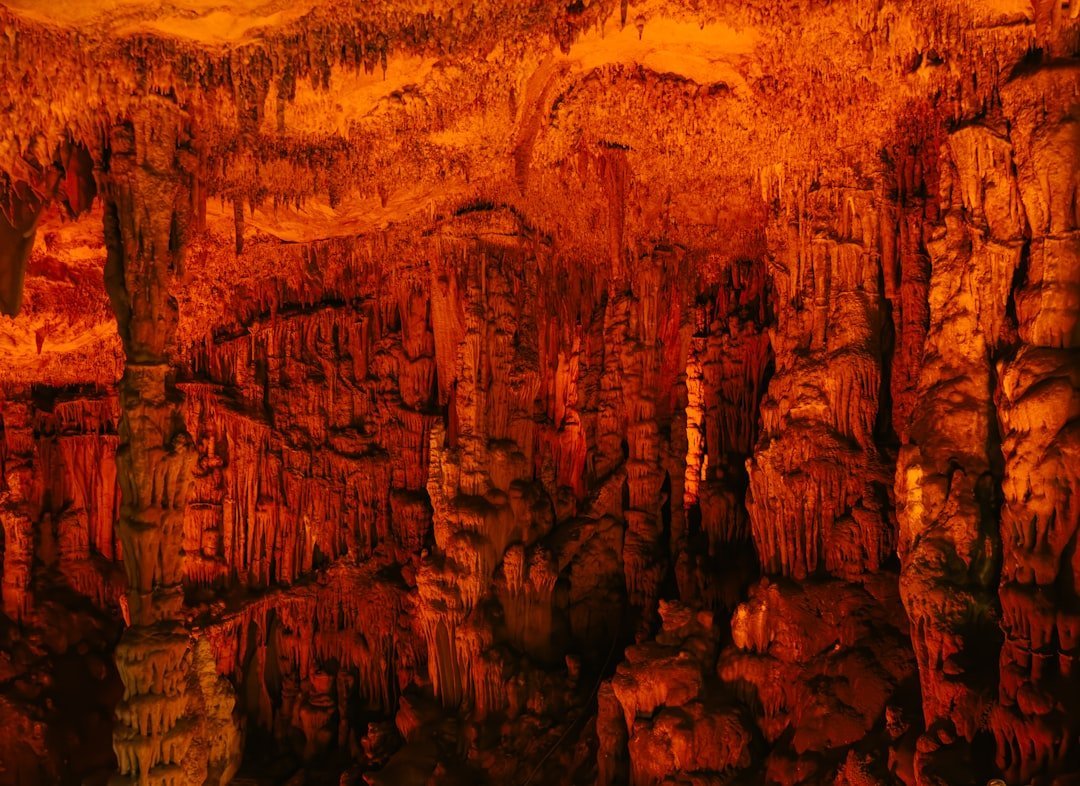
Natural caverns have roofs estimated to be tens of meters thick, which would provide protection from the extreme conditions on the surface. A habitat inside would be protected from solar radiation, micrometeorites, extreme temperature fluctuations, winds, and regolith dust storms, which could pose a threat to human health and technology.
The structural integrity and environmental stability of these tubes make them prime candidates for safe, long-term extraterrestrial habitats, offering natural protection from cosmic radiation, temperature extremes, and surface hazards. Think of it like living inside a mountain, except the mountain is on Mars and you helped pick it from a satellite photo.
These natural shelters would also reduce the landed payload mass for crewed missions, which would be economically advantageous. You do not need to bring an artificial habitat if a natural one is already waiting. That single fact could shave enormous cost and risk off an already staggering mission profile.
The Scale of These Structures Is Almost Incomprehensible
The dataset indicates that Martian and lunar tubes are one to three orders of magnitude more voluminous than on Earth, suggesting that the same processes of inflation and overcrusting were active on Mars. One to three orders of magnitude. That is ten to a thousand times larger. Let that sink in.
Preliminary studies imply that the volumes of lava tubes are orders of magnitude larger on Mars than on Earth, and their cumulative total volume exceeds a billion cubic meters. A billion cubic meters of sheltered underground space. You could fit entire cities in there, and that is not hyperbole. Researchers at European universities have actually said that.
A survey using data from the Mars Reconnaissance Orbiter’s Context and High Resolution Imaging Cameras has identified more than 1,200 candidate cave entrances on the surface of Mars. Over a thousand potential doorways, all photographed, none yet explored from the inside. The gallery of images is extraordinary, and it keeps growing.
New 2025 Discovery: A Whole New Class of Caves
In late 2025, scientists identified a potential new class of caves in the Hebrus Valles region. Unlike the volcanic tubes of Arsia Mons, these new candidates appear to be “karstic,” meaning caves formed by the dissolution of bedrock by water. If confirmed, these would not just be shelters but would be remnants of ancient aquifers, making them the ultimate holy grail for both human habitation and the search for alien life.
This is where things get genuinely wild. A karstic cave on Mars does not just mean shelter. It means water was there. Ancient, flowing water, cutting through rock the same way it does in caves in France or Kentucky. The implications for finding traces of past life are enormous.
Through the intricate study of lava tubes on Earth, an international team of researchers has uncovered clues about Earth’s ancient environments that could be significant in the search for life on Mars. Professor Bogdan P. Onac collaborated with researchers from Portugal, Spain and Italy to shed light on how lava tubes may serve as valuable analogs for Martian caves and the search for extraterrestrial life.
What the Science of Earth’s Lava Tubes Tells Us About Mars
In a study published in Communications Earth and Environment, the team used a range of advanced molecular, isotopic and mineralogical techniques to examine mineral deposits. They learned the volcanic rock in the lava tubes created a protective environment that helped shield the minerals and organic compounds from weathering, preserving the minerals as records of past ecosystems. The team found preserved biosignatures, including calcium and sodium sulfates, indicating microbial activity and microorganisms, such as bacteria, were once active in the caves.
Given that Martian lava tubes are similarly shielded and likely to contain sulfate-rich minerals, they may also hold signs of past microbial life, giving us clues about potential life beyond Earth. The findings may significantly impact the way scientists approach planetary exploration, particularly for upcoming missions aimed at studying the habitability of Mars.
Around four billion years ago, the Martian dynamo shut down following a period when a long-lasting ocean may have existed. A sudden and intense increase of solar particles eliminated the atmospheric and hydrological protection, and at that point, life may have sought refuge in subterranean environments such as lava tubes. So the same places we plan to shelter ourselves may be exactly where ancient Martian life once hid from the sun.
Robots Are Already Preparing for the Descent

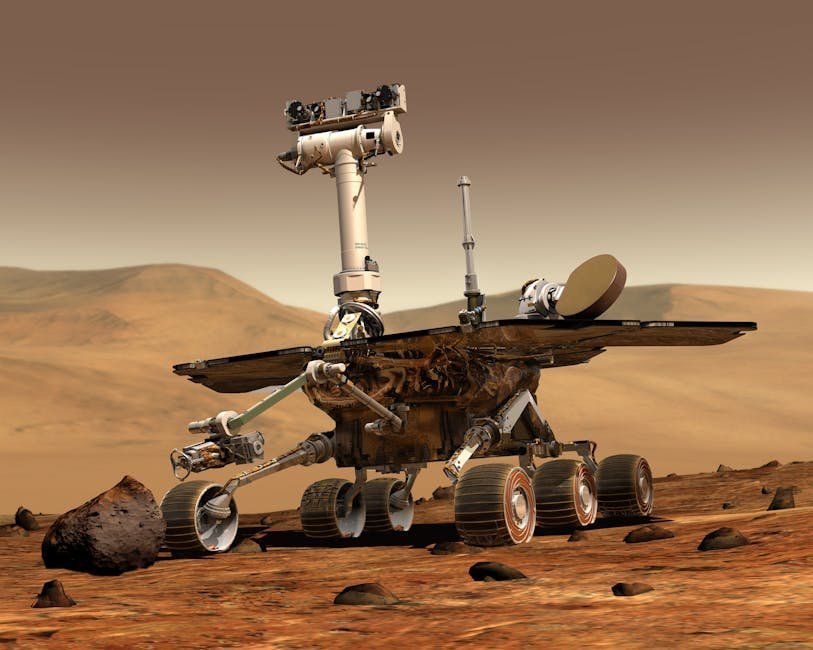
A European research team has unveiled a bold new mission concept that uses three different robots working together to explore extreme underground environments autonomously. Recently tested in the volcanic caves of Lanzarote, the system maps cave entrances, deploys sensors, lowers a scout rover, and creates detailed 3D maps of the interior. This is not a concept drawing. These robots have already crawled through an Earth-based lava tube analog.
The robots operated without real-time human control, which is critical for Mars where signals take up to 20 minutes each way. They built 3D models, measured environmental conditions, and scouted deep interiors, all while coordinating as a team. Signal delay is one of the biggest unsolved challenges in Mars robotics, and this system was built specifically with that constraint in mind.
In the context of Martian lava tube exploration, jumping legged robots would be particularly useful due to their ability to jump over big boulders, gaps, and obstacles, as well as to descend and climb steep slopes. This would allow them to explore and map such caves, and possibly collect samples from areas that may otherwise be inaccessible. Robotic scouting is expected to proceed first between 2028 and 2035, followed by crewed missions.
The Conclusion: Our Future Homes Are Already Photographed
Here is the remarkable thing. The first homes of humans on Mars have probably already been photographed. They show up as dark, circular openings in orbital images, ringed by shadows so deep the cameras cannot see inside. We have over a thousand candidate entrances, mapped from space, catalogued and studied. We just have not gone in yet.
The structural integrity and environmental stability of these tubes make them prime candidates for safe, long-term extraterrestrial habitats. Additionally, lava tubes preserve stratigraphic, geochemical, and possibly biological records, making them valuable targets for planetary science, astrobiology, and future robotic or human missions.
It is a strange and extraordinary thought. Tens of thousands of years ago, our ancestors sheltered in caves to survive on a hostile Earth. The wheel came later, then fire, then cities. Now we are standing at the edge of another planet, looking at photographs of its caves, planning how to move in. History, it turns out, has a very strange sense of humor. What do you think – would you live in a Martian cave? Tell us in the comments.