

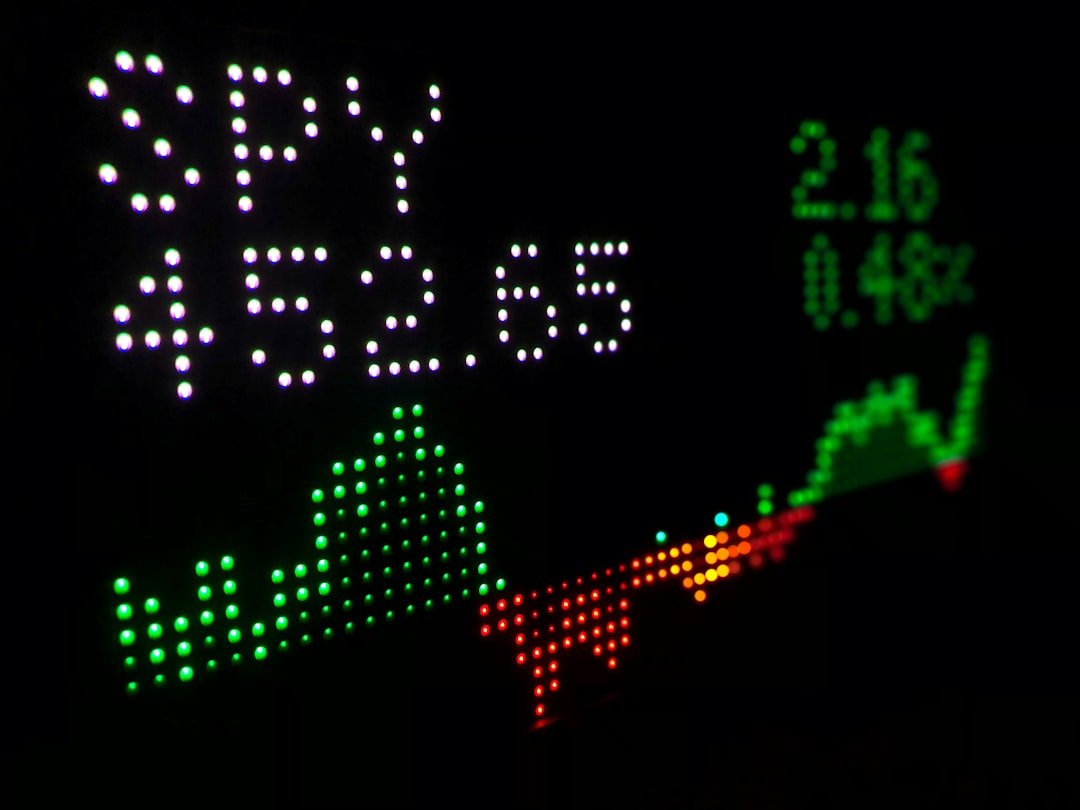
Crude’s Dramatic Reversal Sparks Immediate Optimism (Image Credits: Unsplash)
Financial markets worldwide rallied sharply after the United States and Iran announced a two-week ceasefire that promises to restore passage through the Strait of Hormuz. The key shipping route, blocked amid escalating conflict, had driven oil prices higher for over five weeks. Premarket indicators on Wall Street signaled robust gains, with investors welcoming the potential relief from energy cost pressures.
Crude’s Dramatic Reversal Sparks Immediate Optimism
Benchmark U.S. crude oil futures plummeted $18.43 to settle at $94.52 per barrel, marking a nearly 16% drop in a single session. Brent crude, the global benchmark, fell $15.54 to $93.73 a barrel. Natural gas futures also declined by close to 5%.
This sharp reversal erased much of the gains accumulated since the war began, when disruptions in the Strait of Hormuz threatened global energy supplies. Traders reacted swiftly to news of the truce, which includes Iranian military oversight of strait passage for the ceasefire period. Late Tuesday, former President Trump indicated he would pause planned strikes on Iranian infrastructure, further easing immediate fears.
Airlines and Major Indices Lead Wall Street Charge
Futures for the S&P 500 climbed 2.7% ahead of the opening bell, while Dow Jones Industrial Average futures rose 2.6%. Nasdaq futures jumped even higher at 3.4%.
Airline stocks benefited most from lower fuel costs. Shares in Delta and United Airlines surged more than 12% in premarket trading, with American Airlines up 10%. Delta also released first-quarter results that exceeded expectations, highlighting sustained travel demand ahead of summer.
Europe and Asia Join the Upward Momentum
European markets posted strong advances by midday. France’s CAC 40 index gained 4.5%, Germany’s DAX rose nearly 5%, and Britain’s FTSE 100 added 2.9%.
Asian exchanges closed with even larger increases after overnight developments. Japan’s Nikkei 225 finished 5.4% higher at 56,308.42. South Korea’s Kospi soared 6.9% to 5,872.34, Australia’s S&P/ASX 200 jumped 2.6% to 8,951.80, Hong Kong’s Hang Seng rose 3.1% to 25,893.02, and Shanghai’s Composite index climbed 2.7% to 3,995.00.
| Region/Index | Gain | Closing Level |
|---|---|---|
| Nikkei 225 | 5.4% | 56,308.42 |
| Kospi | 6.9% | 5,872.34 |
| CAC 40 | 4.5% | – |
| DAX | 5% | – |
Analysts Urge Caution Despite Rally
Market participants tempered enthusiasm with reminders of the truce’s brevity. “The ceasefire is only two weeks long, and markets will be watching closely to see whether shipping through the Strait of Hormuz normalizes as promised,” said Tim Waterer, chief market analyst at KCM Trade. He described the overall sentiment as one of cautious optimism rather than full celebration.
Takashi Hiroki, chief strategist at MONEX, echoed those concerns. “There is a reason to be optimistic, but it is still too early to tell,” he noted, pointing to uncertainties surrounding the agreement’s implementation. Currency markets reflected reduced safe-haven demand for the U.S. dollar, which weakened to 158.39 yen from 159.52 yen. The euro strengthened to $1.1701 from $1.1597.
- Oil prices dropped 16% on ceasefire news, reversing war-driven spikes.
- Global stocks rose 2.6% to 6.9%, led by airlines and tech-heavy indices.
- Truce lasts two weeks; durability remains a key watch point for traders.
The ceasefire offers a critical breather for economies strained by high energy costs, but its extension will determine lasting stability. Investors now focus on compliance and diplomacy in the coming days. What impact do you see this having on energy prices and travel plans? Share your thoughts in the comments.