


Something shifted quietly in the creative world around 2022, and it has only grown louder since. Writers, musicians, and visual artists began noticing a presence in their workspace that neither painted nor dreamed, yet could produce a poem in seconds, a melody on command, or a painting in any style imaginable. The question that followed was inevitable: is this genuine creativity, or an extremely convincing echo?
The debate is not merely philosophical. It has entered laboratories, courtrooms, and newsrooms, and the evidence coming in from all of these places is nuanced, sometimes surprising, and far from settled.
What “Creativity” Actually Means – and Why It Matters Here

Before testing whether AI is creative, researchers first had to settle on what creativity even is. Creativity is typically assessed across two dimensions: novelty and usefulness. These two criteria provide a measurable framework, one that can be applied to machines as readily as to humans. Without this foundation, any comparison between human and AI output risks becoming a philosophical argument with no empirical anchor.
Novelty assesses the extent to which an idea departs from the status quo or expectations, while usefulness reflects the practicality and relevance of an idea. Both dimensions are essential. An idea can be bizarre without being useful, or useful without being truly new. Real creativity tends to sit at the intersection of both.
Creativity is a multifaceted construct that manifests differently across domains and tasks. This is worth keeping in mind throughout the AI creativity debate. A system that scores well on word association tests may fall completely flat when asked to write something emotionally resonant, or to take genuine aesthetic risks.
The Big Study: 100,000 Humans vs. AI
A massive new study comparing more than 100,000 people with today’s most advanced AI systems delivers a surprising result: generative AI can now beat the average human on certain creativity tests. The scale of this research, led by Professor Karim Jerbi at the Université de Montréal with the participation of AI researcher Yoshua Bengio, makes it one of the most significant data points in this ongoing debate.
To evaluate creativity fairly across humans and machines, the research team used multiple methods. The primary tool was the Divergent Association Task (DAT), a widely used psychological test that measures divergent creativity, or the ability to generate diverse and original ideas from a single prompt. The DAT is not about vocabulary alone. It is a window into how widely a mind can range when given freedom.
The most creative humans – especially the top ten percent – still leave AI well behind, particularly on richer creative work like poetry and storytelling. So the headline is true: AI is beating the average person. The quieter truth underneath it is that the ceiling of human creativity remains out of reach for machines.
The Fixation Problem: When Patterns Replace Originality
Recent studies have shown that generative AI tends to generate relatively repetitive and predictable outputs, yet they have not provided a definitive answer regarding whether these outputs are spontaneously original or reflect fixation-driven patterns learned from training data. This is the crux of the originality question. Fluency and originality are not the same thing, and AI excels at the former while struggling with the latter in deeper creative contexts.
When responding to a creative prompt, the ideas produced by AI tend to be constrained by a fixation bias present in the training data. This raises the issue of whether the ideas generated by AI are truly original and novel, or if they remain influenced by predictable and repetitive patterns. Think of it as a very sophisticated autocomplete: the system always gravitates toward what has already been said well, rather than reaching toward what has never been said at all.
ChatGPT-4o is not an autonomous creative agent. It lacks consciousness, intentionality, and genuine metacognitive capacities; its outputs reflect only probabilistic inferences over patterns learned from training data. This is a technical reality, not a criticism. It simply clarifies what kind of process is actually taking place when the model produces something that looks creative.
The Leveling Effect: Who Actually Benefits?

The researchers found that the writers with the greatest level of access to the AI model were evaluated as showing the most creativity. Of these, the writers who had scored as less creative on the first test benefited the most. However, the stories produced by writers who were already creative did not get the same boost. This is one of the most practically important findings to emerge from this field in recent years.
Less creative writers saw an increase of roughly ten to eleven percent in creativity and twenty-two to twenty-six percent in enjoyable content when using AI assistance. The gains are real and measurable. For people who struggle to express ideas in writing, AI can act as a genuine scaffold. The tool raises the floor significantly, even if it does not raise the ceiling.
Having access to generative AI effectively equalizes the evaluations of stories, removing any disadvantage or advantage based on the writers’ inherent creativity. Whether that is a good thing depends on how you value the role of innate talent in cultural production. An equalized creative landscape may be more democratic, or it may simply be more uniform.
The Mirror Problem: AI and the Homogenization of Culture

Generative AI can enhance the creativity of short stories but may limit the variation in diverse outputs. This tension, the individual boost versus the collective cost, is emerging as one of the defining tensions of AI in creative fields. It shows up across studies, disciplines, and contexts.
While large language models can produce creative content that might be as good as or even better than human-created content, their widespread use risks reducing creative diversity across groups of people. Across three preregistered studies analyzing thousands of college admissions essays, researchers found this homogenization effect was persistent and difficult to reverse, even through prompt adjustments and parameter changes.
Artificial intelligence chatbots are standardizing how people speak, write and think. If this homogenization continues unchecked, it risks reducing humanity’s collective wisdom and ability to adapt. This concern, raised by USC researchers and published in Trends in Cognitive Sciences in 2026, reframes the AI creativity debate from an individual question to a civilizational one.
The Training Data Foundation: Built on Human Work
While AI technologies have succeeded in automating segments of the creative process, critiques have emerged suggesting that such automation often yields products lacking in genuine originality. This perceived shortcoming is often linked to the dependency of AI on pre-existing datasets, which may inherently limit its potential for true novelty. This is not a minor caveat. It goes to the heart of what originality means in the context of a system that has never experienced the world independently.
Generative AI creates content by recognizing patterns in massive datasets containing text, images, audio, and other media. These AI models learn from millions or billions of examples to generate new outputs that can appear remarkably similar to human-created works. This process raises complicated questions about originality, creativity, and the role of human authorship.
Because stories generated by AI models can only draw from the data that those models have been trained on, those produced in studies were less distinctive than the ideas the human participants came up with entirely on their own. The mirror metaphor fits precisely here. The reflection can be elaborate, even beautiful. Still, it always points back at what was placed in front of it.
The Lovelace Test and the Intentionality Question
In 2001, decades before the current AI boom, researchers developed a benchmark of AI creativity called the Lovelace Test, named after computing pioneer Ada Lovelace. An AI model could only be considered truly creative if it produced an output that could not be explained by the engineer who designed it. By this standard, no current AI model has come close to passing.
While the complex artificial neural networks powering AI today produce outputs that can be difficult for their creators to explain, researchers argue these models are not generating anything truly surprising based on our understanding of how they were designed. The outputs may be statistically improbable, but they are still mechanistically traceable. Surprise and genuine creative intent are not the same thing.
While AI systems demonstrate impressive fluency and the ability to produce a large number of creative ideas, their inability to critically assess the originality of their own outputs reveals a key limitation. A human artist knows when they have done something genuinely new. Current AI systems do not have access to that internal compass.
The Copyright Collision: Who Owns What AI Creates?
For AI-generated output to be copyrightable, most jurisdictions require some level of human creativity or originality in the selection and modification of the AI-generated content. That means AI-generated work alone, in response to a human user’s prompt, is not afforded copyright protection. This legal reality reflects a deeper philosophical consensus: creativity, as societies have defined it for centuries, requires a human hand in the loop.
The potential for AI-generated outputs to displace, dilute, and erode the markets for copyrighted works raises concerns that fewer human-authored works are likely to be sold. The U.S. Copyright Office highlights concerns raised by artists, musicians, authors, and publishers about declining demand for original works as AI-generated imitations proliferate. The U.S. Copyright Office addressed this directly in its landmark 2025 report on generative AI training.
This can occur when AI models are trained on a body of works and then generate new works in the same style, genre, or category, thereby increasing competition and potentially reducing the market value of the originals. The speed and scale at which AI systems can generate content mean that AI has the unique potential to flood a market. Speed and scale are precisely what separate AI from any previous creative tool.
The Temperature Variable: Creativity as a Dial
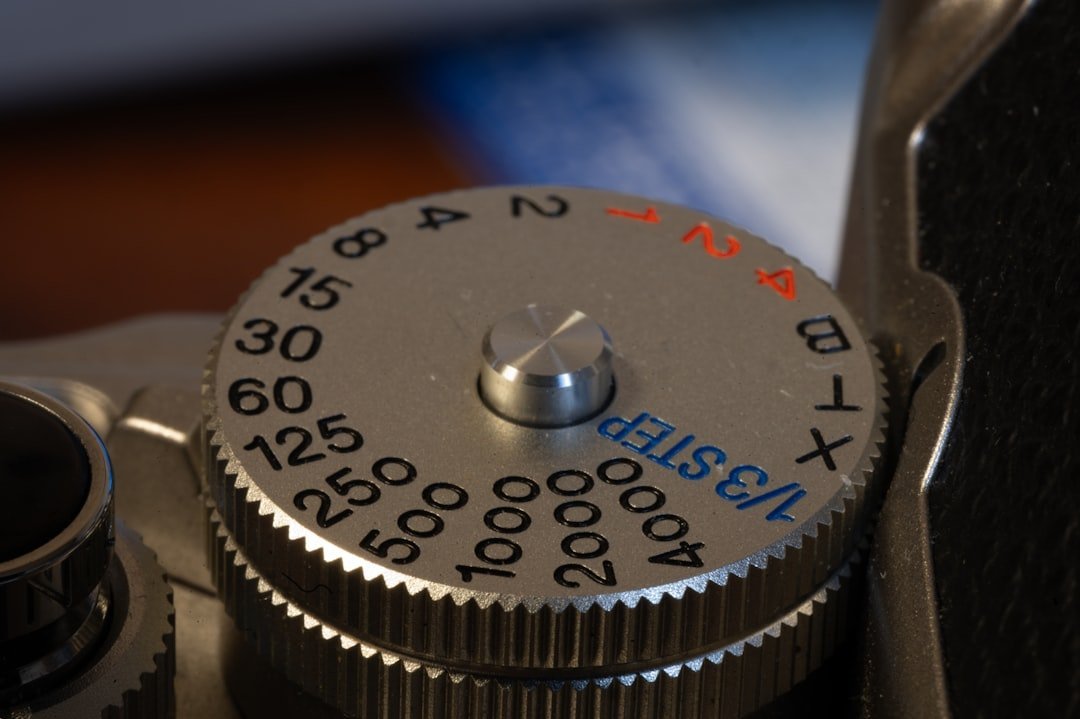
Research shows that creativity in AI can be adjusted by changing technical settings, particularly the model’s temperature. This parameter controls how predictable or adventurous the generated responses are. In other words, what looks like more or less creative output is, at some level, a technical setting rather than an intrinsic quality. That distinction matters a great deal.
Research findings suggest that the creativity-diversity trade-off may emerge from uniform deployment practices rather than from an inherent limitation of generative AI, and that diversity can be intentionally built into AI-mediated collaboration. Studies highlight the risks of over-standardization, the importance of prompt variation, and the value of treating AI not as a static tool but as a configurable partner. This is a more hopeful framing, one that places responsibility on how we deploy AI rather than on what AI fundamentally is.
These findings motivate a synthesis that links cognitive theory, neural evidence, and generative-model engineering, and state testable criteria for when an artificial system merits the label creative. The field is still building those criteria. That process itself may be one of the more important intellectual projects of this decade.
Human-AI Co-Creativity: The Most Viable Path Forward
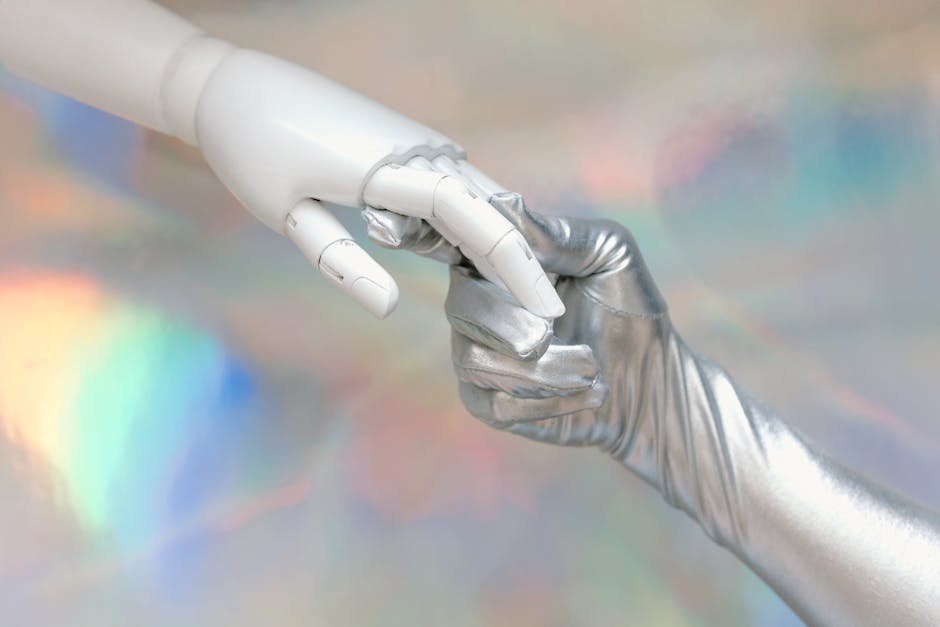
As research expands the knowledge base regarding the capabilities and performance of AI, the prevailing view is shifting away from “AI is creative” and towards a more balanced model of human-AI co-creativity. This shift is significant. The framing is no longer about replacement but about a working relationship between two different kinds of intelligence.
As AI continues integrating into everyday processes, it has been a resourceful tool for augmentation rather than completely replacing the human process. As generative tools greatly aid production and personalization, it is critical to maintain emotional depth, ethical use, and cultural relevance, which can only be truly captured by humans. The machines can iterate quickly. The humans still have to decide what is worth making.
ChatGPT has emerged as a major player, with over 300 million weekly users by the end of 2024, and growing use across sectors notably as a means to support idea generation. At this scale, the question of whether AI is truly creative stops being purely academic. It becomes a question about what happens to culture when hundreds of millions of people use the same creative tool simultaneously.
The “creative wall” the title describes is real, though its exact location keeps moving. AI is genuinely useful as a creative amplifier, a collaborator, and a starting point. What it has not yet demonstrated is the capacity to create from nothing, to be surprised by its own work, or to reach beyond the edges of what human culture has already produced. That gap may narrow over time. For now, the most creative uses of AI seem to involve a human who knows exactly what they’re looking for, using a machine that knows almost everything that has ever been said.