


There’s something quietly unsettling happening in the job market right now. The piece of paper you spent years and thousands of dollars earning may no longer be the golden ticket it once was. Hiring managers across industries are increasingly asking a different question when they look at your application – not “Where did you study?” but “What can you actually do?”
This is not just a trend. It’s a fundamental rethink of how talent is identified, valued, and rewarded. The resume, as we’ve known it for decades, is being killed by a simple truth: credentials don’t always equal competence. So if you’ve been leaning on your degree as your biggest selling point, you might want to read every word of what’s coming. Let’s dive in.
The Death of the Degree Filter

For a very long time, a bachelor’s degree functioned less like proof of knowledge and more like a bouncer at a club door. For many employers, adding college degree requirements seemed an efficient filter – more a proxy than a direct measure, with degrees perceived as indicators of persistence, foundational skill, and general capability. It wasn’t exactly scientific, but it worked as a rough sorting mechanism for decades.
Then labor markets got tight, skills gaps grew wider, and companies started questioning why they were filtering out so many qualified people for reasons that had nothing to do with actual job performance. It became increasingly difficult to justify a filter that summarily disqualified the roughly two-thirds of Americans who lack a degree.
In recent years, at least 26 states, along with private companies like IBM and Accenture, began stripping degree requirements and focusing hiring practices on applicants’ skills. That’s not a small shift. That’s a seismic one.
The Numbers That Should Surprise You
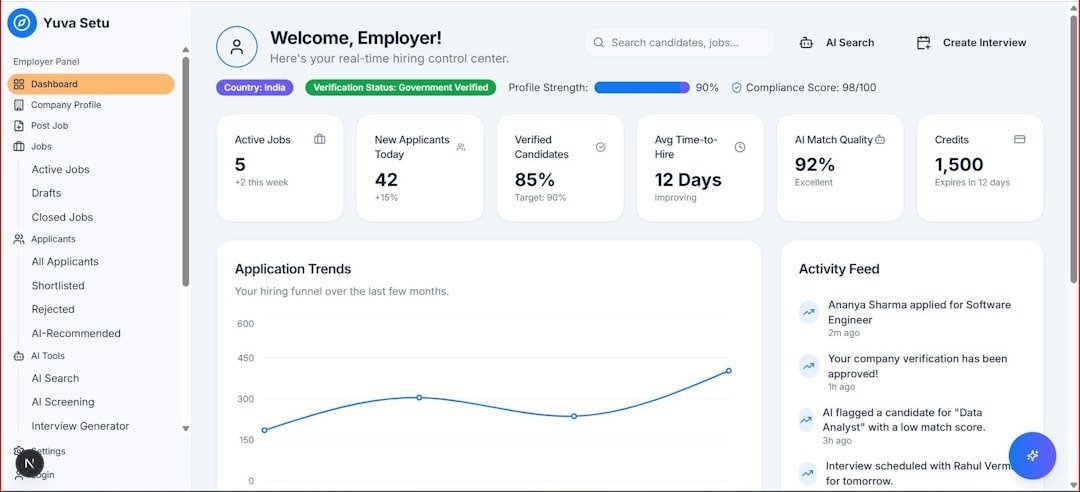
Here’s the thing about the skills-based hiring revolution – the data around it is genuinely fascinating, even when it’s contradictory. On one hand, the momentum is real and growing. According to TestGorilla, 85% of employers now use skills-based hiring, up from 81%, and removing degree filters opens candidate pools that are 19 times larger, while companies using skills-first hiring reduce time-to-hire by up to 50% and report 89% increased employee retention.
On the other hand, the gap between policy and practice is still wide. The Burning Glass Institute and Harvard Business School found that fewer than 1 in 700 hires in 2023 actually benefited from the shift to skills-based hiring. Honestly, that’s a stunning gap between what companies say and what they do.
McKinsey’s research revealed that hiring for skills is five times more predictive of job performance than hiring based on education alone. That stat alone should make every HR department rethink its processes from scratch.
The World Economic Forum’s Warning

One of the most credible voices on the future of work has been issuing consistent warnings for years now – and the 2025 data makes the picture even sharper. Overall, employers expect 39% of workers’ core skills to change by 2030 – representing significant ongoing skill disruption, though this figure is down from 44% in 2023.
Think about that for a moment. Nearly four out of ten skills that are considered “core” today will be outdated or transformed within just a few years. No degree program moves that fast. A growing focus on continuous learning, upskilling, and reskilling programs has enabled companies to better anticipate and manage future skill requirements, and technological skills are projected to grow in importance more rapidly than any other skills in the next five years.
Drawing on data from over 1,000 companies, the WEF’s Future of Jobs Report 2025 finds that the skills gap continues to be the most significant barrier to business transformation. The implication is clear: the race to stay relevant belongs to the continuous learner, not the degree holder.
Big Tech Is Already Playing by New Rules

It’s worth looking at what the giants of tech are actually doing, not just saying. Companies like Google, Apple, and IBM have dropped degree requirements for many positions, recognizing that valuable skills can be acquired through various channels. These are not small startups experimenting with radical HR ideas. These are some of the most selective employers on the planet.
Google, in particular, has gone further than most. Google’s Generative AI Leader Professional Certificate connects learners to over 150 employer partners through the Google Career Certificates consortium, facilitating job placements in high-growth areas. The path from zero-degree to employed is now shorter than it has ever been, if you’re willing to put in the skill-building work.
Amazon alone made 2,468 hires from bootcamp graduates in 2024, up 129% from 2021-22. That number represents a real pipeline of credential-free talent that major employers are actively building and investing in.
The Hidden Workers Problem

There’s a term that has gained traction in workforce research: “hidden workers.” These are people who are fully capable of doing jobs but get screened out by automated filters before a human ever sees their application. A Harvard Business School and Accenture report titled “Hidden Workers: Untapped Talent” found that over 70 million American workers are “hidden” from employers due to outdated degree requirements, despite possessing the necessary skills to succeed.
Seventy million people. That’s roughly the population of the United Kingdom being left out of the hiring conversation for no good reason. Even more telling, 42% of global workers say their current roles don’t actually require a college degree, exposing how arbitrary many credential requirements have become.
Globally, skills-first hiring increases candidate pools of workers without bachelor’s degrees by 9% more than candidate pools with degrees, and in jobs where women are underrepresented, a skills-first approach can increase the proportion of women in candidate pools by 24% more than it would for men. Skills-based hiring isn’t just economically smart – it’s a genuine equity issue.
Recruiters Are Changing How They Search

The shift isn’t just happening in boardrooms and policy documents. It’s happening at the recruiter level, in the actual daily mechanics of how people get hired. Degrees remain relevant, but organizations have realized that academic qualifications alone cannot predict performance or retention, and recruiters are now 50% more likely to search for candidates by skills rather than years of experience.
LinkedIn’s 2023 Global Talent Trends Report revealed that 45% of recruiters globally are using skills data to fill roles, a significant increase from just 28% in 2019, and jobs posted on LinkedIn that emphasize skills over qualifications attract 60% more applications on average. More applications and better-matched candidates. That’s a win for everyone.
About three-quarters of companies used skills-based hiring in 2023, and 27% adopted it in just the last 12 months, yet over 60% of employers still rejected otherwise qualified candidates simply because they lacked a college degree. The contradiction is real and it reveals just how messy this transition actually is.
The Rise of Alternative Credentials
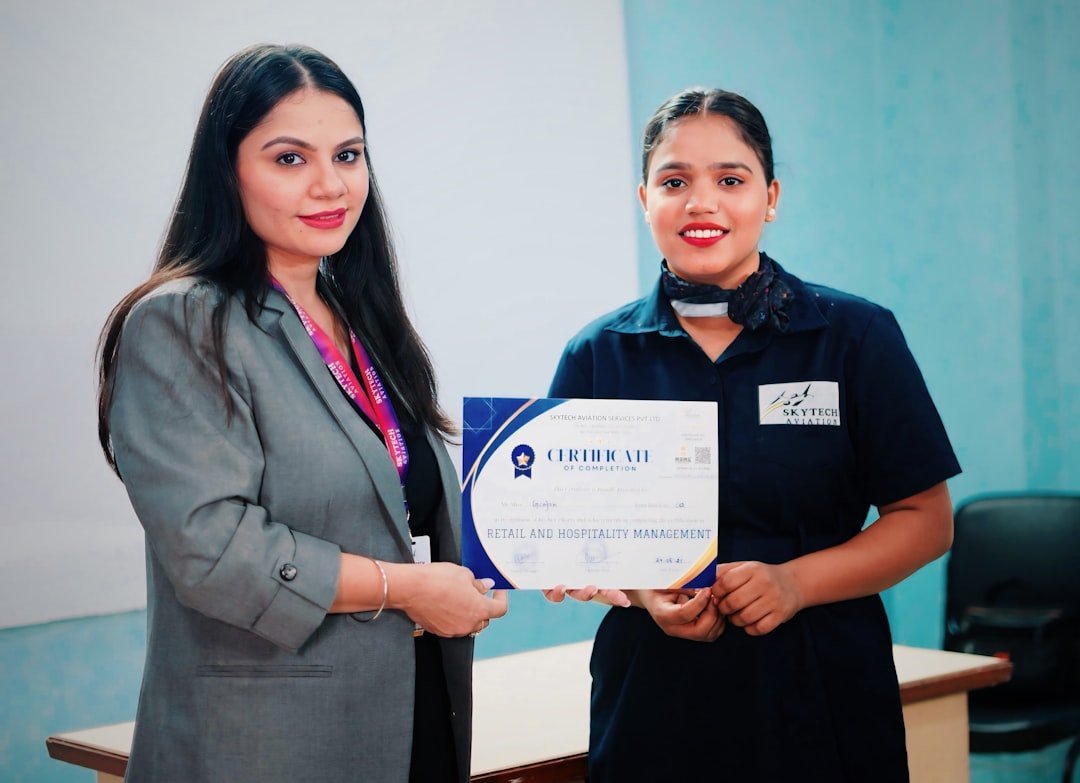
If the degree is losing its crown, something has to take its place – and the answer is a growing ecosystem of alternative credentials that are proving their worth in actual hiring outcomes. While formal skills-based hiring policies show mixed results, alternative credential pathways are delivering proven outcomes for millions of workers, and Registered Apprenticeship Programs have experienced explosive growth with exceptional outcomes.
Let’s be real: a six-month Google Career Certificate is not the same as a four-year university education. It was never meant to be. Google Career Certificates help learners acquire skills for in-demand jobs, with online certificate programs offering AI content for professional-level training. For targeted roles in tech, data, and cybersecurity, they work remarkably well.
Apprenticeships provide paid training with industry connections, bootcamps compress years of learning into months, and certifications demonstrate specific, verified capabilities employers actually need. The honest truth is that for many career paths today, these alternatives aren’t second-best options. They’re genuinely superior ones.
What the Future Job Market Actually Demands
So what skills should you be building right now? The research from multiple credible sources paints a clear picture. Analytical thinking remains the top core skill for employers, with seven out of ten companies considering it essential, followed by resilience, flexibility, and agility, along with leadership and social influence, while creative thinking and motivation round out the top five.
These are not things you learn by sitting in a lecture hall for four years. They’re things you develop by doing – by building, failing, iterating, and solving real problems. Technology skills dominate the fastest-growing skills by 2030, driven by ongoing technological change, while geoeconomic fragmentation and economic uncertainty are also driving demand for creative thinking, resilience, flexibility, agility, and leadership.
Roughly eight out of ten companies plan to upskill workers with AI training, and two-thirds plan to hire talent with specific AI skills, while only about four in ten plan to reduce their workforce as AI automates certain tasks. The message from employers couldn’t be clearer: they want people who can grow with the technology, not just people who studied it years ago.
Conclusion: The Smartest Investment You Can Make

https://web.archive.org/web/20240721101843/https://www.youtube.com/watch?v=erT6LSJcEaY
(Look in the webpage source code for the license note), CC BY 3.0)
The shift from credential-based to skills-based hiring is real, messy, and still unfolding. It’s not a clean revolution – it’s more like a slow earthquake. Institutions are changing, but slowly. Mindsets are shifting, but unevenly. The smart move is to stop waiting for the world to catch up and start building skills that are demonstrable, specific, and current.
Your degree isn’t worthless. Nobody is saying that. But it can no longer do all the heavy lifting on its own. The resume of 2026 is a portfolio, a GitHub repo, a certificate, a track record of things you have actually built and solved. Your ability to demonstrate practical skills, adapt to new challenges, and continuously learn becomes your most valuable asset, and the future belongs to those who can showcase tangible abilities rather than relying solely on credentials.
The question is no longer what do you have on paper. It’s what can you actually do today. So – what are you building?