


Most people spend years adjusting their pillow, switching mattresses, or cutting back on caffeine before ever thinking about the one variable that sleep scientists keep circling back to: room temperature. It sounds almost too simple. Yet a growing body of research from peer-reviewed journals, sleep foundations, and longitudinal studies consistently points to the same conclusion. The temperature of your bedroom shapes how deeply you sleep, how well you recover, and how rested you actually feel in the morning.
The number 19°C sits at the upper boundary of what most experts consider the optimal range for adults. Understanding why that ceiling matters, and what happens to your body on either side of it, is worth paying attention to.
The Science Behind the “Cool Room” Window

Studies suggest that an ideal bedroom temperature for sleep falls between 15°C and 19°C, though some research recommends a slightly broader range of 20°C to 25°C. The fact that two credible recommendations exist side by side isn’t a contradiction. It reflects genuine variation across age groups, climates, and individual physiology.
In optimal room temperatures, approximately 19 to 21°C, researchers observe attempts to establish skin microclimates between 31 and 35°C, and deviation from this range has a negative influence on sleep. That skin microclimate, the thin layer of warmth sitting between your body and the sheets, turns out to be surprisingly important to how quickly and deeply you fall asleep.
How Your Body Begins Cooling Before You Even Close Your Eyes

The body follows a natural circadian rhythm that dictates fluctuations in core body temperature throughout the day. About two hours before bedtime, the body begins to cool down, signaling that it is time to sleep. This process is not passive. It’s driven by specific hormonal and neurological mechanisms.
Under normal circadian regulation, the core body temperature peaks in the late afternoon and gradually declines by about 1°C in the evening, reducing metabolic rate and neuronal activity, promoting drowsiness, and preparing for sleep onset. This decline is mediated by the suprachiasmatic nucleus, the master regulator for circadian rhythms, melatonin release, which itself exerts a direct hypothermic effect, and peripheral vasodilation. Put simply, your body is already doing the work. A cool room simply makes that work easier.
What Happens to Deep Sleep (N3) When the Room Is Too Warm

When the bedroom is too warm, the body struggles to maintain its natural cooling cycle, leading to alterations in sleep cycles and impaired sleep quality. Two major mechanisms are at play: excessive warmth can lead to frequent awakenings throughout the night, preventing deep and restorative sleep, and the body requires a cooler environment to enter slow-wave sleep, the deep sleep phase crucial for brain health and memory consolidation.
Thermal discomfort, meaning your body is too warm, increases lighter sleep stages and reduces the time spent in deep N3 and REM sleep. You may spend more time in N1, the transition stage that provides little restorative value. This is a subtle but significant loss. Hours in bed don’t equal hours of quality recovery.
The REM Sleep Connection

The thermoregulatory link becomes especially significant in REM sleep. During REM, where most vivid dreaming occurs and where memory consolidation and emotional processing happen, your body temporarily stops regulating temperature the way it does when you’re awake. In that state, your brain temperature and core temperature are more sensitive to the ambient conditions in your room. A bedroom that’s too warm can effectively cut REM sleep short, even if you never fully wake up.
A decrease in REM and slow-wave sleep also impacts recovery from stress and decreases function of the immune system. That connection between temperature, sleep architecture, and immune health is one reason researchers now treat bedroom temperature as a genuine health variable, not just a comfort preference.
The NIH Data: What Happens at Skin Level

Small changes in skin temperature of only 0.4°C, within the 31 to 35°C range, can shorten sleep latencies without altering core temperature. They can even encourage deeper sleep in more challenging patient groups, such as elderly insomniacs. This finding, published in NIH-indexed research through Frontiers in Neuroscience, is striking. The margin of change is remarkably small.
This latter group was particularly susceptible to thermal management, supporting the hypothesis that sleep difficulties in the elderly relate to deficits in normal thermoregulation. Thermoregulation, in other words, isn’t equally efficient for everyone, which is why the ideal temperature isn’t identical for all adults.
What the Longitudinal Studies Actually Found

A longitudinal study examined the association between bedroom nighttime temperature and sleep quality in community-dwelling older adults. Using wearable sleep monitors and environmental sensors, researchers assessed sleep duration, efficiency, and restlessness over an extended period. Their findings demonstrated that sleep was most efficient and restful when nighttime ambient temperature ranged between 20 and 25°C, with a clinically relevant 5 to 10% drop in sleep efficiency when the temperature increased from 25°C to 30°C.
The associations were primarily nonlinear, and substantial between-subject variations were observed. These results highlight the potential to enhance sleep quality in older adults by optimizing home thermal environments and emphasize the importance of personalized temperature adjustments based on individual needs and circumstances. The nonlinear nature of these results is key. There’s no perfectly universal number, but there is a clearly defined zone.
Temperature, Melatonin, and Memory Consolidation

Cooler sleep temperatures trigger increased melatonin production. Melatonin isn’t just a sleep hormone; it’s a powerful antioxidant that fights cellular aging and supports immune function. The relationship between ambient temperature and melatonin output is direct and well-documented.
Stage N3, also known as slow wave sleep since it is characterized by delta-wave activity, is pivotal for cerebral restoration, memory consolidation, and metabolic regulation. Proper temperature regulation during sleep enhances memory consolidation and problem-solving abilities. The downstream effects of sleeping at the right temperature extend well beyond feeling refreshed in the morning.
Adaptive Thermal Regulation: The Newest Research Direction

Research published in 2024 and 2025 found that adaptive real-time temperature adjustment achieved a marked reduction in REM latency and an increase in REM sleep percentage, highlighting the critical role of temperature modulation during REM sleep in enhancing cognitive and emotional recovery processes. Furthermore, a significant increase in deep sleep percentage under adaptive thermal regulation supports the hypothesis that matching temperature to sleep stages enhances the body’s recovery by optimizing thermoregulatory efficiency during non-REM sleep.
Traditionally, thermal interventions have focused on controlling the ambient temperature of the room, but recent advancements in sleep technologies have enabled more localized temperature regulation, such as through heated blankets or temperature-adjustable mattresses. Most current approaches utilize a constant temperature throughout the night, which may not reflect the body’s dynamic thermoregulatory needs during different sleep stages. This is arguably the frontier: not just cooling a room, but cooling it intelligently.
Climate Change Is Already Disrupting Your Sleep

Higher outdoor or indoor temperatures are generally associated with degraded sleep quality and quantity worldwide. The negative effect of heat persists across sleep measures, and is stronger during the hottest months and days, in vulnerable populations, and the warmest regions. This is no longer just a theoretical concern.
Limited evidence of fast sleep adaptation to heat suggests rising temperatures induced by climate change and urbanization pose a planetary threat to human sleep, and therefore health, performance, and wellbeing. The 2024 systematic review published in Sleep Medicine Reviews that produced these findings draws from real-world data across multiple countries, making its conclusions difficult to dismiss.
Practical Ways to Actually Reach 19°C Tonight
Evidence synthesis from peer-reviewed studies published between 2000 and 2024 suggests that moderate thermal environments, generally ranging between 18°C and 22°C, support sleep continuity in most healthy adults, though optimal thresholds may vary by age, region, and season. The overlap in these ranges points to a reliable, evidence-based window rather than a single rigid target.
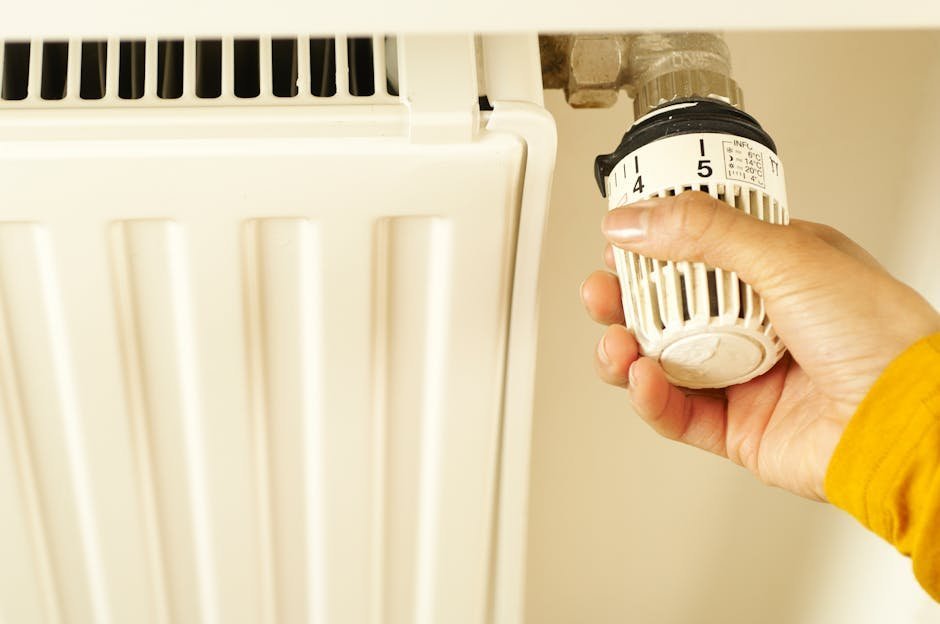
Programming your thermostat to automatically cool your bedroom 30 minutes before bedtime and gradually warm before your wake time mimics natural temperature patterns and can improve both sleep quality and morning alertness. Bedding matters as much as air temperature. A cool room with a heavy duvet is not the same as a cool room with light blankets. Small practical adjustments, taken together, can bring your sleeping environment meaningfully closer to that evidence-based window.
Conclusion: One Variable, Measurable Results

The evidence across multiple research institutions, journals, and real-world longitudinal studies is consistent: the temperature in which you sleep is not a minor detail. It shapes the depth of your slow-wave sleep, the integrity of your REM cycles, the efficiency of your memory consolidation, and the degree to which your body actually recovers overnight.
19°C is not a magic number. It’s the upper boundary of a well-researched range that supports the body’s own thermoregulatory process. The more interesting insight is what this tells us about recovery in general: the best biological conditions are often the most modest ones, not high-tech, not extreme, just carefully aligned with what the body is already trying to do on its own.