


There is something deeply unsettling about standing inside the King’s Chamber of the Great Pyramid of Giza and feeling, rather than hearing, the air around you hum. Thousands of researchers, engineers, and curious visitors have described it the same way over the decades: a kind of pressure, a low thrum, a presence that seems woven into the stone itself. This is not folklore. This is physics.
Scientists, acousticians, and archaeologists have been quietly studying what the ancient Egyptians may have known intuitively: that certain frequencies, when generated inside this massive stone structure, behave in ways that modern engineering still struggles to fully explain. What you are about to read will probably surprise you. Let’s dive in.
The King’s Chamber Was Designed to Resonate – On Purpose

Researchers and visitors to the Grand Gallery and King’s Chamber inside the Great Pyramid have experienced, and still experience, an extraordinary reverberation of sound resulting from the resonance of sound waves, which is not an accidental feature. That last part is worth sitting with for a second. Not accidental. The dimensions of the King’s Chamber are carefully chosen in order to create a standing or stationary wave as a result of the phenomenon of sound resonance. Think of it like an instrument. A violin body is shaped specifically to amplify certain frequencies. The King’s Chamber, it seems, was no different.
The acoustics in the King’s Chamber are notably extraordinary. It sounded very weird inside there – think of the “livest room” you’ve ever experienced, and then double that. It was acoustically solid as a rock, given a minimum of 200 feet of stone in all directions. This was reported by a professional acoustic engineer who brought specialized measurement equipment into the chamber for testing. That level of reverberation is not something you stumble into by accident with 2.5 million stone blocks.
Tom Danley’s Four Resident Frequencies

Experiments conducted by Tom Danley in the King’s Chamber of the Great Pyramid and in chambers above the King’s Chamber suggest that the pyramid was constructed with a sonic purpose. Danley identifies four resident frequencies, or notes, that are enhanced by the structure of the pyramid, and by the materials used in its construction. Four distinct notes. Embedded in the architecture itself. That is not a coincidence, it is engineering.
Moreover, Danley’s tests show that these frequencies are present in the King’s Chamber even when no sounds are being produced. They exist in frequencies that range from 16 Hertz down to half a Hertz, well below the range of human hearing. According to Danley, these vibrations are caused by the wind blowing across the ends of the so-called shafts, in the same way as sounds are created when one blows across the top of a bottle. So the pyramid is, in a very real sense, always playing. Even in silence.
The Schumann Resonance Connection
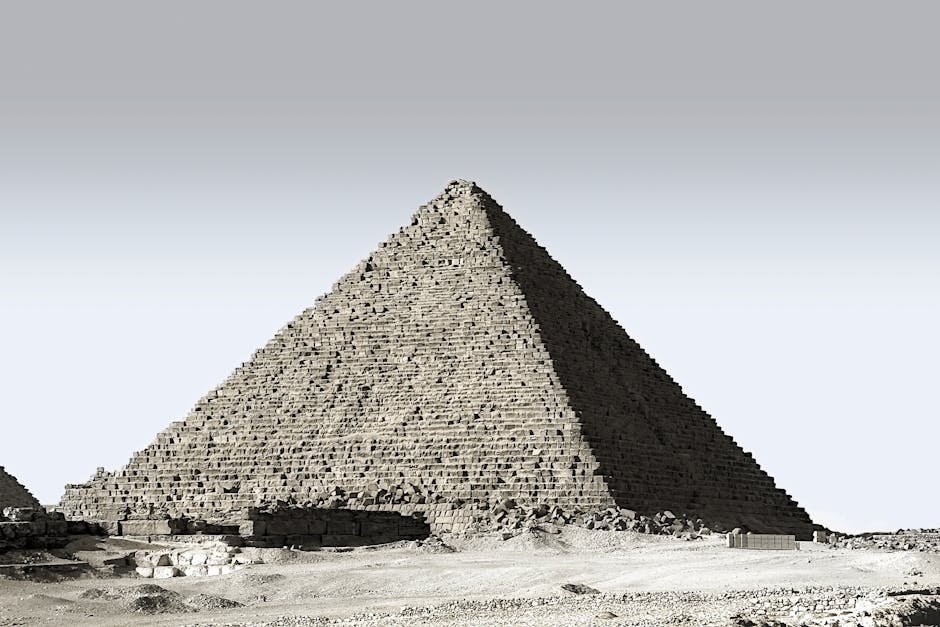
German professor of physics Winfried Otto Schumann discovered in 1952 that in the atmosphere there are resonating electromagnetic waves measurable at a frequency of around 8 hertz. This is called the Schumann resonance frequency and is a natural phenomenon that occurs when electricity discharges in the atmosphere. It creates a low-frequency resonance effect, which pulsates with a measured dominant frequency of 7.83 hertz between the surface of the Earth and the ionosphere at an altitude of about 80 km. This is called the resonant frequency of the Earth, whose predominant standing wave is 7.83 hertz.
Here is where things get genuinely interesting. The average between the calculated and measured frequency for the latitude of Giza is 8.1 hertz, and this is the exact frequency captured by the shape of the Great Pyramid. The King’s Chamber was built to resonate on a certain frequency, which is the exact octave or second harmonic of the ground frequency of 8.1 hertz – the keynote of Mother Earth. Honestly, calling that a coincidence takes more intellectual effort than just acknowledging it as deliberate design.
The Granite Sarcophagus and Its Measurable Resonance
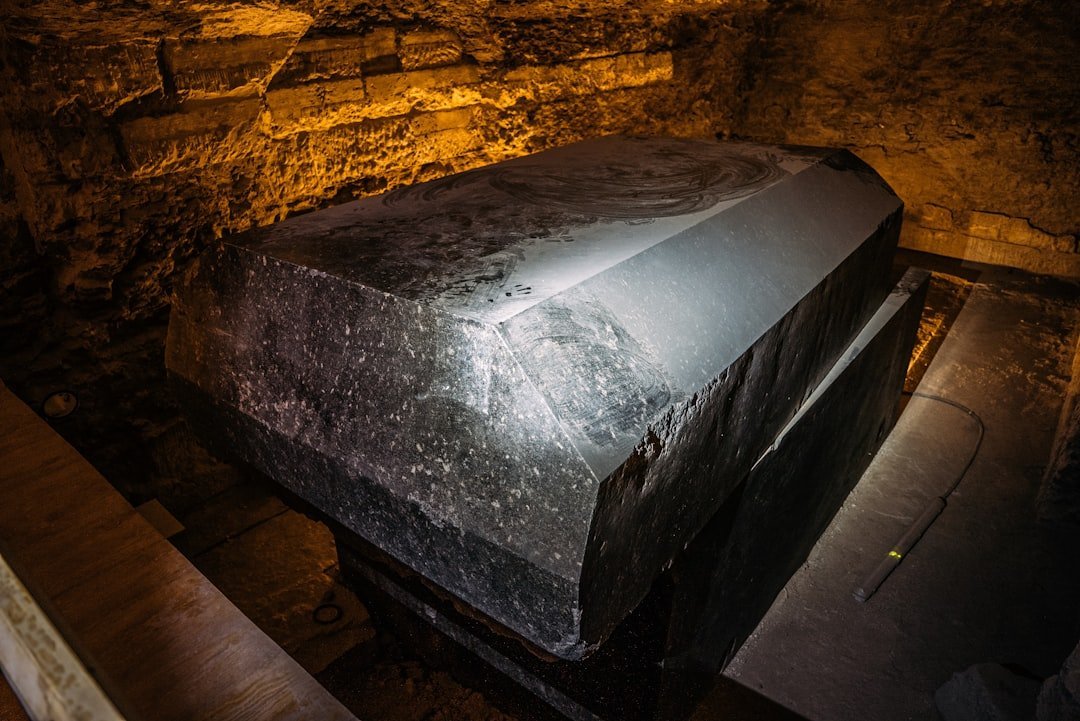
Acoustical engineer J. Reid carried out acoustic experiments revealing the resonant frequency of the upper chamber to be 121 Hz. Resonance in the upper chamber’s granite box (erroneously dubbed the “sarcophagus”) was found at 117 Hz. The interaction of these slightly offset resonant frequencies was most strongly felt while inside the granite box, creating a resounding beat frequency that closely matches the human heartbeat. That is not poetry. That is a measurable acoustic phenomenon.
The principal resonant frequencies of the granite sarcophagus were shown to be between 65 Hz and 160 Hz, with the greatest spikes of activity between 114 Hz and 122 Hz. The King’s Chamber sarcophagus is highly resonant, partly due to its high quartz content, hence the Egyptian architect’s choice of raw material since limestone and alabaster lack the resonant properties enjoyed by granite. The ancient Egyptians chose granite with specific, provable physical properties. That choice was not random.
The Dead-End Passage and Its Infrasound Generation

Deep below the pyramid, inside the Subterranean Chamber, lies a narrow tunnel that most visitors walk right past without a second thought. What all the evidence suggests is that the Dead-end Passage was indeed designed to function as a resonance tube, producing infrasound with a base frequency of around 5 Hz. The strong possibility that the Great Pyramid’s Dead-end Passage functioned as a resonance tube spurred British engineer Rodney Hale to examine more closely its recorded 5.13 Hz resonant frequency. What he discovered is staggering in its implications: although infrasound was generated in the range of 5 Hz within the tube, its amplitude increased noticeably when a person climbed inside the tube. On exiting the tube, it fell back down to a much lower level.
Researchers have noted that infrasound affects the human brain in several different ways, which can stimulate feelings of nausea, anxiety, paranoia, and awe, and for the most sensitive individuals can lead to a sense of separation from the physical world. Scientists have confirmed that infrasound can produce a changing state of consciousness leading to unusual visual experiences and psychological visions. Whether intentional or not, the pyramid’s subterranean chambers were generating precisely those frequencies.
The Quartz Content of Aswan Granite – A Piezoelectric Game-Changer
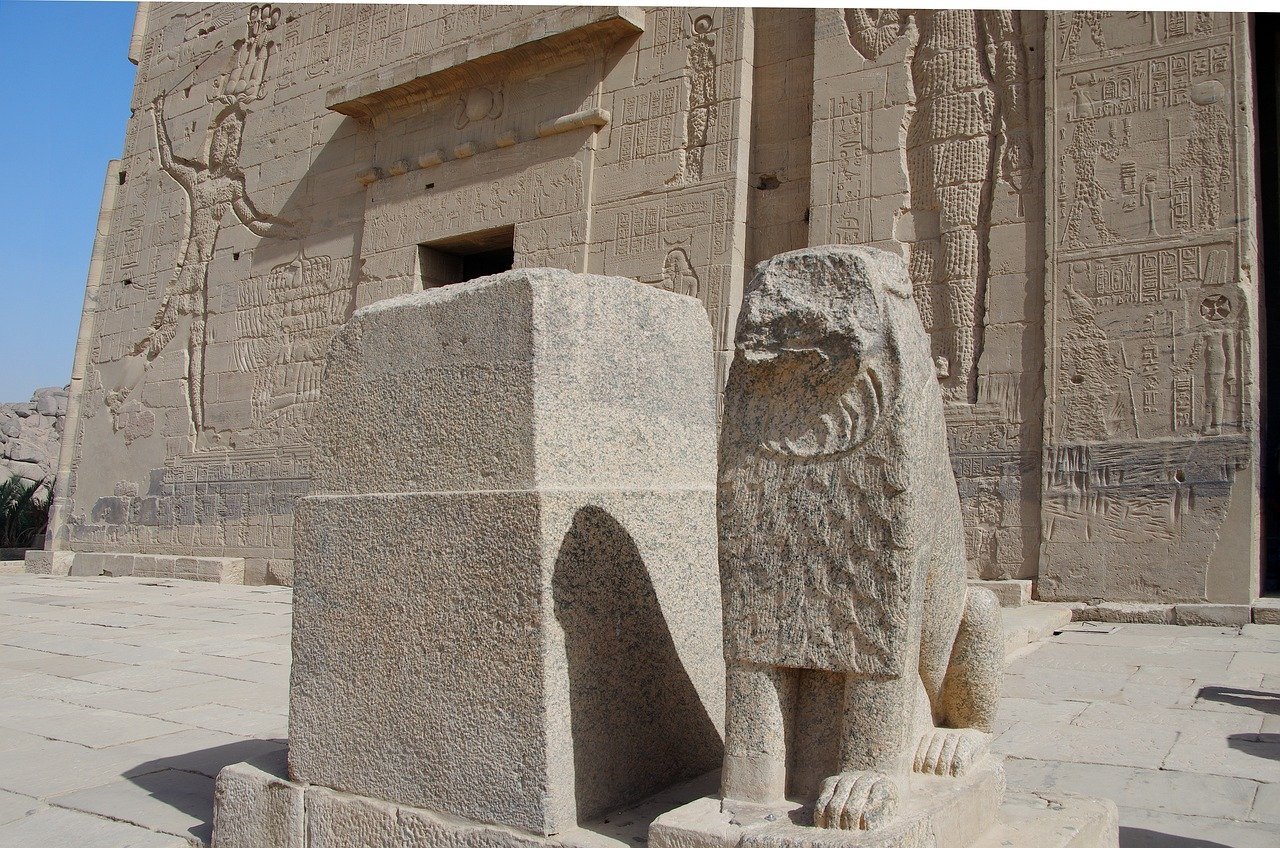
The interior chambers, including the King’s and Queen’s Chambers, are constructed with rose granite, sourced from hundreds of miles away in Aswan. This granite contains roughly 85% quartz, a material known for its piezoelectric properties, which generate an electrical charge when compressed or vibrated. Quartz is used in modern devices like watches and GPS units, where minimal movement can produce a charge. Think about that. The same material powering your watch was lining the most sacred room in the most precisely built structure on Earth.
The King’s Chamber was built to resonate freely, and this resulted in a huge mechanical and electrifying force inside the chamber, further reinforced by the piezoelectric effect which arose from the vibrating quartz crystals in the Aswan granite. The sound energy is at its maximum in the middle of the chamber because of the physical characteristics of the alternating pattern of nodes and anti-nodes in a standing wave. The quartz-rich pink granite in the King’s Chamber and the red granite in the sarcophagus can produce electric fields and discharges in response to mechanical stress. The stones were not just walls. They were active participants in whatever was happening inside.
The 2018 ITMO University Study – Hard Science Confirms the Mystery

Let’s be real: sometimes the most credible voices in a room are the ones with the least to gain from controversy. A team from ITMO University in Saint Petersburg, Russia, and the Laser Zentrum in Hannover, Germany, applied theoretical physics methods to investigate how the Great Pyramid responded to electromagnetic radiation, which includes radio waves, microwaves, and infrared light. This was not fringe research. This was published in the Journal of Applied Physics.
Scientists predicted that under resonance conditions, the pyramid can concentrate electromagnetic energy in its internal chambers and under the base. The researchers estimated that resonances in the pyramid can be induced by radio waves with a length ranging from 200 to 600 meters. The 4,600-year-old structure focuses and amplifies electromagnetic waves, particularly in the King’s Chamber, the Queen’s Chamber, and an unfinished chamber beneath the pyramid. A structure built roughly four and a half millennia ago is focusing electromagnetic energy. In 2026, that sentence still feels remarkable.
The Grand Gallery as a Resonant Waveguide
A comprehensive analysis of the Great Pyramid as a resonant structure encoding fundamental physical constants through its geometry and internal acoustic modes proposes that the Pyramid functions as a macroscopic harmonic resonator. This research further investigates the Grand Gallery as a human-activated resonant waveguide capable of inducing piezoelectric field generation, acoustic standing waves, and potential consciousness field interactions. That last phrase, consciousness field interactions, sounds extreme until you understand the infrasound frequencies involved.
The Grand Gallery, resonating at 440 Hertz and emitting an F-sharp chord, appears designed to amplify vibrations. Acoustic engineers have confirmed that the gallery’s structure naturally produces this frequency, which some believe harmonizes with the Earth’s natural vibrations. Above the King’s Chamber, five layers of granite beams in the so-called relieving chambers are rough-cut on their tops, possibly tuned to resonate at the same F-sharp chord. The structure is layered, deliberate, and tuned from floor to ceiling.
The Cymatics Experiment Inside the Sarcophagus
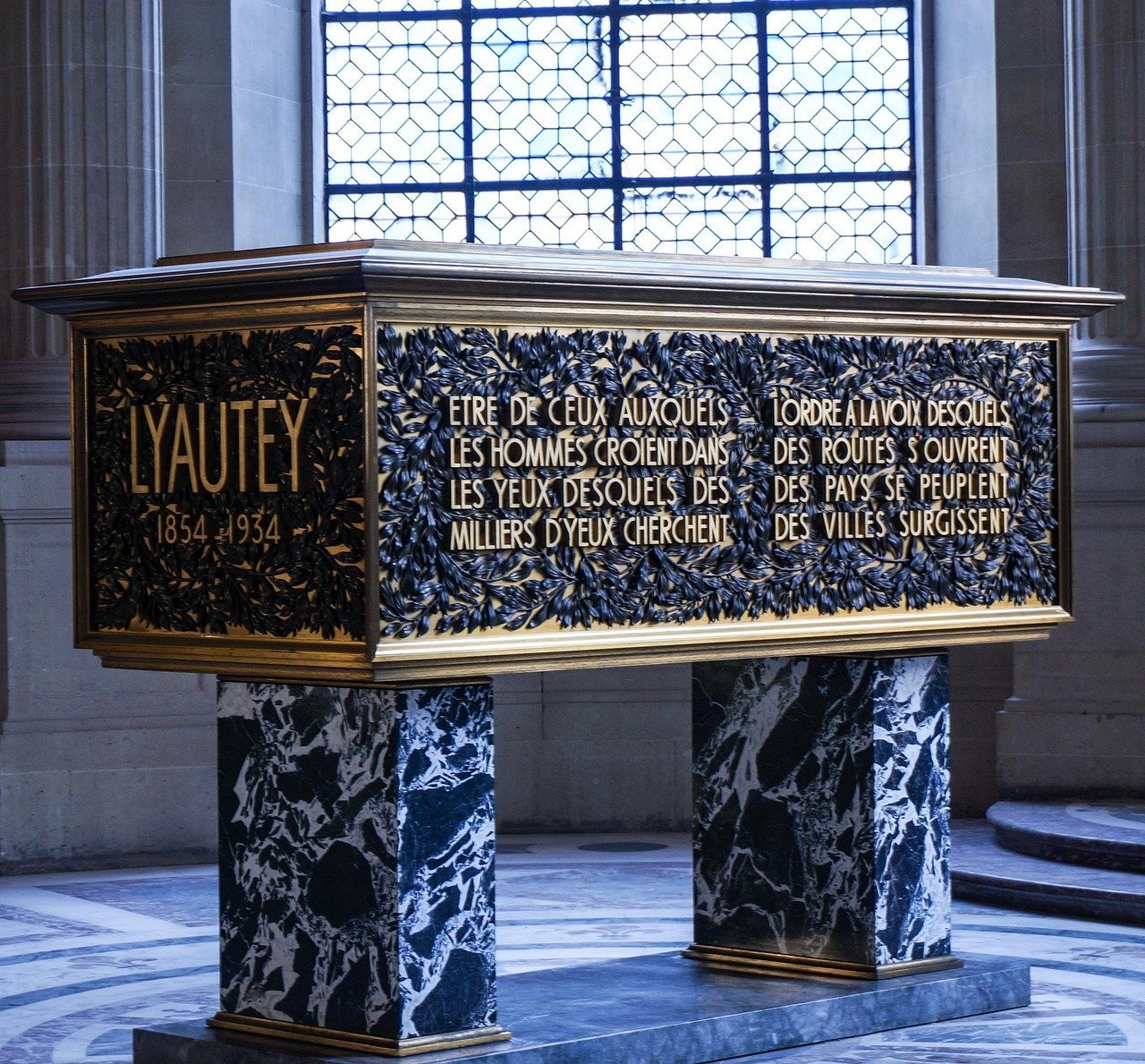
The acoustics study of the Great Pyramid was undertaken in order to investigate the hypothesis that the King’s Chamber was designed to be highly reverberative and that the chamber and its sarcophagus are acoustically coupled, meaning the energy of any sound made in the chamber is largely transferred into the sarcophagus. Such coupling was postulated to have been designed to support a ritual enacted prior to or after the pharaoh’s death. It is hard to say for sure what the original ritual purpose was. What is certain is that the acoustic coupling is real and measurable.
The interaction between the acoustic field, the resonance of the quartz particles embedded in the granite, and the inherent resonances of the quartz sand grains is an immensely complex one. However, the patterns that form are essentially harmonic, and in studying the hieroglyphic-like cymatic forms, researchers found these too are essentially harmonic, the result of naturally occurring geometries within the crystals released during acoustic excitation of the sarcophagus. Cymatic patterns, geometric shapes produced by sound frequencies in matter, formed inside a 4,500-year-old stone box. That is not mysticism. That is applied physics.
What the 2025 Radar Discoveries Add to the Story
In March 2025, an interdisciplinary team of researchers announced a groundbreaking discovery beneath Egypt’s Giza Plateau: a vast complex of underground chambers and shafts extending nearly two kilometers under the famous pyramids. The team, consisting of Professor Corrado Malanga, Dr. Filippo Biondi, and Dr. Armando Mei, utilized advanced radar imaging technology to see almost two miles below ground without excavation. The underground geometry of the site is turning out to be far more complex than anyone assumed.
An advanced blend of radar interferometry, Doppler vibration analysis, and seismic tomography allowed the team to accomplish what was previously thought impossible – imaging a large network of structures nearly half a mile beneath an archaeological site, all from satellite observations. Dr. Biondi was previously involved in projects monitoring infrastructure stability via satellite SAR, and he has published research on detecting vibrations of structures from space. In other words, the same methods used to detect vibrations in bridges from orbit are now revealing the vibrational architecture buried beneath Giza. The pyramid’s relationship with frequency goes deeper, literally, than we ever imagined.
The more science catches up to the Great Pyramid, the more it seems the ancient builders were ahead of it. Whether they understood the physics in the same vocabulary we use today is impossible to know. But the evidence increasingly suggests they understood the outcomes: a structure that resonates, focuses energy, alters perception, and hums with the Earth’s own frequency. Even now, millennia later, those frequencies are still working. What do you think the ancients were really building? Tell us in the comments.