

A Model Organism Meets Extreme Space Conditions (Image Credits: Pixabay)
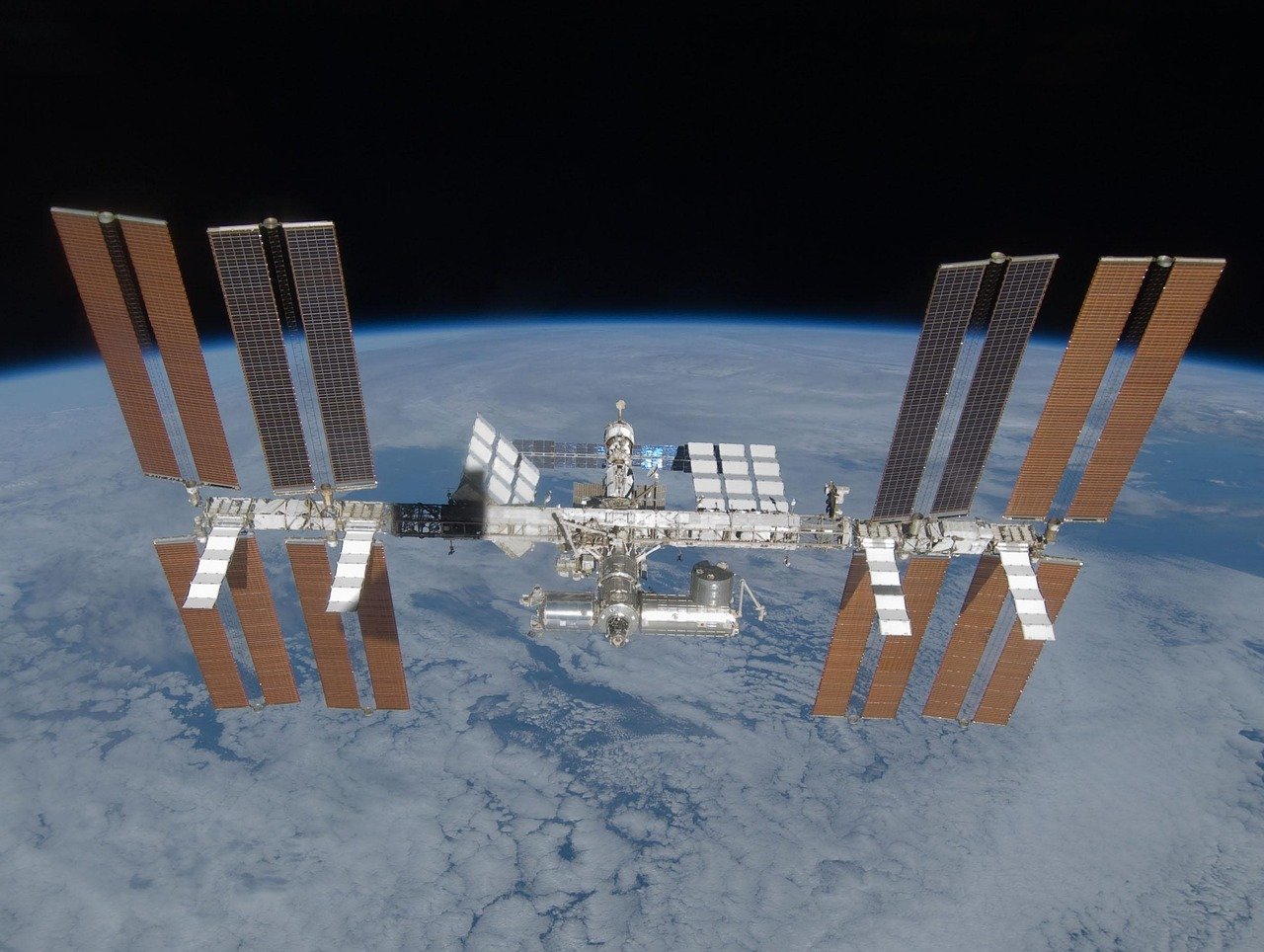
Florida’s Kennedy Space Center stands ready for a peculiar yet pivotal launch. Thousands of microscopic nematodes, known as C. elegans worms, will hitch a ride on a SpaceX Falcon 9 cargo mission to the International Space Station tomorrow. Researchers from the Universities of Exeter and Leicester aim to use these one-millimeter-long creatures to decode how microgravity and radiation harm living tissues, offering clues for protecting astronauts on future lunar voyages.[1][2]
A Model Organism Meets Extreme Space Conditions
These worms represent more than a novelty in space research. C. elegans nematodes share roughly 60 to 80 percent of their genes with humans, including those linked to muscle maintenance and stress responses.[3] Their short three-day life cycle allows scientists to observe multiple generations in orbit, providing rapid data on biological adaptations.
The Fluorescent Deep Space Petri-Pod experiment, or FDSPP, equips the worms with genetic fluorescent markers. These glow under specific lights when stress genes activate, revealing real-time cellular reactions without needing physical samples.[2] Dr. Tim Etheridge, the scientific lead from the University of Exeter, explained the value: “By studying how these worms survive and adapt in space, we can begin to identify the biological mechanisms that will ultimately help protect astronauts during long-duration missions.”[4]
Engineering the Petri Pod for Orbital Survival
The heart of the mission is a compact, shoebox-sized laboratory weighing just three kilograms. This Petri Pod features 12 sealed chambers, four equipped with miniature cameras for white-light and fluorescence imaging.[3] Nutrient agar supplies food and moisture, while sensors track temperature, pressure, and radiation doses.
Built at Space Park Leicester under Professor Mark Sims, the device withstands launch vibrations and operates autonomously for up to 15 weeks. A trapped air volume and agar’s surface tension prevent liquids from floating in microgravity. Data streams back via the ISS, capturing time-lapse videos of the worms’ responses.[5]
- Microgravity effects on muscle and bone-equivalent tissues.
- Cosmic radiation’s impact on DNA repair pathways.
- Fluid shifts mimicking vision issues in astronauts.
- Vacuum exposure’s influence on organism viability.
- Overall stress responses via glowing gene markers.
Launch Sequence and In-Orbit Deployment
The pod passed acceptance tests in the United States before the worms were loaded shortly prior to liftoff. A brief two-day delay shifted the schedule from April 8 to April 10, ensuring optimal conditions.[1] Once docked at the ISS, the experiment begins indoors before a robotic arm relocates it outside.
There, the pod faces the vacuum of space, unshielded cosmic rays, and persistent weightlessness. Eight additional chambers test microorganisms and materials, broadening the dataset. The setup returns to Earth on a later cargo flight for detailed analysis.[2]
Pathway to Safer Deep Space Exploration
This UK Space Agency-funded effort aligns with NASA’s Artemis program, where astronauts will endure extended lunar stays. Past worm missions confirmed their resilience, but FDSPP pushes boundaries with external exposure and advanced monitoring.[4] Space Minister Liz Lloyd noted, “These tiny worms could play a big role in the future of human spaceflight,” highlighting the innovation’s potential.[3]
Professor Sims emphasized the hardware’s promise: “This mission to the International Space Station will demonstrate the flight-readiness of FDSPP and position the UK amongst the global leaders of life sciences research.”[5] Insights could spur countermeasures like targeted drugs or shielding.
Key Takeaways
- C. elegans offers ethical, high-volume testing for human-like responses in space.
- Petri Pod enables compact, low-cost biology experiments beyond low Earth orbit.
- Results target Artemis challenges, paving the way for Moon and Mars habitats.
As these unassuming worms embark on their orbital odyssey, they carry the weight of humanity’s cosmic ambitions. Their findings may one day enable safe, sustained presence off Earth. What role do you see such model organisms playing in our space future? Share your thoughts in the comments.