


There’s a number baked into the fabric of reality itself. Not a guideline. Not a suggestion. A hard, unyielding boundary that the entire universe seems to agree on – and no matter how much energy you throw at it, it simply won’t budge. It’s the speed of light, and honestly, the more you learn about it, the more astonishing it becomes.
From the tiniest subatomic particles smashing together beneath the Swiss Alps, to the glow of dying stars billions of light-years away, the evidence points to the same conclusion every single time. Something truly extraordinary is going on. Let’s dive in.
A Number Carved Into the Universe

The speed of light in vacuum, commonly denoted “c,” is a universal physical constant exactly equal to 299,792,458 meters per second. That’s not an approximation. It’s exact. By international agreement, a metre is defined as the length of the path travelled by light in vacuum during a time interval of 1/299,792,458 of a second – meaning the constant doesn’t just describe light, it literally defines our measurement of distance.
The speed of light is so immutable that, according to the U.S. National Institute of Standards and Technology, it is used to define international standard measurements like the meter. Think about that for a moment. We didn’t measure the speed of light and then define the meter. We defined the meter using light. The universe handed us its ruler, and we took it.
Einstein’s Core Argument: Mass, Energy, and the Impossible Wall

According to the theory of special relativity, nothing in the universe can travel faster than light. The theory states that as matter approaches the speed of light, the matter’s mass becomes infinite. That means the speed of light functions as a speed limit for the whole universe. It’s not that we lack powerful enough rockets. It’s that the physics itself becomes self-defeating.
The constancy of the speed of light is a cornerstone of Einstein’s Special Theory of Relativity. It leads to revolutionary concepts such as time dilation, length contraction, and the equivalence of mass and energy (E=mc²). These phenomena become significant at speeds approaching c, fundamentally altering our understanding of space and time. In short, getting close to light speed doesn’t just get hard. It gets cosmically impossible.
What Happens When You Try to Speed Up a Particle
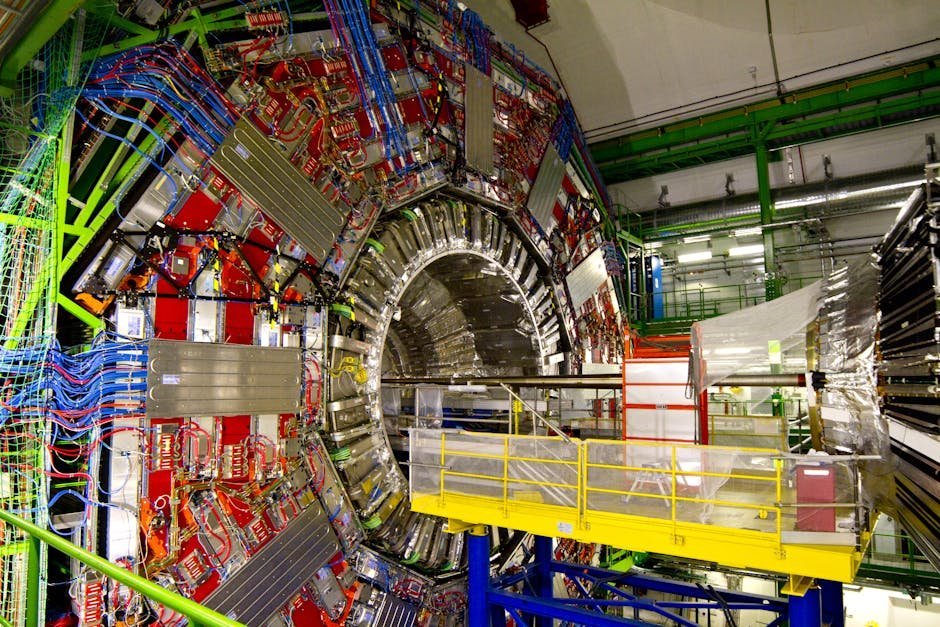
Here’s the thing – scientists haven’t just theorized about what happens near light speed. They’ve actually tried to push matter there, and the results are striking. The proton beams at CERN’s Large Hadron Collider travel at a speed of 99.999999% of the speed of light. That’s breathtakingly close. Yet despite all that colossal energy, the particles never cross the final threshold.
When reaching their maximum energy, protons in the LHC travel at a velocity which is 99.999999% of light speed, which corresponds to a Lorentz gamma factor of about 7,400. That gamma factor is the mathematical way of expressing just how warped reality becomes at these speeds. The energy required to push a proton even fractionally closer to c climbs toward infinity. The particles would never cross the speed of light.
Time Slows Down – and We’ve Measured It

One of the strangest and most verified consequences of approaching light speed is time dilation. Clocks tick slower when they move fast. I know it sounds crazy, but it’s not a thought experiment anymore. The Hafele-Keating experiment was a test of the theory of relativity. In 1971, Joseph C. Hafele and Richard E. Keating took four cesium-beam atomic clocks aboard commercial airliners. They flew twice around the world, first eastward, then westward, and compared the clocks in motion to stationary clocks at the United States Naval Observatory. When reunited, the three sets of clocks were found to disagree with one another, and their differences were consistent with the predictions of special and general relativity.
Scientists have since compared the ticking rates of atomic clocks on airplanes, satellites and skyscrapers to ones on the ground. Each test confirmed Einstein’s predictions that moving clocks tick more slowly than stationary ones, and clocks in higher gravity tick more sluggishly than ones in lower gravity. Even more remarkably, JILA physicists measured time dilation at the smallest scale ever, showing that two tiny atomic clocks, separated by just a millimeter – roughly the width of a sharp pencil tip – tick at different rates.
GPS Satellites: Relativity in Your Pocket

You don’t need a physics lab to experience the effects of light-speed limits. You just need your phone. GPS satellites – the ones that control the blue dot on your phone – all carry atomic clocks. These satellites hurtle so fast through space that special relativity indicates they should fall behind earthbound clocks by seven microseconds per day.
The engineers who designed the GPS system included these relativistic effects when they designed and deployed the system. To counteract the General Relativistic effect once on orbit, the onboard clocks were designed to tick at a slower frequency than ground reference clocks, so that once in proper orbit their clocks would appear to tick at the correct rate. Relativity is not just some abstract mathematical theory: understanding it is absolutely essential for our global navigation system to work properly. Every time you get directions, you’re benefiting from Einstein being right.
Light in Materials: Slower, But Not Because the Constant Changed
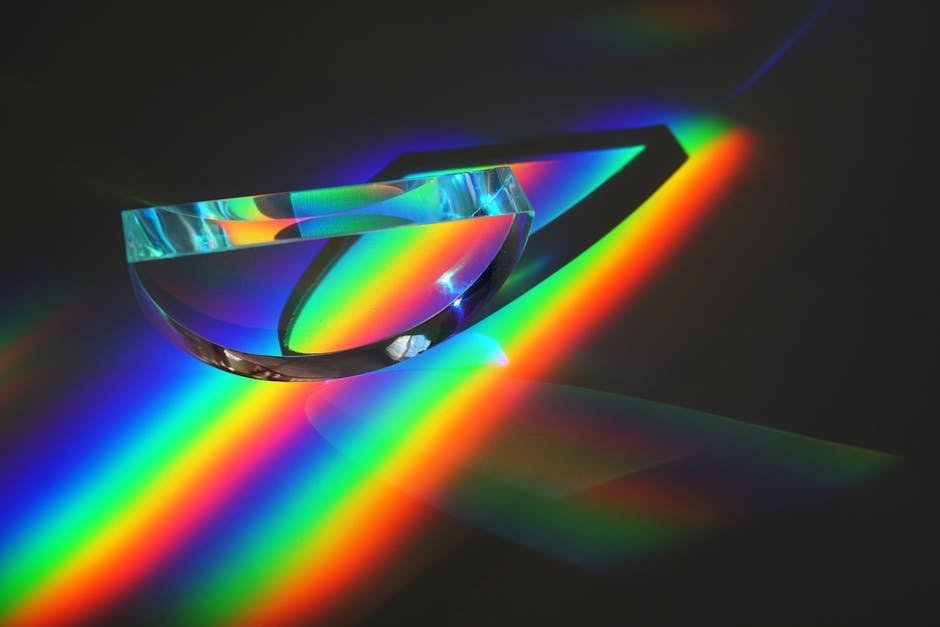
Here’s a common misconception worth clearing up. Light slows down when it passes through glass or water, and people sometimes take that as proof the speed limit is flexible. It isn’t. The phase velocity in a material is often represented in terms of a refractive index. The refractive index of a material is defined as the ratio of c to the phase velocity in the material – larger indices indicate lower speeds. The refractive index may depend on the light’s frequency, intensity, polarization, or direction of propagation.
Think of it like this: imagine a cyclist riding at full speed down a wide road, then entering a crowded market. They slow down because of the obstacles, not because the physical laws of cycling changed. Light behaves the same way inside a dense medium, bumping into atoms and momentarily being absorbed and re-emitted. All forms of electromagnetic radiation, including visible light, travel in vacuum at the speed c, as do massless particles and field perturbations such as gravitational waves. In empty space, there are no such obstacles. The true speed limit is always enforced.
The Warp Drive Dream: Brilliant, But Still Fiction

Honestly, no discussion of faster-than-light travel is complete without addressing the warp drive. Science fiction has made it feel almost inevitable. But the physics tells a much harder story. When Mexican physicist Miguel Alcubierre first proposed his theoretical warp drive in 1994, the concept required a bubble of “negative energy density” around an object to create an imbalance in space-time, generating motion without movement of the craft.
Despite the theoretical potential of exotic matter, its nature remains elusive, and it is not known whether such materials can exist in the physical universe. The energy conditions governing general relativity typically require that energy densities be non-negative, presenting a challenge for the existence of exotic matter. The warp drive solution of Alcubierre appears to violate all three major energy conditions. It violates the strong energy condition because local gravity is repulsive, the dominant energy condition because energy flows faster than light, and the weak energy condition because a ball of negative mass is required to set up the warp bubble. In other words, it needs something the universe doesn’t seem to provide.
The Universe Has Spoken – And Science Keeps Listening

You might think that after more than a century of testing, scientists would have moved on. Not quite. The curiosity never stops, and neither does the scrutiny. Einstein’s claim that the speed of light is constant has survived more than a century of scrutiny, but scientists are still daring to test it. Some theories of quantum gravity suggest light might behave slightly differently at extreme energies. By tracking ultra-powerful gamma rays from distant cosmic sources, researchers searched for tiny timing differences that could reveal new physics. They found none, but their results tightened the limits by a huge margin.
Recent experiments using astrophysical observations of very-high-energy gamma rays have tested the constancy of the speed of light with unprecedented precision. Any deviation from a constant speed of light must be extremely small to remain compatible with current constraints. The research, published in Physical Review D in late 2025, found no violation of Lorentz invariance. Once again, Einstein’s predictions held firm. The study did not detect any violation. Even so, the results are significant – the new analysis improves previous limits by an order of magnitude, sharply narrowing where new physics could be hiding.
Conclusion: The Speed Limit That Defines Everything

The speed of light isn’t just a number in a textbook. It’s the boundary condition for the universe as we know it. It defines how we measure distance, how time behaves, how energy relates to mass, and why every GPS in the world needs to account for Einstein’s equations just to tell you where you are.
Decades of experiments, particle accelerators, atomic clocks on jet planes, gamma-ray bursts from billions of light-years away – all of them point to the same wall. Unbreakable. Unchanging. Absolute. It’s hard not to feel a kind of strange awe about that.
So here’s a thought to sit with: in a universe that seems endlessly surprising and full of exceptions to every rule, the speed of light may be the one thing that truly has no loopholes. What do you think – does that feel like a prison, or a kind of cosmic elegance? Drop your thoughts in the comments below.