

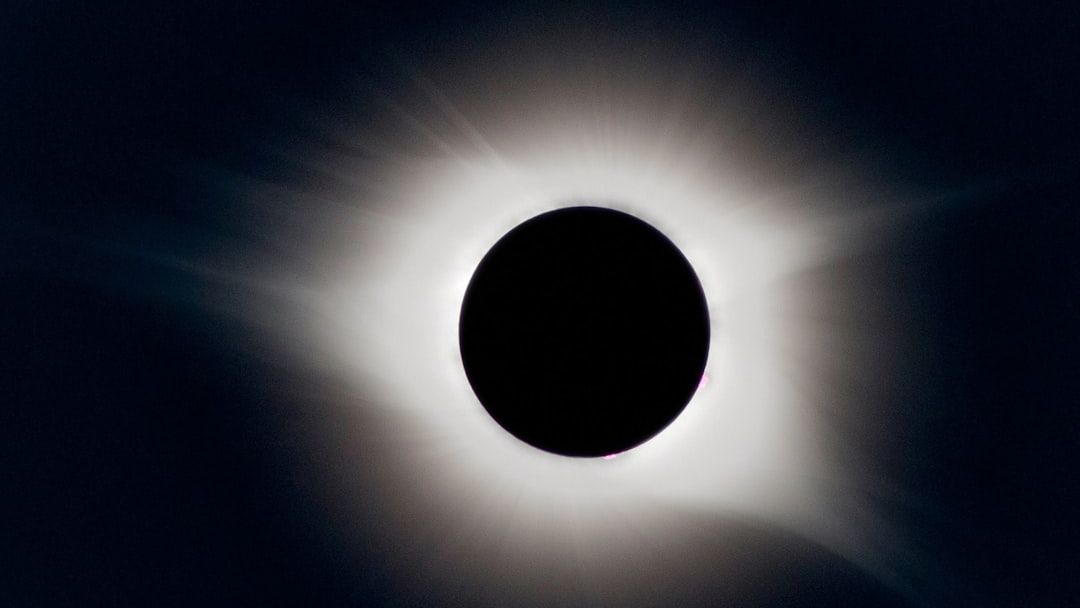
10 hidden spots in Spain to see the rare sunset total solar eclipse on Aug. 12 – Image for illustrative purposes only (Image credits: Unsplash)
Northern Spain stands poised for a celestial spectacle on August 12, 2026, when a total solar eclipse unfolds against the backdrop of a setting sun. The moon’s shadow will race across the landscape, plunging remote areas into twilight for durations up to nearly two minutes. Travelers seeking uncrowded vistas will find ideal perches in rural expanses, where clear western horizons promise uninterrupted views of the sun’s glowing corona.[1]
The Unique Challenge of a Low-Horizon Eclipse
This eclipse differs from midday events, as totality occurs with the sun hovering just degrees above the horizon – between 10 degrees in the northwest and under 2 degrees farther east. Observers must prioritize sites offering flat, open terrain free of hills, trees, or structures to the west-northwest. Rural plateaus, wetlands, and elevated villages emerge as prime choices, balancing accessibility with pristine sightlines.
Timing adds drama: partial phases begin around 7:30 p.m. CEST, with totality striking between 8:27 and 8:31 p.m. across the path. Weather plays a pivotal role, with August statistics favoring clearer skies inland over coastal zones. Advance scouting ensures no surprises block the view.[1]
Northern and Central Plateau Standouts
Asturias’ rugged terrain hosts one standout overlook at Lago Enol’s Mirador del Príncipe de Asturias in Picos de Europa National Park. This high-altitude vantage peers toward the Cantabrian Sea, framing totality at 8:27 p.m. for 1 minute 42 seconds, with the sun 9.7 degrees aloft. Though the lake misses direct totality, the site’s mountain panoramas elevate the experience amid pristine wilderness.[1]
Shifting southeast, Zamarramala near Segovia rises on a plateau above Castilian plains, delivering 360-degree panoramas. Totality lasts 57 seconds at 8:31 p.m., sun at 8 degrees high – perfect for horizon chasers avoiding Segovia’s busier confines. Calatañazor, a medieval hamlet in Soria, hugs the centerline for a generous 1 minute 43 seconds at 8:29 p.m., its stone streets overlooking the storied Valley of Blood.[1]
Historical Fortresses and Riverine Wetlands
The 8th-century Fortaleza Califal de Gormaz in Soria commands a northwest-facing balcony over rural fields, ideal for totality at 8:29 p.m. lasting 1 minute 42 seconds. Its ancient walls and watchtowers, including a signature horseshoe arch, provide a timeless stage as the shadow sweeps in. Nearby, Alfaro Wetlands along the Ebro River in La Rioja offer grassy clearings amid heron-filled meanders; expect 1 minute 16 seconds at 8:28 p.m., sun 6.9 degrees up.[1]
San Vicente de la Sonsierra crowns a hill in La Rioja’s wine country, surveying the Ebro Valley for 1 minute 22 seconds of totality at 8:28 p.m. Vineyards and Sierra de Cantabria slopes enhance the scene, blending viticulture with astronomy along the Ruta del Vino.[1]
Eastern Badlands, Lakes, and Islands
Navarre’s Bardenas Reales Natural Park features Castildetierra, an eroded chimney in semi-desert solitude. Parking abounds for easy access, with totality at 8:28 p.m. for 1 minute 4 seconds, sun 6.7 degrees above the horizon. Laguna de Gallocanta, straddling Aragon’s high plateau between Teruel and Zaragoza, sits on the centerline amid bird-rich salinity; 1 minute 42 seconds at 8:30 p.m. promises eagle sightings alongside the eclipse.[1]
Arcos de las Salinas in Teruel’s Gúdar-Javalambre boasts the Galáctica Astronomy Center and a star-viewing mirador; totality spans 1 minute 23 seconds at 8:31 p.m., just cresting mountains. Menorca’s Talatí de Dalt prehistoric site near Maó delivers flat terrain among Talayotic stones for 1 minute 7 seconds at 8:30 p.m. – though the mere 1.5-degree sun demands prior horizon checks in this Starlight reserve.[1]
Planning Your Eclipse Adventure
Safety remains paramount: use certified solar glasses for partial phases and direct viewing only during totality. Pack tripods, binoculars, and cameras with solar filters. Monitor forecasts via reliable apps, as northern coasts risk clouds while interiors shine brighter. Arrive early to claim space in these low-key locales.[1]
These spots marry Spain’s diverse heritage – Neolithic ruins, Islamic citadels, natural parks – with a once-in-a-generation sky show. As the corona unfurls low on the horizon, the fusion of earthly beauty and cosmic wonder will linger long after the sun reemerges.