

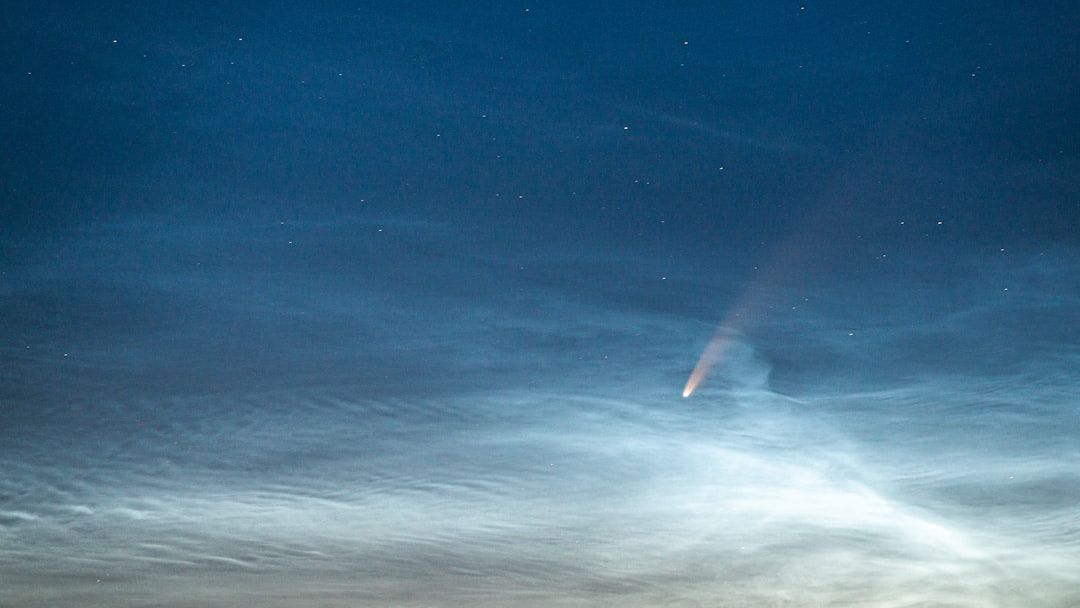
What’s the best time to see Eta Aquarid meteors in 2026? – Image for illustrative purposes only (Image credits: Unsplash)
Stargazers worldwide prepare for one of spring’s reliable celestial displays as the Eta Aquarid meteor shower reaches its annual climax. Earth currently plows through debris left by Halley’s Comet, igniting swift streaks across the predawn sky. Though a bright waning gibbous moon poses visibility hurdles this year, dedicated observers in dark locations stand ready to catch the show.[1][2]
Understanding the Shower’s Timing and Scope
The Eta Aquarids activate each year from late April through late May, with 2026 marking no exception. This shower runs from April 19 to May 28, building intensity toward a broad peak overnight between May 5 and 6.[3] Astronomers pinpoint the height around 3:51 UTC on May 5, though activity remains elevated for several days surrounding that moment.[2]
Predawn hours deliver the strongest displays, as the radiant – the apparent origin point in Aquarius – rises in the eastern sky after midnight. Rates climb steadily from about 2 a.m. local time until sunrise, when the radiant reaches its loftiest position. Observers note that meteors appear fleet and often trail persistent glows, distinguishing this shower from slower counterparts.[1]
Facing the Moonlight Hurdle in 2026
A waning gibbous moon, illuminated to roughly 84 percent, dominates the post-midnight sky during peak nights. This lunar glow washes out fainter meteors, potentially slashing hourly counts below 10 in compromised conditions.[3] The moon sets shortly after sunrise in many regions, offering a narrow window of darker skies closer to dawn.
Strategic positioning helps counter the interference. Skywatchers who situate themselves in the moon’s shadow or focus on moon-free sky patches report better success. Still, the shower’s reputation endures, drawing enthusiasts undeterred by temporary celestial rivals.[2]
What Matters Now
– Peak: Overnight May 5-6, best after 2 a.m. local time.
– Moon phase: 84% illuminated, waning gibbous.
– Ideal window: Hours before dawn, eastern horizon focus.
Mastering Observation Techniques
Success hinges on preparation rather than equipment. No telescopes or binoculars aid meteor spotting; these events reward the naked eye’s wide field of view. Seek the darkest site possible, far from city lights, and arrive early to let your eyes dark-adapt for 30 minutes.[1]
Comfort sustains long vigils. Recline in a chair or lie back with feet toward the east, blankets at hand against the chill. Silence phones to preserve night vision – opt for red flashlights if needed. Bill Cooke of NASA’s Meteoroid Environment Office advises starting no earlier than 2 a.m., as the radiant remains below the horizon post-sunset.[1]
- Arrive 30-45 minutes early for eye adjustment.
- Scan broad sky sections, not just the radiant.
- Bring warm layers, beverages, and patience.
- Avoid white lights; use red illumination sparingly.
Halley’s Legacy Fuels the Display
These meteors trace to Comet 1P/Halley, the solar system’s most famous periodic visitor with a 76-year orbit. Each passage sheds ice and dust, forming streams Earth intersects twice yearly – Eta Aquarids in May and Orionids in October. Meteors blaze in at 66 kilometers per second, vaporizing high in the atmosphere to create glowing trains.[4]
Southern Hemisphere viewers enjoy prime prospects, with the radiant soaring higher and rates nearing 50 per hour under ideal skies. Northern observers, including those in the U.S. mid-latitudes, catch 10 to 30, often as horizon-grazing streaks. The American Meteor Society lists a zenithal hourly rate of 50, though real-world tallies vary with conditions.[3]
Hemisphere Insights and Expectations
Aquarius rides low for northern latitudes, limiting radiant elevation and favoring earthgrazers – meteors skimming the horizon. Southern stargazers, from Australia to South America, claim this as a seasonal highlight. Even modest displays reward with the shower’s speed and persistence.[4]
Expect variability; no two peaks mirror exactly. Post-peak, activity lingers until late May, offering secondary chances. This year’s lunar backdrop tempers optimism, yet the event underscores the sky’s enduring pull.[1]
The Eta Aquarids remind us of cosmic connections, fragments of a comet linking Earth to distant orbits. As dawn breaks on May 6, those who ventured out carry memories of transient fire. With clearer nights ahead in the meteor calendar, the pursuit continues.