

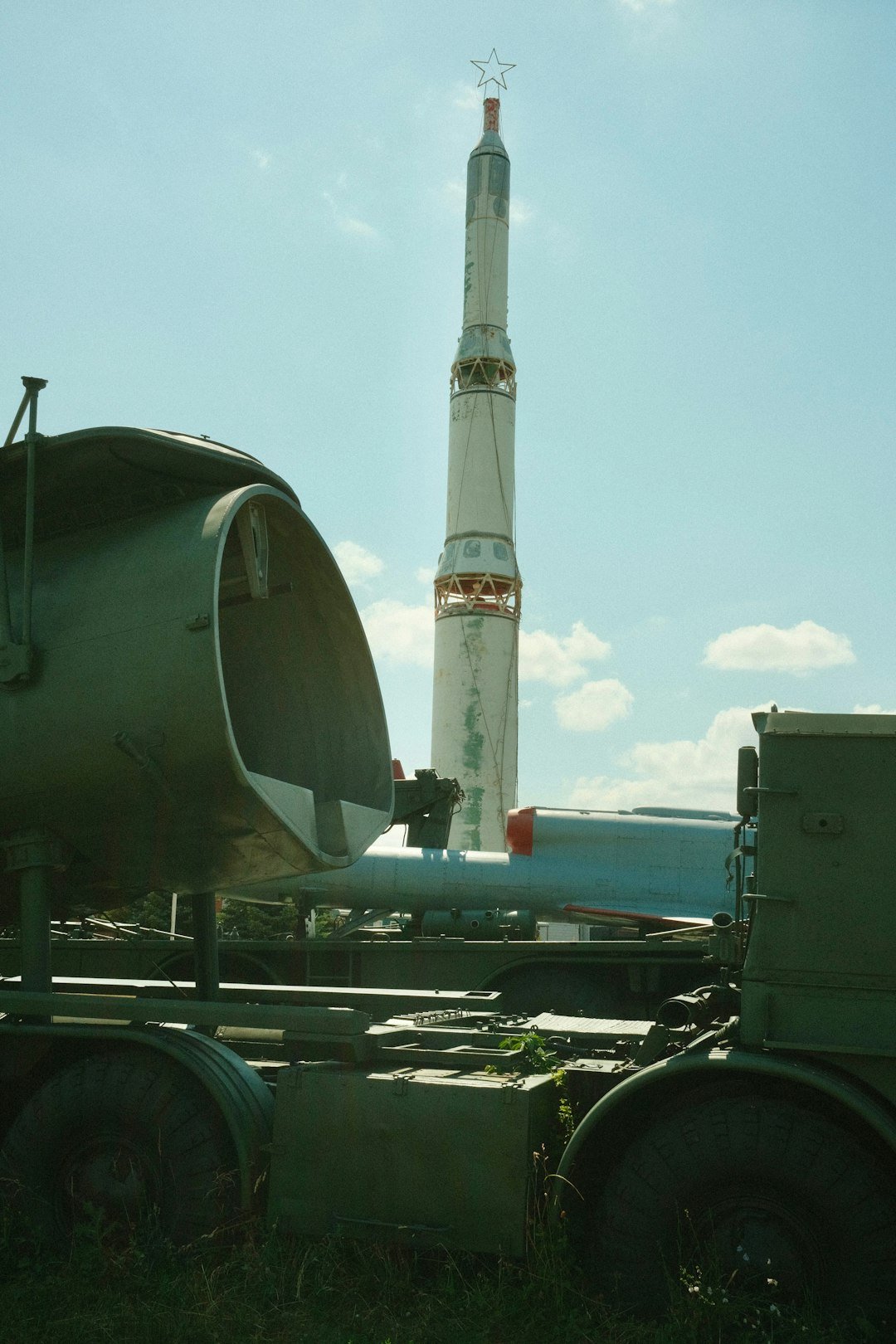
A Legacy Machine Tackles Modern Heights (Image Credits: Unsplash)
Kennedy Space Center, Florida – NASA’s Artemis II rocket, a towering 322-foot structure designed for lunar missions, recently completed its methodical 4-mile journey from the Vehicle Assembly Building to Launch Complex 39B. This rollout, lasting 8 to 12 hours, highlights the blend of legacy engineering and modern precision required to transport such a behemoth safely. The process, rooted in Apollo-era innovations, ensures the rocket reaches the pad intact and ready for launch.[1]
A Legacy Machine Tackles Modern Heights
The crawler-transporter 2, or CT-2, stands as one of the largest self-propelled land vehicles ever built, originating from 1965 to support the Saturn V rockets that reached the Moon. This massive platform, comparable in size to a baseball infield, carries the rocket atop a mobile launch assembly while navigating a specially prepared roadway. Engineers prioritize stability over speed, given the combined weight exceeds 10 million pounds.[1]
CT-2 relies on eight independent treads, each composed of 57 heavy-duty shoes weighing 2,100 pounds apiece. Powered by twin 1,500 kW diesel generators driving electric motors, it achieves a top speed of about 1 mph but consumes 165 gallons of fuel per mile. The roadway, paved with imported river rocks, crushes under the load into sand that absorbs vibrations, creating a smoother path akin to bubble wrap underfoot.[1]
Why Not Build It Right at the Launch Pad?
Assembly occurs inside the Vehicle Assembly Building due to its massive overhead cranes capable of stacking the rocket’s components securely. This facility offers weather protection and climate control, essential for handling sensitive hardware. In contrast, Launch Complex 39B focuses on launch operations, featuring specialized equipment like lightning protection towers that stand 594 feet tall.[1]
Those towers, part of a three-structure system, have diverted strikes from rockets in the past. Building on the pad would expose the stack to elements and lack the VAB’s lifting capacity. NASA maintains this division to optimize both assembly quality and launch safety.[1]
The Physics Demanding a Patient Pace
A direct 4-hour trip at 1 mph seems logical, yet reality demands more time. The first hour accelerates gradually from standstill, followed by cruising, then another hour to decelerate precisely at the pad. Winds and air drag on the 322-foot rocket extend the duration further, pushing totals to 12 hours in challenging conditions.[1]
Horizontal forces during movement generate torque around the rocket’s center of mass, risking topple. Even minimal acceleration of 0.0075 m/s² produces a 275-pound reaction force on the 3.5-million-pound dry rocket. The mobile launch assembly adds support, but crews err on caution against gusts. This calculated slowness prevents disaster.[1]
Leveling the Path to Liftoff
CT-2’s hydraulic suspension adjusts each corner independently, keeping the platform level across the sloping terrain leading to the pad. It rolls beneath the mobile assembly, lifts it seamlessly, and deposits it for integration with pad hardware. Regular rock replenishment counters erosion from weather and traffic.[1]
Here are key specifications comparing the rocket and its transporter:
| Component | Height/Size | Weight (Dry) |
|---|---|---|
| Artemis II Rocket | 322 feet | 3.5 million lbs |
| Crawler-Transporter 2 | Baseball infield size | 6+ million lbs |
| Mobile Launch Assembly | Includes rocket interface | Varies |
Fueled, the rocket balloons to over 5.75 million pounds, underscoring the scale.[1]
Built for Apollo, CT-2 and its twin continue serving Artemis, linking past triumphs to future lunar goals. For more details, see NASA’s crawler-transporters fact sheet.
- VAB assembly leverages cranes and protection unavailable at the pad.
- CT-2’s 1 mph max speed prioritizes physics-driven safety over haste.
- Legacy tech from 1965 powers today’s moonshot ambitions.
This rollout exemplifies how NASA balances immense power with meticulous control, turning potential chaos into reliable progress. As Artemis eyes the Moon, such engineering endures as a testament to human ingenuity. What aspects of rocket transport intrigue you most? Share in the comments.