

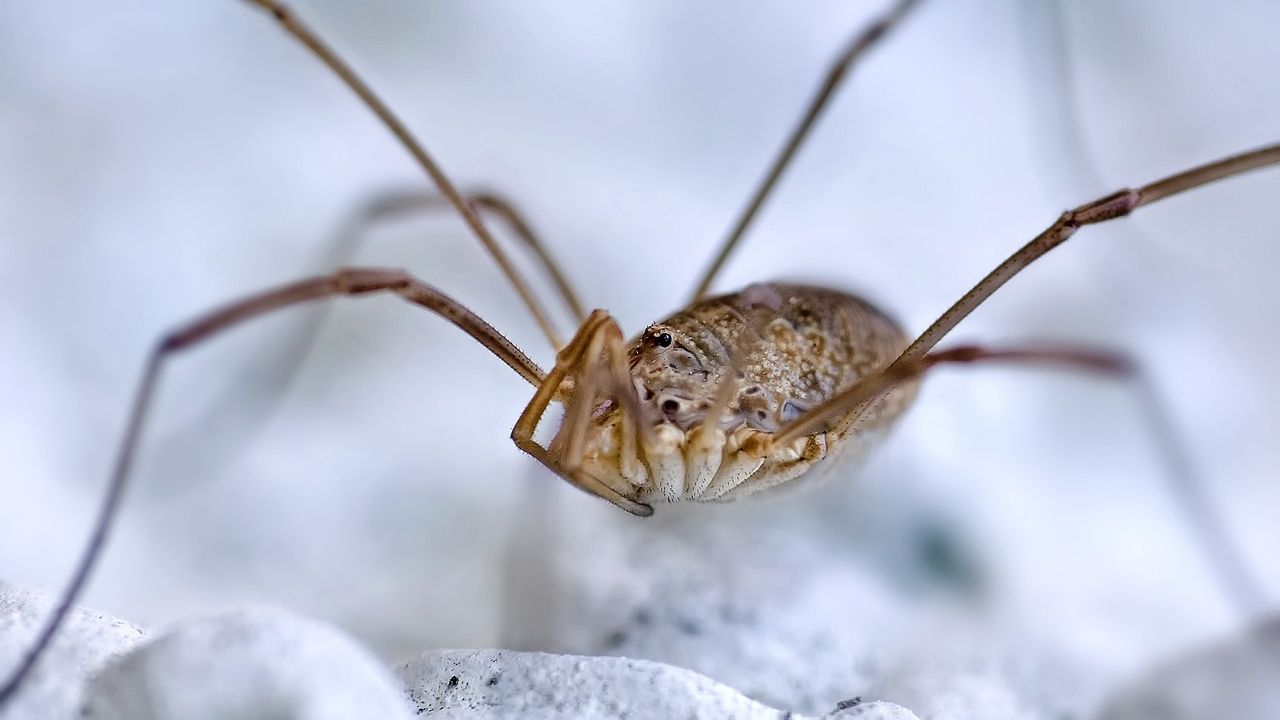
A Fresh Find in Thanh Hoa Province (Image Credits: Pixabay)
Researchers recently unveiled a new harvestman species in Vietnam’s Thanh Hoa Province, bringing fresh clarity to the genus Dongmoa within the Podoctidae family. This arachnid, examined through advanced micro-CT scanning, joins two existing species – one from northern Vietnam and another from Japan’s Ryukyu Islands – while two others from China’s Hainan Island shifted from the genus Bonea. The revision provides the first modern systematic analysis of Dongmoa, refining long-held classifications and spotlighting a overlooked structure that could transform how scientists delineate related species. Such updates underscore the ongoing need to revisit traditional taxonomy amid new technologies and discoveries.
A Fresh Find in Thanh Hoa Province
Scientists described the new Dongmoa species after scrutinizing its external morphology with micro-CT technology, which captures intricate three-dimensional details invisible to standard microscopy. This approach allowed precise documentation of features that distinguish it from close relatives. Previously, the genus Dongmoa contained just two recognized members, limiting comprehensive understanding of its diversity.
The discovery expands known distribution patterns, linking populations across Indochina. Thanh Hoa Province, with its varied habitats, proved fertile ground for this addition. Researchers noted the specimen’s unique traits during fieldwork, prompting deeper analysis. This marks a key step in documenting Vietnam’s arachnid biodiversity.
Reclassifying Hainan’s Harvestmen
Two species originally placed in the genus Bonea, both from Hainan Island, now belong to Dongmoa following detailed morphological comparisons. This reassignment raises the genus total to five, altering previous assumptions about species boundaries. Hainan’s tropical environments harbor these long-legged arachnids, which share subtle traits with their Vietnamese and Japanese counterparts.
The shift highlights how earlier classifications, rooted in Roewer’s foundational work, required updating. Investigators compared genital and somatic features across specimens, confirming the move. Such reassignments prevent misidentification in future surveys. The change strengthens ties between Chinese and Southeast Asian populations within Podoctidae.
Refined Diagnosis and a Newly Recognized Feature
The study delivers a revised diagnosis for Dongmoa, setting it apart from similar genera like Bonea and Erecanana through targeted character evaluations. Differences emerge in leg structure, chelicerae, and other appendages, clarified by high-resolution imaging. This framework replaces outdated delineations with precise criteria.
Particularly notable is the insula lunata, a variable morphological structure previously overlooked. Its presence offers a reliable marker for taxonomy in Podoctidae. Researchers emphasized its potential variability, urging caution in over-reliance without further verification. Here is a summary of the genus’s updated scope:
- Northern Vietnam: Original species.
- Ryukyu Islands, Japan: Original species.
- Thanh Hoa Province, Vietnam: New species.
- Hainan Island, China: Two reassigned species.
Transforming Podoctidae Taxonomy
This work constitutes the first modern systematic treatment of Dongmoa, substantially refining the Roewerian framework that long guided opilionid studies. Traditional methods often overlooked subtle variations, but micro-CT and comparative anatomy now enable sharper species delimitation. The effort spans Indochina to Japan, revealing interconnected distributions.
Findings lay groundwork for phylogenetic investigations, potentially reshaping family-level relationships in Podoctidae. As habitats face pressures, accurate taxonomy supports conservation priorities. The study, by A. B. Kury, G. Machado, and D. S. Pham, appears in the Journal of Natural History (DOI: 10.1080/00222933.2026.2650134).
These harvestmen, often overshadowed by spiders, play subtle roles in forest ecosystems as predators and decomposers. Clearer genus boundaries promise better tracking of environmental changes across Asia. Researchers anticipate further surveys will test the insula lunata’s diagnostic power, extending benefits to broader arachnid research.