

A Photographer’s Moment of Precision (Image Credits: Pixabay)
Sicily, Italy – A vivid Lyrid meteor streaked across the night sky beside Mount Etna’s summit on April 22, 2026, perfectly framed by a distinctive lenticular cloud during the meteor shower’s peak.[1][2] This rare alignment of celestial and terrestrial drama unfolded from a vantage point on Piano dei Grilli, capturing the volcano’s majestic presence under Sicily’s clear spring skies. The image highlights the ongoing allure of the Lyrids, one of the oldest recorded meteor showers, at a moment when observers worldwide tuned in for its annual display.[3]
A Photographer’s Moment of Precision
Massimo Tamajo, based in Syracuse, Sicily, positioned himself at Piano dei Grilli to document the Lyrid peak. His Nikon DSLR equipped with an 85mm f/1.4 lens recorded the scene through a 2.5-second exposure at f/2.2 and ISO 2000. This setup balanced the faint meteor trail against the brighter volcanic summit and cloud formation.
The resulting photograph appeared on Astronomy Magazine, showcasing how patient skywatching can yield extraordinary results. Tamajo’s timing aligned with the shower’s height, when Earth passed through debris from Comet C/1861 G1 (Thatcher), the Lyrids’ parent body.[4] Such captures remind enthusiasts of the rewards in combining technical skill with natural spectacle.
The Ancient Legacy of the Lyrids
Records of the Lyrid meteor shower date back over 2,700 years, with the earliest observations noted by Chinese astronomers in 687 BC.[3][5] The shower activates each year from April 16 to 25, reaching its zenith around April 22 or 23. Under ideal dark-sky conditions, viewers might spot 10 to 20 meteors per hour radiating from the constellation Lyra.[6][7]
Occasional outbursts have pushed rates higher, as seen in events producing over 100 meteors hourly in past decades.[8] In 2026, the peak fell during daylight hours for some regions, yet nighttime views like Tamajo’s persisted into the following evening. This reliability draws astronomers year after year, even as modern light pollution challenges visibility.
Lenticular Clouds: Etna’s Atmospheric Halo
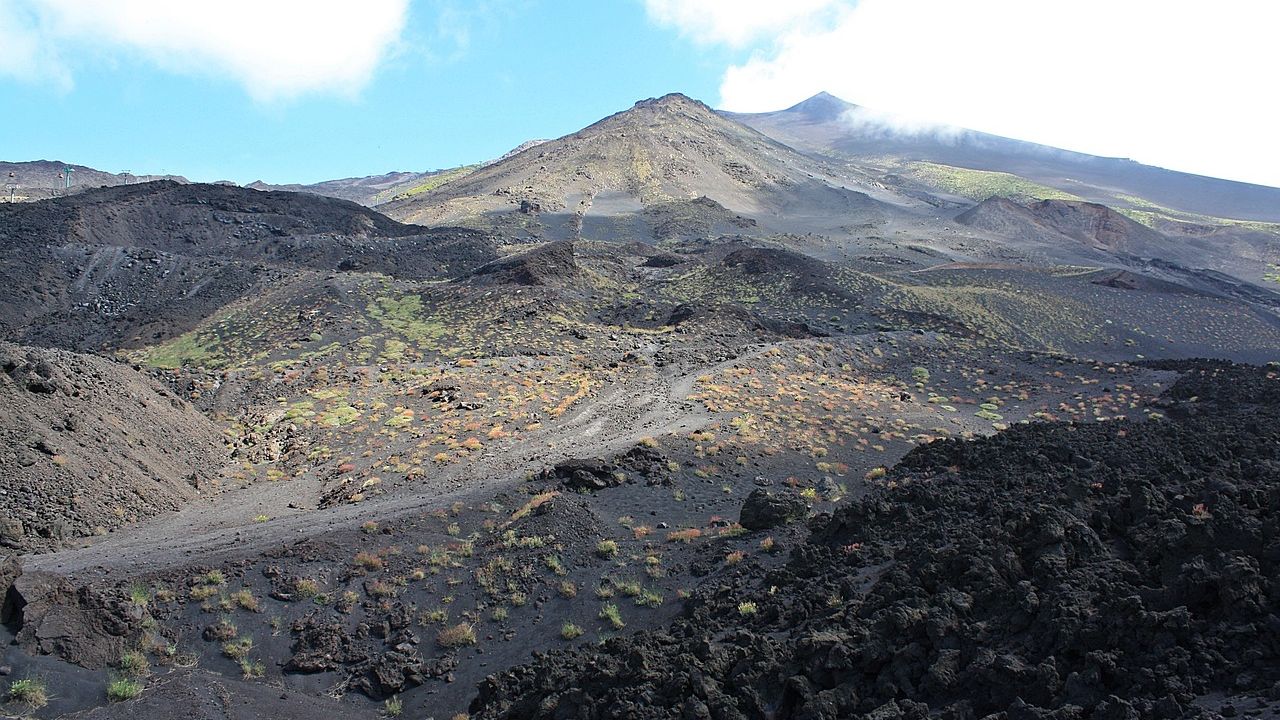
Mount Etna, Europe’s tallest active volcano, frequently hosts lenticular clouds due to its prominence and prevailing winds. These lens-shaped formations arise when moist air flows over the peak, cooling and condensing into stable layers that resemble swirling crowns or UFOs.[9] On this occasion, the cloud capped the summit, adding a dynamic foreground to the meteor’s path.
Such clouds signal strong upper-level winds, often 40-80 km/h, creating wave patterns in the atmosphere. Etna’s location in Sicily amplifies these displays, especially during transitional seasons like spring. The combination with a Lyrid meteor elevated the scene from routine to remarkable, blending geology, meteorology, and astronomy.
What matters now: As urban glow encroaches, images like this underscore accessible wonders for dedicated observers in remote spots.
Technical Mastery Behind the Shot
Tamajo’s equipment choices optimized for low light and motion. The wide-aperture 85mm lens gathered ample photons during the brief exposure, while ISO 2000 minimized noise without washing out details. A 2.5-second shutter captured the meteor’s streak without overexposing the static cloud and mountain.
Observing from Piano dei Grilli offered an unobstructed line of sight to Etna’s 3,357-meter summit. Sicily’s Mediterranean climate often provides clear April nights, aiding such efforts. This photograph not only documents a fleeting event but also inspires others to venture out during meteor peaks.
In an era of advanced telescopes and apps, Tamajo’s image reaffirms the power of simple, well-executed astrophotography. It serves as a quiet testament to the skies’ enduring capacity to surprise, even atop one of Earth’s most active volcanoes. As the Lyrids fade until next spring, this Sicilian snapshot lingers as a highlight of 2026’s celestial calendar.[10]