

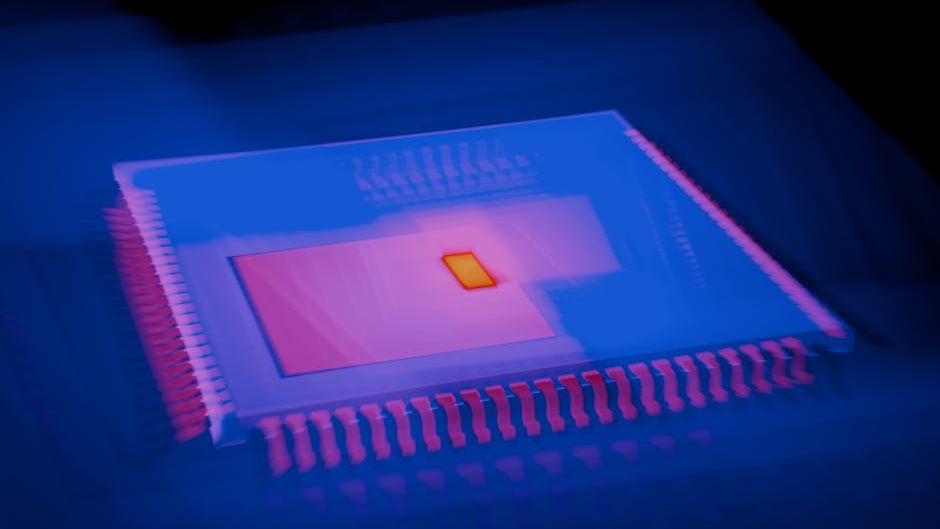
Agentic AI Redefines Compute Needs (Image Credits: Pexels)
Arm unveiled its first production silicon product this spring, the AGI CPU, a data center processor engineered to handle the explosive demands of agentic AI.[1][2] Packing up to 136 high-performance cores, the chip delivers over twice the performance per server rack compared to leading x86 alternatives, according to Arm’s estimates.[3] This marks a pivotal shift for the British firm, long known for licensing designs, now stepping into direct chip sales to fuel the next phase of AI deployment.
Agentic AI Redefines Compute Needs
Agentic AI represents a leap beyond traditional chatbots, featuring autonomous systems that plan, decide, and execute tasks with minimal human oversight.[2] These agents coordinate across thousands of instances in data centers, managing workloads, shuttling data, and interfacing with accelerators like GPUs.
CPUs have taken a backseat to GPUs in recent AI hype, but agentic workloads revive their centrality. They orchestrate parallel tasks at rack scale, where sustained efficiency under heavy loads becomes paramount. Arm designed the AGI CPU from the ground up for this role, shedding legacy baggage that burdens general-purpose processors.[4]
Unpacking the AGI CPU’s Core Specifications
The AGI CPU leverages Arm’s Neoverse V3 architecture on a TSMC 3nm process, featuring a dual-chiplet layout for optimal integration of compute, memory, and I/O.[3] Each core boasts 2MB of dedicated L2 cache and supports Armv9.2-A with AI-specific instructions like bfloat16 and INT8.
Arm offers three SKUs to balance density, memory throughput, and cost:
| SKU | Cores | Max Frequency | Memory BW per Core | TDP |
|---|---|---|---|---|
| 136C | 136 | 3.5 GHz | 6 GB/s | 300W |
| 128C | 128 | 3.5 GHz | 6.3 GB/s | 300W |
| 64C | 64 | 3.7 GHz | 13 GB/s | 300W |
Memory setup includes 12 DDR5-8800 channels for aggregate bandwidth exceeding 800 GB/s, with sub-100ns latency thanks to on-die integration. I/O shines with 96 PCIe Gen6 lanes and CXL 3.0 for pooling resources across accelerators.
In a reference 1U dual-node server, two chips yield 272 cores. Stacked into a 36kW air-cooled rack of 30 blades, that scales to 8,160 cores – ideal for dense agentic deployments without thermal throttling.[1]
Powerhouse Partnerships Drive Momentum
Meta led co-development as the flagship customer, pairing the AGI CPU with its MTIA accelerators for gigawatt-scale infrastructure.[1] OpenAI plans to bolster its orchestration layer, while Cloudflare eyes energy-efficient edge compute.
- Cerebras integrates for AI infrastructure.
- F5 accelerates cloud services.
- SAP supports AI business solutions on Arm.
- SK Telecom builds sovereign AI models with Rebellions NPUs.
- Supermicro, Lenovo, and ASRock Rack offer ready systems.
“The launch of Arm AGI CPU represents a new chapter in Arm’s data center journey,” stated Mohamed Awad, Arm’s EVP of Cloud AI Business Unit.[1] Over 50 ecosystem players back the platform, from hyperscalers to memory makers.
Challenges and Industry Ripples
While promising, the AGI CPU enters a crowded field dominated by x86 incumbents and Nvidia’s Vera. Arm forgoes SMT for deterministic scaling, betting on single-thread efficiency.[4] Production ramps in late 2026, with full ecosystem maturity key to adoption.
The chip underscores a broader trend: custom silicon tailored for inference and orchestration, potentially easing AI’s power crunch. By prioritizing rack-scale density at 300W TDP, it could reshape data center economics, challenging Intel, AMD, and even Arm’s licensees.
As agentic AI proliferates – from enterprise tools to personal assistants – the AGI CPU positions Arm not just as a designer, but a builder of tomorrow’s compute foundation. Data centers worldwide stand to gain from its blend of raw power and restraint, paving the way for AI that acts more like partners than prompts.