

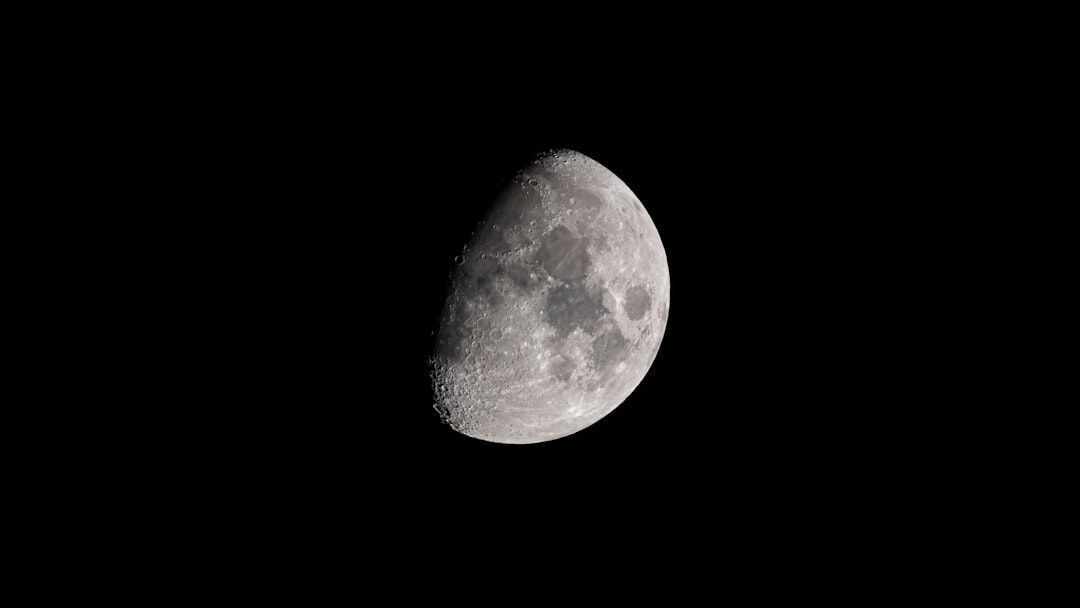
Evening Brilliance: Venus and Jupiter Lead the Way (Image Credits: Unsplash)
Stargazers in the Northern Hemisphere have much to anticipate as spring unfolds. Brilliant Venus and Jupiter dominate the evening skies, drawing closer each night toward a striking conjunction in June. The moon parades through key constellations, while a meteor shower peaks before dawn. These celestial displays offer prime opportunities for observation from now through month’s end.
Evening Brilliance: Venus and Jupiter Lead the Way
Venus emerges low in the western sky after sunset, its intense glow outshining nearby stars. By late April, it climbs higher, passing between the Pleiades cluster and the orange star Aldebaran. Jupiter hangs brighter higher up, near Gemini’s twin stars Castor and Pollux. Observers will notice the gap between these giants narrowing daily, setting the stage for their June 8 proximity, just three moon-widths apart.
The waxing crescent moon joins the spectacle multiple times. On May 17, it appears near Venus low in the west, bathed in earthshine from reflected sunlight. The next evenings, May 18 through 20, position the moon between Venus and Jupiter, then beside Jupiter and Gemini’s twins. These pairings set before midnight, best viewed an hour after sunset under clear twilight.
By May’s close, Mercury flickers briefly low in the evening west for Northern Hemisphere viewers, hugging the horizon amid Venus and Jupiter’s glare. Southern observers catch a similar glimpse in late May twilight.
Dawn Sights: Saturn, Mars, and the Eta Aquariid Peak
Early risers spot Saturn and Mars low in the east before sunrise. In mid-April, Mercury gleams brightest among them, though it fades by May’s start. Saturn rises ahead, with fainter Mars trailing below in twilight. As May progresses, Saturn pulls higher, widening the separation from the slower-climbing Mars.
The Eta Aquariid meteor shower crests on May 5 morning, its radiant in Aquarius rising after midnight. Peak viewing comes hours before dawn, when the radiant arcs south for Northern viewers or overhead for Southern ones. A waning gibbous moon dims fainter streaks, yet patient watchers may count dozens per hour from dark sites.
A thin waning crescent moon enhances the scene on May 13 to 15, sliding near Saturn and Mars 30 to 45 minutes pre-sunrise.
Key Dawn Targets
- Mercury: Mid-to-late April, brightest low east.
- Saturn and Mars: Steady climbers through May.
- Eta Aquariids: May 5 pre-dawn, radiant in Aquarius.
Moon Phases and Stellar Rendezvous
The moon’s cycle punctuates the season with precise timings. Its first quarter arrives April 24 at 2:32 UTC (9:32 p.m. CDT April 23), rising near noon and visible high at sundown. Full Flower Moon crests May 1 at 17:23 UTC (12:23 p.m. CDT), sandwiched between Antares in Scorpius and Spica in Virgo, near Libra’s Zubenelgenubi. This marks the first of three micromoons, the most distant full phases of 2026.
Third quarter falls May 9 at 21:10 UTC (4:10 p.m. CDT), ideal pre-dawn. New supermoon on May 16 at 20:01 UTC (3:01 p.m. CDT) stands as the second of five, at 222,819 miles distant – closer than average. First quarter returns May 23 at 11:11 UTC (6:11 a.m. CDT). Full Blue Moon peaks May 31 at 8:45 UTC (3:45 a.m. CDT), the year’s smallest full moon at 252,360 miles, rising near Antares May 30 sunset.
| Date | Phase | UTC Time | Highlights |
|---|---|---|---|
| April 24 | 1st Quarter | 2:32 | High at sundown |
| May 1 | Full (Flower) | 17:23 | Between Antares, Spica |
| May 9 | 3rd Quarter | 21:10 | Pre-dawn view |
| May 16 | New (Supermoon) | 20:01 | Dark skies for stars |
| May 23 | 1st Quarter | 11:11 | Sundown highlight |
| May 31 | Full (Blue Micymoon) | 8:45 | Smallest of 2026 |
Conjunctions abound: April 24-25 waxing gibbous near Leo’s Regulus and Sickle; April 28-30 by Virgo’s Spica; May 2, 4-5 waning gibbous at Antares and Scorpius; May 6-7 beside Sagittarius’ Teapot; May 8-10 in Capricornus; May 22-23 at Regulus; May 26-27, 28-29 near Spica, Antares, Zubenelgenubi. Apogee hits May 4 at 252,176 miles; perigee May 17 at 222,497 miles.
Constellations Framing the Action
Overhead evenings reveal spring staples. Leo the Lion’s Sickle – a backward question mark – anchors Regulus at its base. The Big Dipper points south to it from Ursa Major. Virgo’s Spica and Boötes’ Arcturus complete the Spring Triangle with Regulus or Leo’s Denebola.
May shifts Leo toward zenith, its triangle hindquarters galaxy-rich for scopes. Scorpius’ Antares glows red; Sagittarius’ Teapot asterism steams low. Faint Capricornus resembles an arrowhead pre-dawn. Dark skies sharpen these patterns, with tools like Stellarium Online tailoring views by location.
These alignments remind skywatchers of the cosmos’ rhythm. Clear nights ahead promise rewarding vigils, blending planets, moon, and stars into memorable spring vistas.