

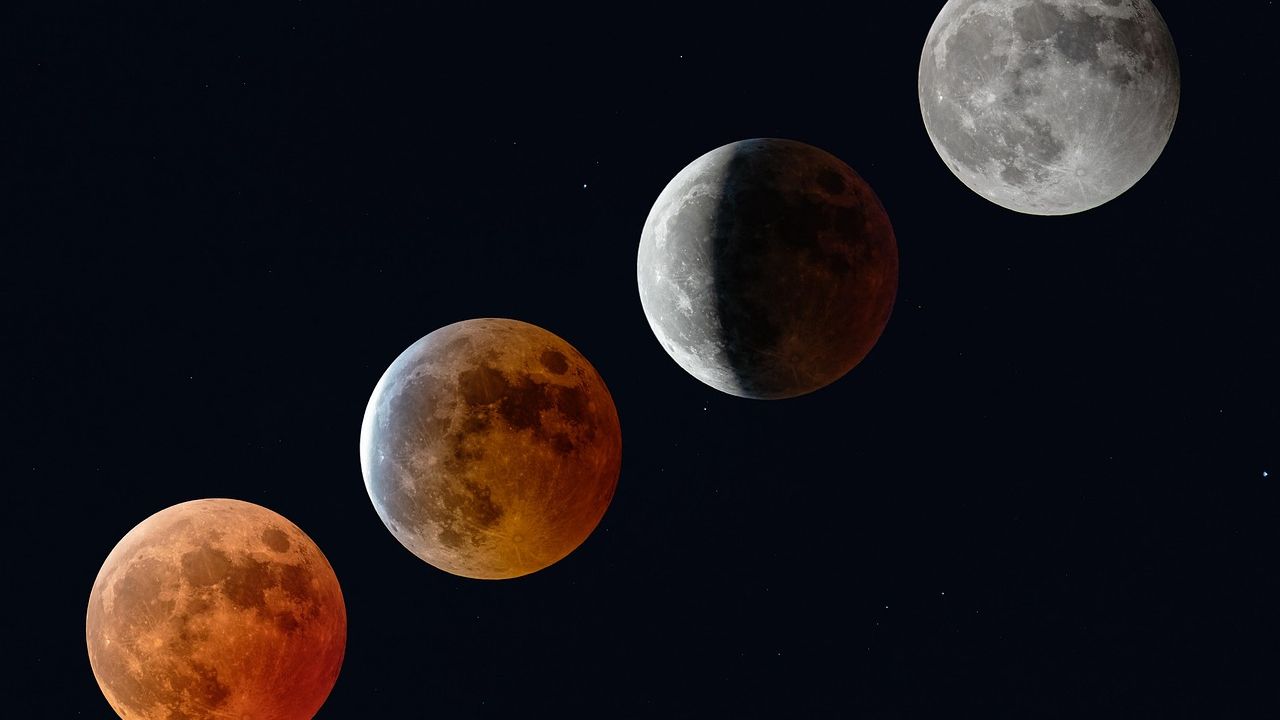
The Formation of the Lunar X (Image Credits: Pixabay)
The first-quarter moon phase arrives late tonight, providing an ideal moment for telescope users to glimpse the Lunar X and V. These fleeting optical effects emerge along the moon’s terminator, where sunlight grazes crater rims to form shapes reminiscent of letters. On April 23, 2026, at approximately 22:31 UTC, the moon hits this phase exactly, drawing attention from sky enthusiasts worldwide.[1][2]
The Formation of the Lunar X
Sunlight angles across the moon’s rugged terrain during first quarter, casting shadows that highlight certain ridges. The Lunar X appears as an X-shaped pattern formed by the illuminated rims of craters La Caille, Bianchini, and Purbach. This intersection creates a distinct cross visible only when the terminator – the boundary between light and shadow – aligns precisely with these features.
Observers note the effect’s subtlety, requiring steady magnification to resolve fully. The pattern stands out most dramatically on the shadowed side, where contrast sharpens the edges. Though it resembles an artificial mark, the X results purely from natural topography and lighting.
Unveiling the Lunar V
Nearby, the Lunar V takes shape from crater Ukert and a cluster of smaller neighboring craters. Illuminated rims converge to mimic a V, complementing the X in a paired display. Together, these features offer a rare treat for lunar observers, lasting just a few hours per lunar cycle.
The V’s visibility mirrors the X’s, peaking around the same terminator position. Brighter than surrounding areas, it persists briefly even as sunlight advances. This duo has captivated viewers for generations, blending astronomy with optical intrigue.
Timing Your Observation
The Lunar X and V become observable for about four hours centered on first quarter. For April 23-24, 2026, prime viewing begins around 10:50 UTC on April 24, though checking local conditions refines the window.[3] Earlier glimpses may reveal the features faintly as the terminator approaches.
Dark skies enhance detection, so aim for evenings after sunset when the moon rises higher. The moon’s waxing crescent phase on April 23 builds anticipation, with 42 percent illumination by evening.[4] Patience pays off, as the exact alignment shifts slightly each month.
Practical Tips for Success
A telescope with at least 50x magnification reveals the details best. Center the view on the terminator in the moon’s southeastern quadrant, near the craters mentioned. Steady the instrument to counter Earth’s rotation and atmospheric turbulence.
- Start observing 30-60 minutes before exact first quarter for emerging contrast.
- Use a moon filter to reduce glare on brighter sections.
- Sketch or photograph the scene to document changes over time.
- Join online communities for real-time reports from fellow observers.
Frank Lu from Texas imaged the features in February 2025 and shared: “Inspired by Deborah Byrd’s article in EarthSky’s Astronomy Essentials, I went out looking for the Lunar X and Lunar V on this 1st-quarter moon. I’m extremely pleased to find them.” Such accounts underscore the thrill of the hunt.
Why These Features Captivate
The Lunar X and V exemplify pareidolia, where the brain discerns familiar patterns in random forms. Yet their reliability at first quarter grounds them in predictable astronomy. Kannan A in Singapore observed in 2021: “These are transient lunar features visible on the lunar surface for about 4 hours once a month.”
Each cycle renews the opportunity, fostering a global network of imagers and spotters. Greg Redfern from Virginia captured them in July 2025, calling it “a great splendor.” As the terminator marches on, these illusions fade, leaving observers eager for the next quarter.
With tonight’s alignment, the moon invites closer inspection. These natural etchings remind us of the celestial body’s intricate relief, visible to anyone with the right tools and timing. The display endures as a highlight in lunar observation, bridging science and wonder.