

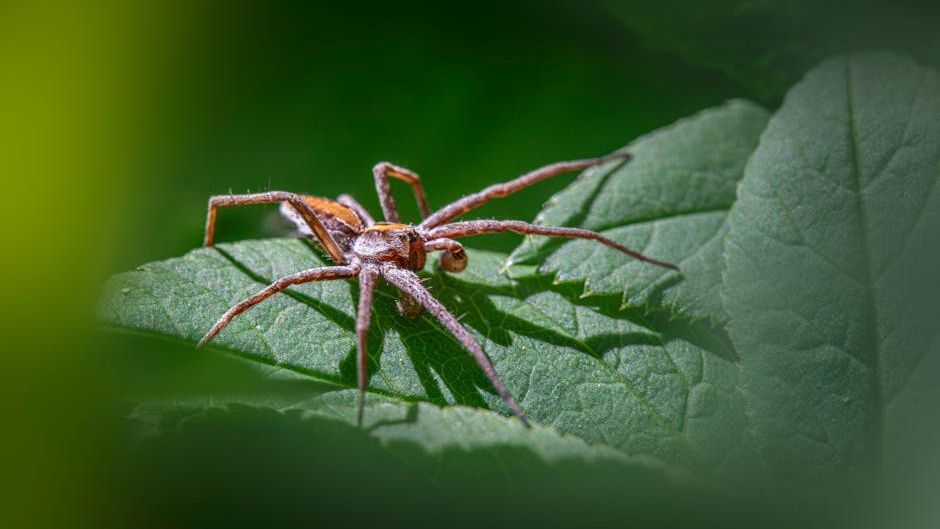
The Birth of a Controversial Family (Image Credits: Pexels)
A close look at a lone spider specimen has led researchers to dismantle an entire proposed family in the arachnid world. Established just three years earlier, Fonteferreidae relied on traits that closer scrutiny revealed as unreliable. This reassessment highlights the rigorous standards that define modern taxonomy, ensuring classifications withstand empirical testing.
The Birth of a Controversial Family
Joachim Wunderlich introduced the spider family Fonteferreidae in 2023, placing it within the diverse Araneae order. The proposal hinged on a single male holotype, which served as the foundation for both the family and the genus Fonteferrea, along with the species F. minutissima. At the time, the specimen’s features appeared distinctive enough to warrant this elevation to familial status among araneoid spiders.
Taxonomists often build new categories on key morphological markers, such as body structure or genitalia. Yet this case stood out for its minimal evidence base. The absence of multiple specimens or comparative data raised questions early on, though the initial description proceeded.
Re-Examination Reveals Critical Shortcomings
A team of arachnologists, including Laura Lopardo, Nadine Dupérré, Gustavo Hormiga, and Peter Michalik, revisited the holotype in their 2026 study published in ZooKeys. Their analysis determined the specimen was not a mature adult but a subadult male. This developmental stage meant essential reproductive structures remained undeveloped, undermining the original diagnostic claims.
Somatic characters, those related to the body itself, also failed to hold up under renewed inspection. Without clear, unique traits separating it from established families, the case for Fonteferreidae weakened substantially. The researchers emphasized that subadults rarely provide the robust evidence needed for such high-level taxonomic decisions.
Why Maturity Matters in Spider Taxonomy
Spider classification demands precision, particularly for families, which group species sharing fundamental evolutionary traits. Mature genitalia often serve as the gold standard, offering reliable shapes and patterns that persist across development. In Fonteferreidae’s instance, the holotype’s immaturity obscured these vital details, leading to overstated distinctions.
Historical precedents abound where immature specimens sparked premature splits. Taxonomists now prioritize multi-specimen series and adult forms to avoid such pitfalls. This episode reinforces protocols that have stabilized Araneae nomenclature over decades, preventing a proliferation of questionable groups.
- Subadult status hid reproductive diagnostics.
- Somatic features lacked uniqueness.
- Single-specimen basis defied standard practices.
Placing Fonteferreidae in Taxonomic Limbo
The study’s authors concluded that insufficient evidence necessitated rejection of the family, genus, and species. They proposed treating Fonteferrea minutissima, its genus, and Fonteferreidae as nomina dubia – Latin for “doubtful names” – a formal designation for taxa too uncertain for confident placement. This status suspends their use pending better material, such as additional specimens.
Published in ZooKeys volume 1278, the paper spans pages 95 to 109 and invites further scrutiny. Arachnologists welcomed the correction, viewing it as a safeguard against taxonomic inflation. Future discoveries might resurrect or reassign these names, but for now, they rest in scientific reserve.
The process underscores taxonomy’s self-correcting nature. As new tools like advanced imaging emerge, even recent proposals face rigorous challenges. This rejection ensures spider diversity reflects reality, not hasty interpretations.
A Lesson in Scientific Humility
Araneae boasts over 50,000 described species, with families anchoring broader evolutionary narratives. Erroneous groups can mislead research on webs, venoms, and behaviors. By dismantling Fonteferreidae, the team upheld integrity in a field where one overlooked detail alters lineages.
Researchers continue exploring spider frontiers, from tropical forests to molecular phylogenies. This case reminds the community that bold proposals must endure testing. In the end, taxonomy advances through such measured reversals, refining our grasp of nature’s intricate web.