

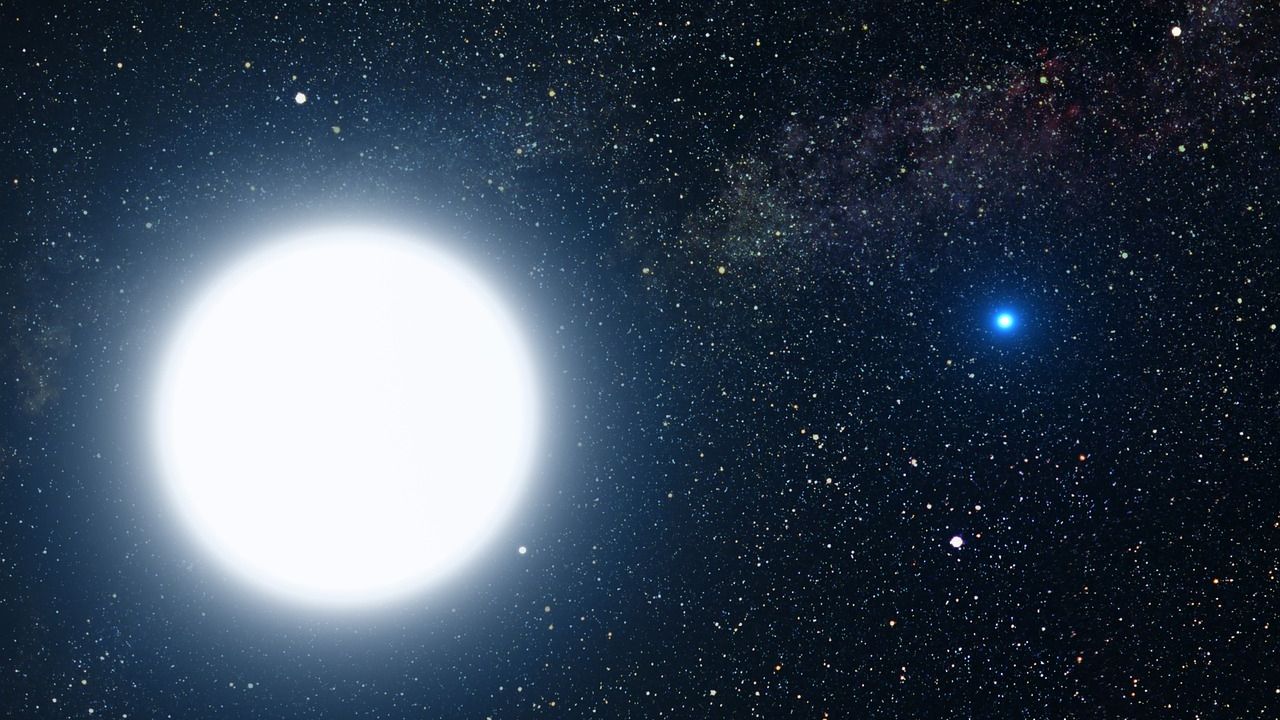
Overturning Decades of Skepticism (Image Credits: Pixabay)
Binary star systems, which make up more than half of all stars in the galaxy, have long puzzled astronomers with their apparent scarcity of planets. Recent computer simulations upended that view by demonstrating that these dual-star setups actually generate a wealth of exoplanets. The catch lies in their unstable dynamics: most of these worlds end up hurtled into interstellar space as free-floating rogue planets.
Overturning Decades of Skepticism
Astronomers once assumed exoplanets struggled to coalesce around binary stars because the gravitational tug-of-war between the two suns would disrupt planet-forming disks of gas and dust. This perspective dominated for years, as early observations yielded few candidates. Powerful telescopes, however, began changing the narrative in recent times.
Researchers have now confirmed around 50 exoplanets orbiting binary pairs. These detections marked a shift, hinting that planet formation in such systems occurred more readily than expected. Still, the numbers paled compared to single-star systems, prompting deeper investigation through modeling.
Key Findings from Advanced Models
New simulations painted a clearer picture: exoplanet formation around binaries proves far from rare. The models accounted for the complex interplay of stellar gravity, disk dynamics, and planetary migration. They revealed that planets do assemble, but often on expansive orbits far from their parent stars.
Wide orbits pose observational hurdles. Most exoplanet discoveries rely on the transit method, where a planet passes in front of its star, dimming the light briefly. Planets circling at great distances rarely align for such events, slipping past current detection capabilities.
The Fate of Ejected Worlds
Instability defines these systems. Simulations showed that gravitational interactions frequently destabilize planetary orbits, ejecting many exoplanets entirely. These rogue planets drift through the galaxy without a host star, illuminated only by their internal heat or faint starlight.
Such ejections explain the detection gap. While binaries produce planets in abundance, the survivors represent a tiny fraction – those lucky enough to maintain stable paths. The models quantified this: a significant portion of formed worlds meet this nomadic end.
| Aspect | Traditional View | Simulation Insights |
|---|---|---|
| Planet Formation | Rare or difficult | Common and efficient |
| Orbit Characteristics | Narrow, if any | Often wide and sparse |
| Long-Term Outcome | Stable retention | Frequent ejections as rogues |
Broader Implications for Cosmic Surveys
These findings reshape how astronomers approach exoplanet hunts. Future telescopes, designed for direct imaging or radial velocity measurements, may spot more wide-orbit and rogue worlds. Binaries, being so prevalent, could harbor a hidden population of planets influencing galactic chemistry and habitability debates.
Questions linger about rogue planet prevalence. Do they outnumber bound exoplanets? Enhanced simulations and observations will test these ideas, potentially revealing a galaxy teeming with orphaned worlds.
A Galaxy of Wandering Worlds
The simulations underscore the dynamic nature of binary systems: cradles of creation that also serve as launchpads for exile. As detection technologies evolve, the tally of known exoplanets around binaries will likely climb, alongside a growing catalog of rogues. This duality reminds researchers that the cosmos favors neither stability nor solitude – only relentless motion.